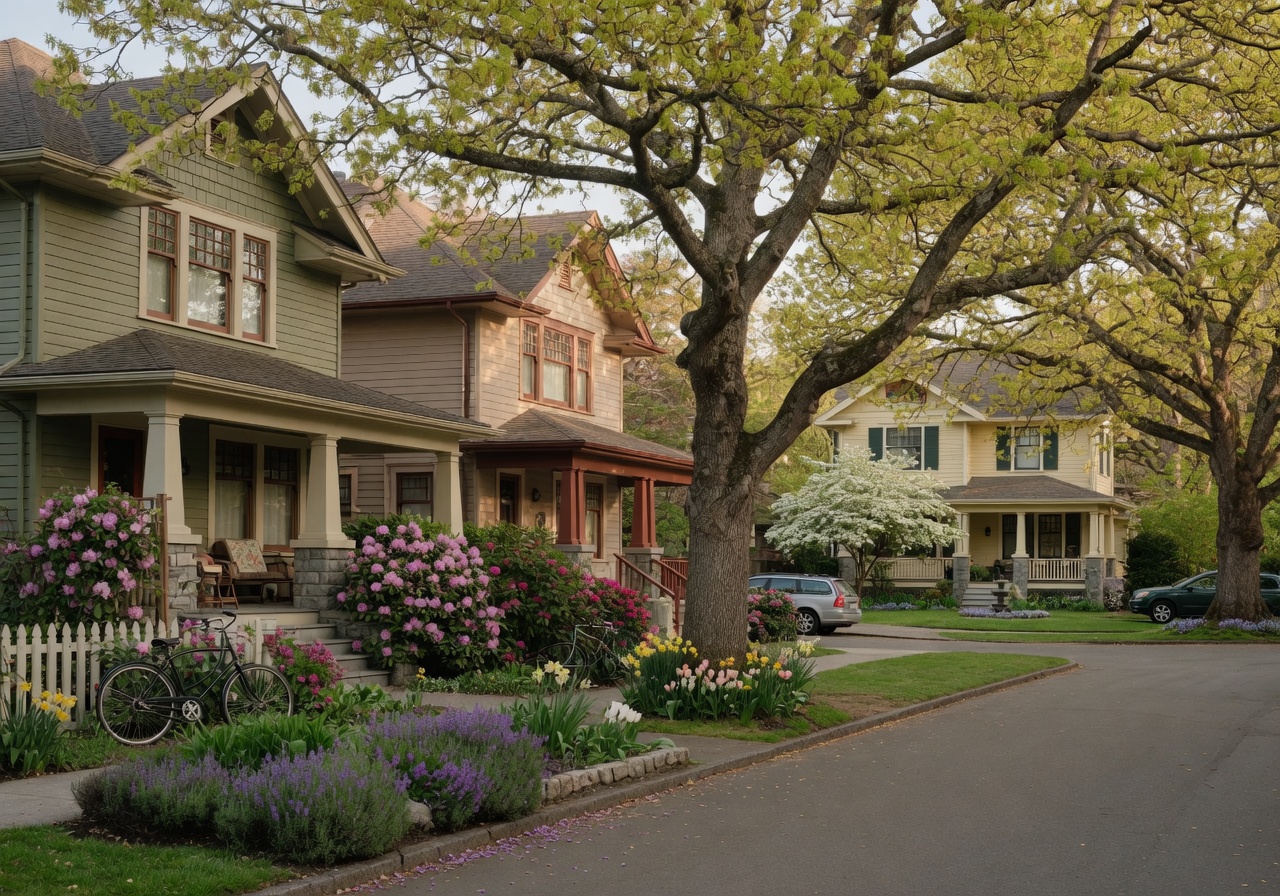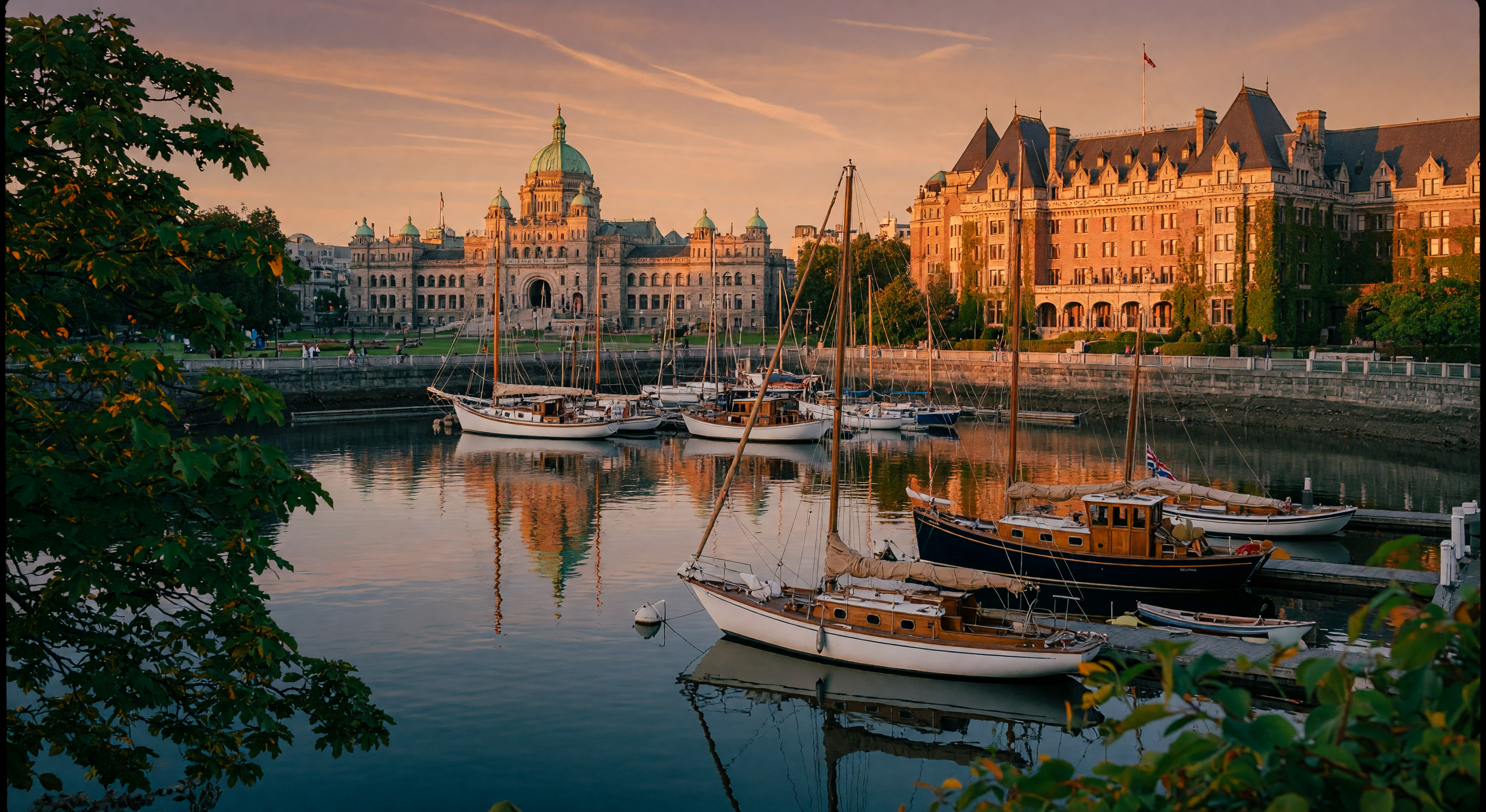
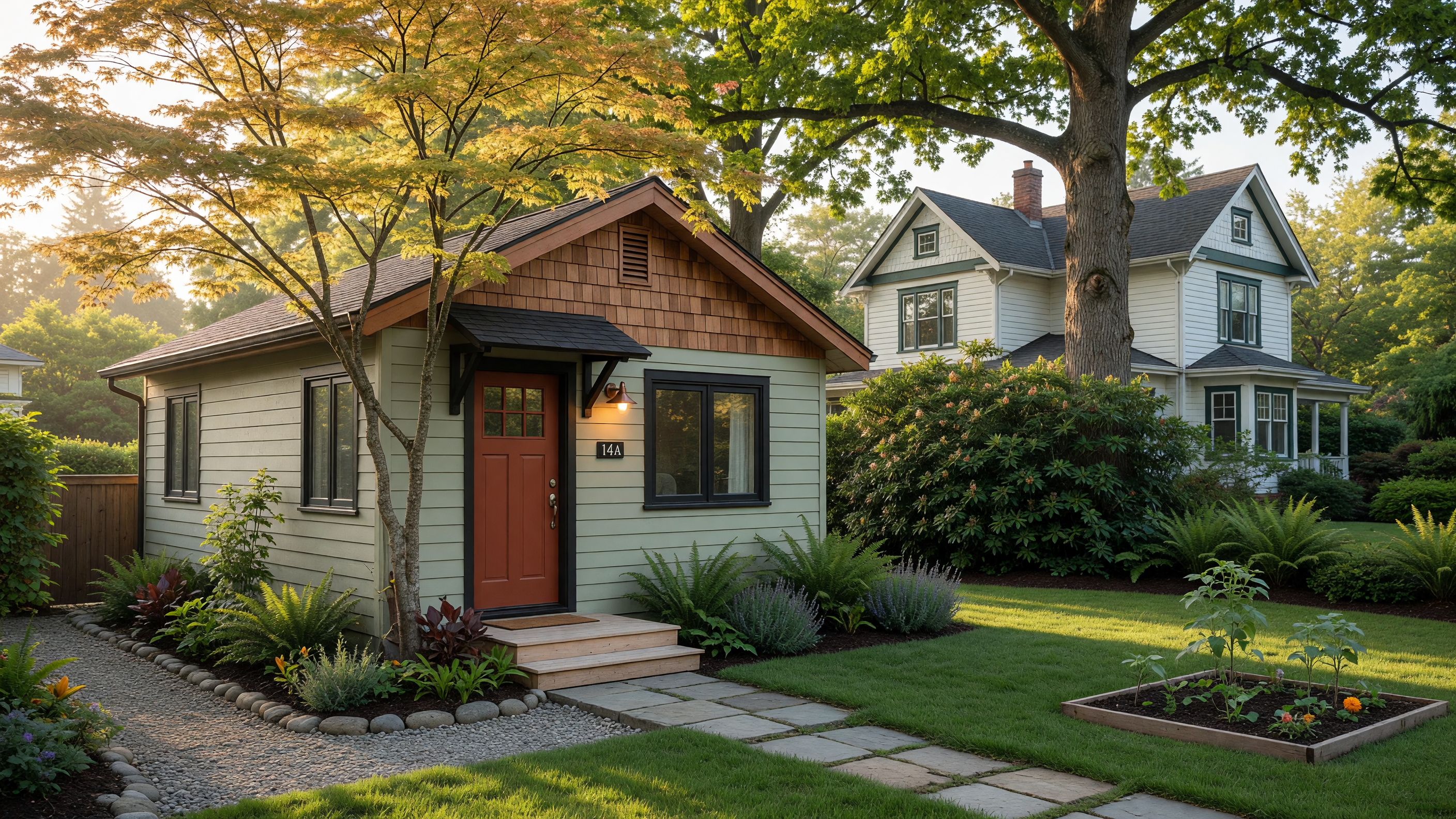
There's a quiet revolution happening in Greater Victoria's backyards. Across Oak Bay, Saanich, Langford, and Colwood, homeowners are discovering that the property they already own holds the key to thousands of dollars in monthly rental income, and a more affordable mortgage. With new provincial legislation mandating that municipalities permit secondary suites and accessory dwelling units (ADUs) on most residential lots, 2026 is shaping up to be the year that building a mortgage helper in Greater Victoria goes from niche strategy to mainstream reality.
What Is a Secondary Suite, and Why Does It Matter in Victoria?
A secondary suite is a self-contained living unit within or attached to a single-family home, most commonly a finished basement suite, but also garden suites, carriage homes, and detached ADUs. It has its own entrance, kitchen, bathroom, and sleeping area, and it's rented to a tenant who pays monthly rent.
In Greater Victoria's current housing market, where the average single-family home price hovers around $1.1 million and mortgage rates remain a central concern for buyers, a legal secondary suite isn't just a nice-to-have. It's a financial strategy. A well-built suite can generate $1,500 to $2,500 per month in rental income, fundamentally changing the math on home ownership for families, retirees, and investors alike.
Perry Fanthorpe of the Happy Homes Team has seen this shift firsthand. "When clients sit down and look at the numbers, the lightbulb goes on," he says. "A $1,800-a-month suite knocks a meaningful chunk off your mortgage payment every single month. Over five years, that's over $100,000 in offset costs. It changes everything about what you can afford."
The Big Legislative Shift: BC's Bill 44 and Bill 25
If you haven't followed provincial housing news, here's what you need to know. British Columbia's Bill 44 (2023), the Small-Scale Multi-Unit Housing (SSMUH) legislation, fundamentally changed the rules for residential lots across the province. It requires all municipalities to permit at least one secondary suite and one detached ADU (such as a garden suite or carriage home) on most single-family and duplex-zoned lots.
Bill 25 (2025) reinforced and expanded these requirements, giving municipalities a deadline of June 30, 2026 to update their zoning bylaws to comply. The practical result? If you own a single-family home in Greater Victoria, chances are very good that you can now legally build a secondary suite, and possibly a detached ADU, on your property without needing a rezoning application.
This is a seismic shift. Before these laws, many homeowners in Oak Bay, parts of Saanich, and other established neighbourhoods were prohibited from adding suites by outdated zoning. The provincial legislation has essentially overridden those restrictions, opening up new possibilities for tens of thousands of homeowners.
Key Takeaway: What the Province Requires
- All municipalities must permit at least one secondary suite + one detached ADU on most single-family lots.
- Municipalities must update bylaws by June 30, 2026.
- Individual municipalities still set specific rules on floor area, parking, setbacks, and design.
- All units must meet BC Building Code standards for safety, egress, fire separation, and occupancy.
Municipality-by-Municipality: What the Rules Look Like Now
While the province sets the baseline, each municipality in Greater Victoria applies its own specific requirements. Here's a snapshot of where things stand as of mid-2026 for the most popular residential areas:
City of Victoria
Victoria has been a leader in enabling secondary suites. Suites are permitted in most residential zones, and the city has been progressively updating its bylaws to align with provincial SSMUH requirements. Carriage homes and garden suites are increasingly permitted on eligible lots. Expect standard BC Building Code requirements for fire separation, ceiling height (minimum 2.1 metres / 7 feet), and a separate entrance.
District of Saanich
Saanich has been actively amending its bylaws to comply with provincial legislation. As of their June 2024 amendments, many lots within the Urban Containment Boundary now permit up to 3–6 dwelling units. Secondary suites are permitted in most single-family zones. Garden suites carry specific site plan requirements, including parking provisions that must be in addition to the principal dwelling's parking. Saanich also requires a building permit and occupancy inspection for all suites.
District of Oak Bay
Oak Bay permits secondary suites in all RS (One-Family Residential) zones, with no minimum lot or unit size. Recent 2025 parking bylaw updates specify a minimum of 0.5 parking spaces per unit for properties with two to four dwellings. Oak Bay's heritage character means design considerations are important, your suite needs to respect the neighbourhood aesthetic, and exterior modifications in heritage areas may require additional review.
City of Langford
Langford has been one of the most pro-development municipalities on the West Shore. Secondary suites are generally permitted on lots starting at 550 m² (approximately 5,920 ft²), with a maximum floor area of 90 m² (approximately 969 ft²). For carriage suites, the ground floor must typically be used for vehicle parking. Panhandle lots may face restrictions. Langford's newer housing stock often comes pre-wired for suite conversion, making it an attractive option for buyers thinking ahead.
District of Colwood & City of Esquimalt
Both Colwood and Esquimalt are updating their bylaws to align with provincial mandates. Colwood, in particular, has been encouraging ADU development as part of its growth strategy. Esquimalt's proximity to Victoria and its more affordable entry prices make it an interesting option for buyers specifically seeking properties with suite potential.
How Much Does It Cost to Build a Secondary Suite in Greater Victoria?
This is the question every homeowner asks, and the honest answer is: it depends on what you're building, where, and to what standard. But here are the real numbers for Greater Victoria in 2026:
| Suite Type | Typical Cost Range | Typical Size |
|---|---|---|
| Basement secondary suite | $80,000 – $180,000 | 500–1,000 ft² |
| Garden suite (detached) | $150,000 – $300,000 | 500–800 ft² |
| Carriage home (detached, above garage) | $250,000 – $400,000+ | 600–1,000 ft² |
| Municipal permit fees | $40,000 – $65,000 (varies by municipality) | |
The biggest cost drivers are site preparation (excavation, underpinning existing foundations), utility upgrades (electrical panel, plumbing, separate metering), and finishing quality. A basement suite conversion is typically the most affordable path because the structural shell already exists. A detached carriage home or garden suite involves full construction from the ground up, which explains the higher price tag, but also delivers a freestanding unit that commands premium rents.
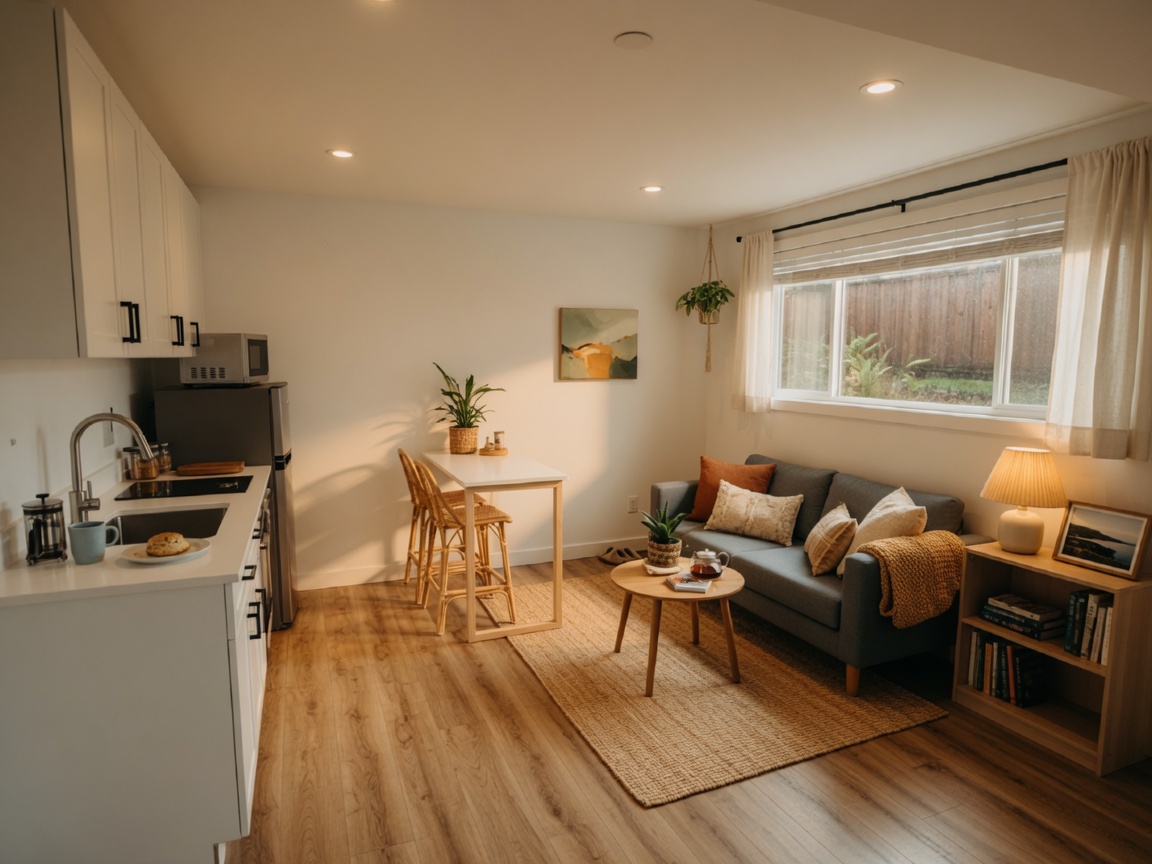
A well-designed secondary suite feels like a real home, not an afterthought. Quality finishes and thoughtful layouts command higher rents and attract long-term tenants.
What Can You Expect to Earn? Victoria's Rental Income Numbers
Rental demand in Greater Victoria remains exceptionally strong. The region's vacancy rate has hovered near historic lows for several years, driven by limited supply, steady population growth, and the persistent affordability gap between renting and buying. For homeowners with a legal suite, this means dependable rental income.
Current market rates for legal secondary suites in Greater Victoria (as of mid-2026):
- 1-bedroom basement suite: $1,200 – $1,800/month
- 2-bedroom basement suite: $1,800 – $2,400/month
- Detached garden suite or carriage home: $2,000 – $2,700/month
Location matters. Suites in Saanich and Esquimalt may trend slightly lower than those in the City of Victoria or Oak Bay, but demand is strong across the region. Detached units (garden suites, carriage homes) consistently command premium rents because tenants value the privacy and separation from the main house.
How a Mortgage Helper Changes the Numbers
Let's talk about the real financial impact. For a homeowner carrying a $800,000 mortgage at current rates, a suite generating $2,000/month in rent means:
- $24,000 per year in rental income applied to your mortgage
- $120,000 over five years, enough to substantially reduce principal or accelerate your payoff timeline
- Improved debt service ratios, which can help you qualify for a larger mortgage or better rates at renewal
This is why Perry often recommends suite potential as a key criterion when helping clients evaluate properties. "When we're looking at houses, I always ask: where does the suite go? What would the rent be? It's not just about the monthly payment, it's about what the property can earn for you while you live in it."
Common Questions About Building a Suite in Victoria
Do I need a permit to build a secondary suite?
Yes, absolutely. Every secondary suite in Greater Victoria requires a building permit from your municipality, plus a final occupancy inspection. An unpermitted suite is a legal liability, an insurance risk, and a serious problem at resale. A legal suite adds value to your property; an illegal one subtracts it.
How long does the permit process take?
In most Greater Victoria municipalities, expect 4–8 weeks for plan review and permit issuance, depending on complexity and how complete your application is. Construction timelines vary: a basement suite conversion might take 3–5 months, while a new-build carriage home can take 6–12 months from permit to occupancy.
What about parking requirements?
Each municipality has its own rules. Oak Bay requires a minimum of 0.5 parking spaces per unit for properties with multiple dwellings. Saanich requires additional parking for garden suites beyond the principal dwelling's requirements. Victoria's rules vary by zone. Langford generally requires the ground floor of carriage suites to serve as parking. Check your specific municipal bylaws, this is one of the most common stumbling blocks in the permit process.
Will a suite increase my property taxes?
Likely yes, but the increase is modest compared to the rental income. Your property assessment may be adjusted to reflect the additional dwelling, which can increase your annual tax bill. However, the rental income far outpaces this incremental cost, and the suite adds significant resale value.
Can I house-hack with a secondary suite?
Absolutely, and this is one of the smartest strategies for first-time buyers in Victoria's market. Buy a home with suite potential (or that already has a legal suite), live in the main unit, and use the rental income to offset your mortgage. Some clients use the suite income to qualify for a property they couldn't otherwise afford, effectively letting their tenant help them build equity.
What to Look for When Buying a Home with Suite Potential
Not every property is equally suited for a secondary suite. If you're shopping with mortgage-helper potential in mind, here are the key things to evaluate:
- Lot size and zoning. Confirm your municipality permits suites on the specific lot. Under SSMUH, most single-family lots qualify, but there are exceptions (e.g., panhandle lots in Langford).
- Ceiling height. BC Building Code requires minimum 2.1 metres (about 7 feet) of clear ceiling height in all habitable rooms. Many older Victoria basements fall short, and underpinning to gain headroom is expensive.
- Separate entrance. A legal suite needs its own private entrance. Evaluate if the lot layout allows for a practical, code-compliant separate entry.
- Electrical and plumbing capacity. Older homes may need a panel upgrade (200-amp service is standard for homes with suites) and separate utility metering.
- Parking. Does the property accommodate the parking requirements for an additional unit? Some lots simply don't have room.
The Bottom Line: Is a Secondary Suite Worth It in 2026?
In almost every scenario we run for clients, the numbers work. With BC's new legislation making it easier than ever to build legally, strong rental demand keeping vacancy rates low, and Greater Victoria's home prices making mortgage offsets critical, a secondary suite is one of the most powerful financial tools available to local homeowners.
The upfront investment, be it $100,000 for a basement conversion or $300,000 for a detached carriage home, pays for itself over time through reduced mortgage costs, increased property value, and steady passive income. For many Victoria homeowners, it's the difference between stretching to afford their home and comfortably building wealth through it.
If you're wondering if your property has suite potential, or if you're shopping for a home with a mortgage helper already built in, we'd love to walk through the numbers with you. Perry's deep knowledge of construction and municipal bylaws, combined with our team's expertise in matching buyers with the right properties, means you'll get a clear, honest assessment of what's possible.
Check out our summer car shows guide for something fun, dive into our neighbourhood guides to find the community that fits your life, and our Langford first-time buyers guide is a great starting point if you're considering the Westshore. Our full Langford neighbourhood guide also covers suite-friendly communities in detail. And when you're ready to talk strategy, let's connect.

About the Author
Anna Hakim & Perry Fanthorpe, Happy Homes Team
Anna Hakim and Perry Fanthorpe are AI Certified Agents helping people build lives on Southern Vancouver Island. Perry builds financial roots through mortgage helpers and investment strategy. Anna builds emotional roots through community and belonging.