You need winter tires on the Malahat, but not for everyday driving around Victoria, and the dates are exact: October 1 to March 31 on the Highway 1 stretch between Victoria and Duncan. BC requires winter tires or chains on designated highways, and the Malahat is the busiest posted route on southern Vancouver Island, so locals who commute north of the hill keep compliant tires on from the first week of October. Within Greater Victoria itself, city streets are not designated routes, which makes the rule surprisingly simple once you know which road you are on.
When Exactly Do You Need Winter Tires on the Malahat?
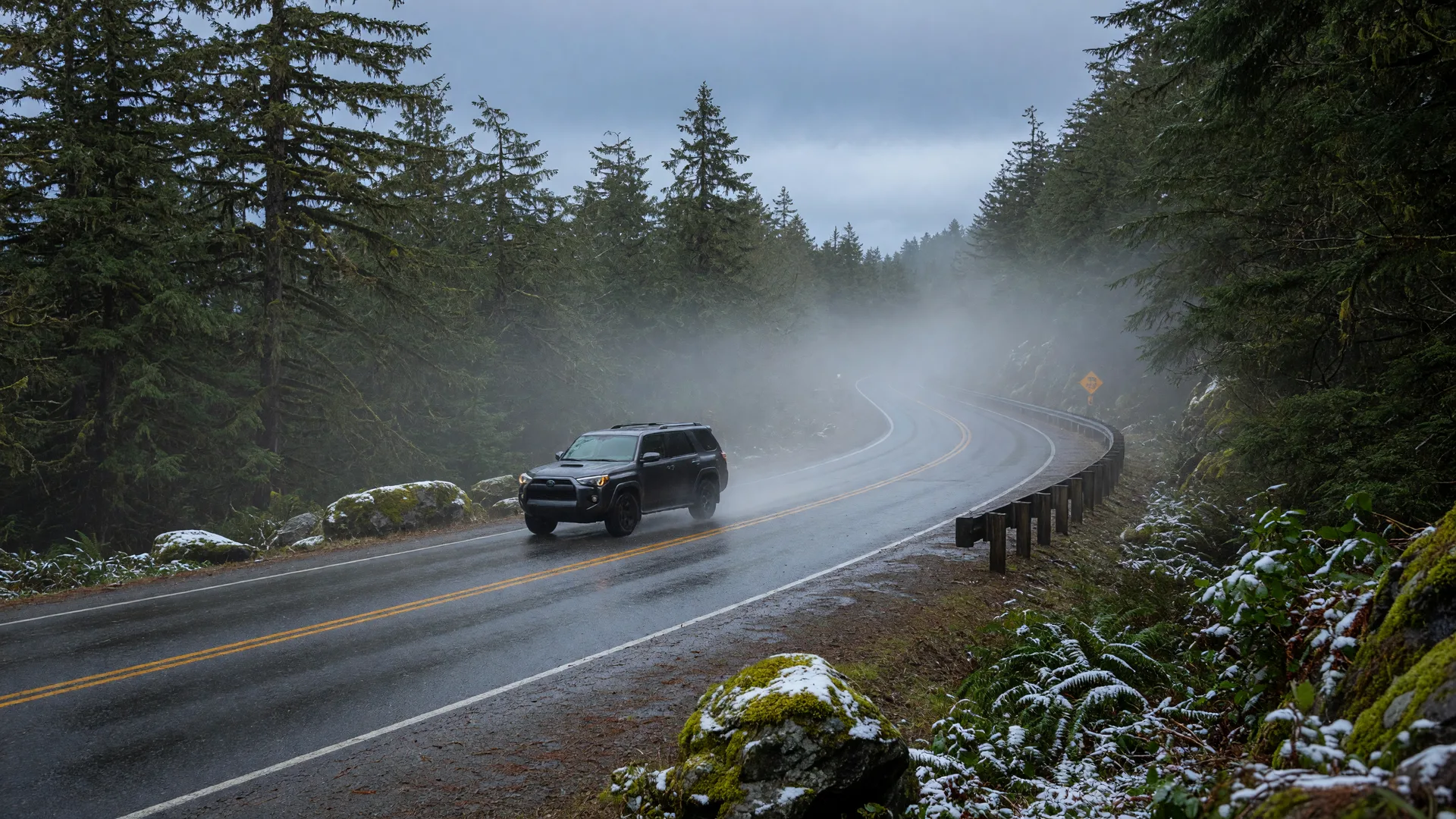
Winter tires or chains are required on the Malahat, the Highway 1 corridor between Victoria and Duncan, from October 1 to March 31 every year. The longer October 1 to April 30 window applies to routes that cross mountain passes and high-snowfall areas; the Malahat is one of the routes where the requirement ends earlier, on March 31.
The requirement returns every autumn, and the posted signs are the final word on any given stretch, so trust the signage over any article, ours included. DriveBC is the site locals check before a summit trip, because conditions can flip from dry to sketchy at the top in an hour.
Which Other Vancouver Island Highways Are Posted?
If your weekend plans involve the Island's wilder roads, the Malahat is not the only place the rule applies. Highway 14 west of Sooke toward Port Renfrew is posted, and so are Highway 4 toward Port Alberni and Tofino and Highway 28 to Gold River. Anyone who drives out to the West Coast Road in the winter, or heads north to ski country, needs compliant tires from the moment the signage starts.
The practical takeaway for south-Island living: the Malahat is the one posted route most of us actually cross on a regular basis, which is why it gets all the attention. Our scenic drives guide will tell you exactly how often those other roads show up in a normal Victoria year, which for most of us is a few times a season rather than every commute.
What Counts as a Legal Winter Tire in BC?
BC's legal definition is broader than most people expect. A tire with the three-peaked mountain and snowflake symbol qualifies, and so does a tire marked M+S, mud and snow, as long as it is in good condition with at least 3.5 millimetres of tread. Both meet the legal requirement on posted routes; ICBC recommends the mountain and snowflake tire whenever you drive snow or ice regularly, because M+S all-seasons lose their grip long before they look worn.
The fine for driving a non-compliant vehicle on a posted route is $121, and the enforcement runs all season, not just on storm days. Get the right tires because of the grade in front of you, and let the ticket be a reminder rather than the reason.
Do You Need Winter Tires Just to Drive Around Victoria?
No. City streets in Greater Victoria are not designated winter tire routes, and the province does not require winter tires for everyday driving in the milder coastal climate of southeastern Vancouver Island. A lot of locals run all-seasons year-round and simply slow down on the few icy mornings the region gets, which is a choice that works for short in-town trips.
The line to remember is simple: posted highway means winter tires required, city streets mean your call. If you cross the Malahat at all, even once a month, the tires have to be compliant for those trips, and most people find it easier to run them all winter than to swap sets on a rotating schedule.
How Does This Affect Where You Live?
For anyone weighing a home in Mill Bay or Shawnigan Lake against Victoria proper, winter tires are part of the cost of living north of the hill, the same way the ferry fare is part of living on an island at all. Our Shawnigan Lake commute guide and our Mill Bay guide both say the same thing honestly: the drive is beautiful, and the drive is the catch. A compliant set of tires, plus the discipline to check conditions, is how the year-round commuters do it.
On the other side, if you never cross the hill, winter tires are a non-event, and the practical housing difference shows up in what we call the two-car garage test. A garage that stores a second set of tires, and keeps your summer set from freezing flat, is a nice-to-have that car people and highway commuters both quietly shop for. Our guide to what kind of home car people need covers the garage question in full, because it matters more than most buyers expect.
What Should You Do Before November?
Check your tread depth and the M+S or snowflake marking now, because October 1 sneaks up on everyone and the tire shops get busy the first week it snows on the summit. If you commute over the hill, book your changeover early, and make checking DriveBC part of the routine on any trip that crosses the top. Winter driving here is rarely about deep snow, it is about ice in the shade through the trees and the odd sudden whiteout, so tires and patience beat four-wheel drive every time.
And if you are house hunting this fall, add "does this home fit two sets of tires" to the list. It is a small detail that tells you a lot about how the previous owners approached winter, and it is a genuinely useful filter when you are comparing garages across Langford, Saanich or the Peninsula.
Ask Us About Commute-Friendly Homes
The Happy Homes Team at eXp Realty helps buyers weigh commute and lifestyle on both sides of the Malahat every season, because homes south of the hill and homes north of it answer different questions. Anna will ask how your weeks actually run, ferry runs and ski trips included, and Perry will tell you which garage, driveway and storage setup fits the life you drive. Winter tires are the small part of that math, and the right home is the big one.

About the Author
Anna Hakim & Perry Fanthorpe, Happy Homes Team
Anna Hakim and Perry Fanthorpe are AI Certified Agents helping people build lives on Southern Vancouver Island. Perry builds financial roots through mortgage helpers and investment strategy. Anna builds emotional roots through community and belonging.