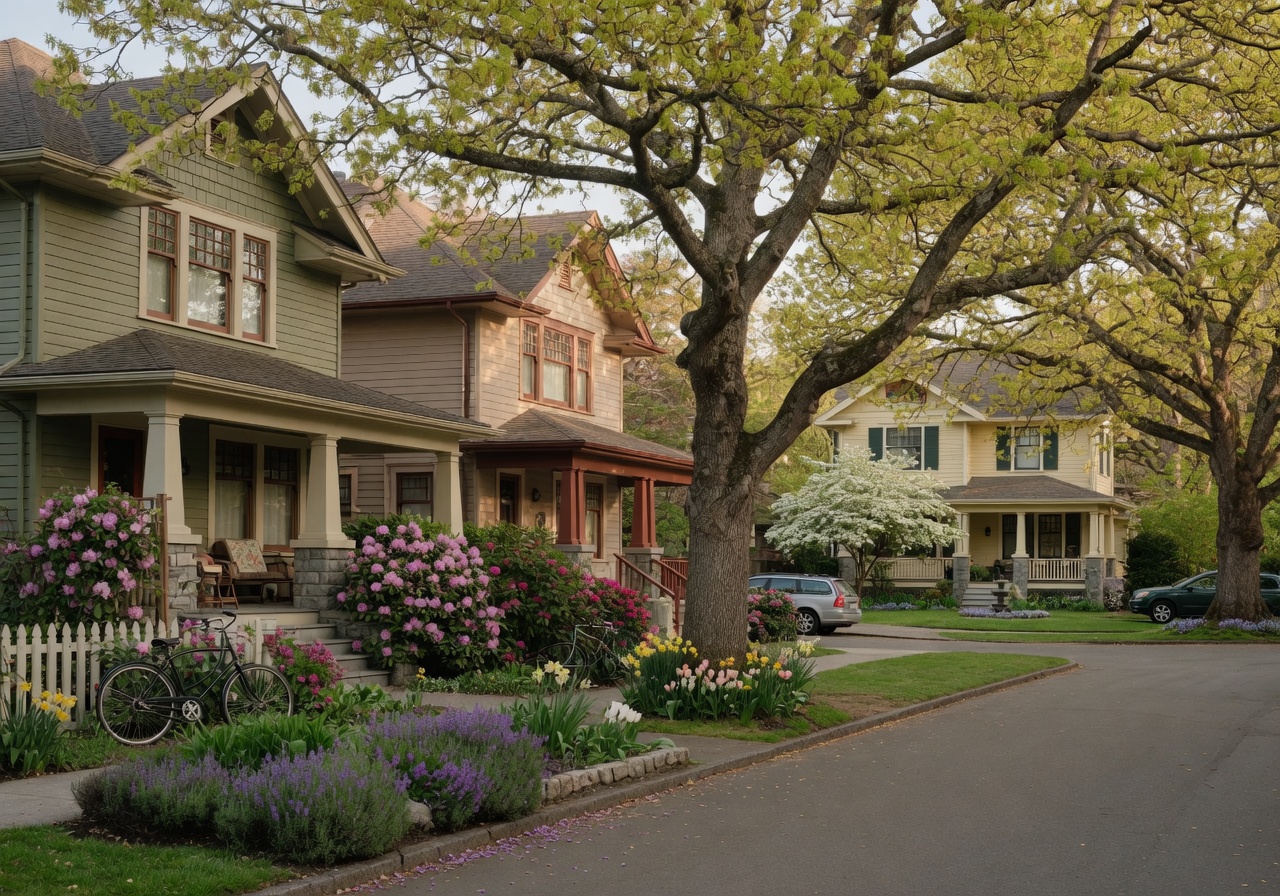

There is a widely held belief that real estate is a numbers game. Price per square foot. Mortgage rates. Comparable sales. Days on market. And those numbers matter – we use them every day, and we build our strategies around them. But here is what most sellers don't realize until they are deep in the process: the numbers get you to the table. The psychology is what closes the deal.
Buyers do not make decisions the way they say they do. They tour a home and say they love the layout, but what they are really responding to is how the home made them feel in the first seven seconds. They say they chose a property because of the school district, but the real trigger was the garden path that reminded them of growing up. They say they negotiated hard on price, but what they were actually negotiating was trust.
Understanding the psychology of selling is not a soft skill. It is the most powerful strategy a seller can have.
First impressions are not just impressions – they are decisions
Research in environmental psychology consistently shows that people form lasting impressions within the first seven to ten seconds of entering a space. That is not enough time to assess the foundation, the roof age, or the quality of the plumbing. It is, however, more than enough time to decide if a home feels right.
That gut reaction – the one buyers often can't even articulate – shapes everything that follows. If the entryway smells faintly of mildew, every subsequent room is viewed through a more skeptical lens. If the light is warm and the space feels open and intentional, buyers begin to picture their life there before they've even seen the kitchen.
In Victoria, where character homes sit alongside modern builds and the buyer pool includes relocators from across Canada, first impressions are not uniform. What reads as charming and cozy to a local may read as dated and dark to someone arriving from Calgary or Toronto. Knowing how to stage and present a home for your specific buyer pool is not decoration – it is positioning.
The Psychology of First Impressions
Buyers decide how they feel about a home within the first seven to ten seconds of walking through the door. That reaction – shaped by light, scent, temperature, and spatial flow – influences every offer, every negotiation, and every final price. A home that feels right commands more than a home that merely looks right on paper.
Buyers make emotional decisions first and rationalize them second
This is not a controversial claim in psychology. It is foundational. Antonio Damasio's research on patients with damage to the emotional processing centres of the brain showed something remarkable: people who cannot feel emotions also cannot make decisions. Not just poor decisions – they cannot decide at all. The rational mind needs the emotional mind to point it in a direction.
In real estate, this plays out in a pattern we see constantly. A buyer walks into a home and immediately feels something – excitement, comfort, possibility. Then they spend the rest of the tour gathering evidence to support that feeling. They notice the natural light in the kitchen not because it is objectively the best-lit room, but because their brain is looking for reasons to justify the warmth they felt at the front door.
Conversely, when a buyer walks into a home and feels nothing – or worse, feels a vague sense of unease – no amount of square footage or updated appliances will overcome it. They will find reasons to walk away, and they will believe those reasons are purely logical.
This is why presentation matters so much more than most sellers understand. It is not vanity. It is not about making your home Instagram-worthy. It is about ensuring that the first emotional signal a buyer receives is the right one – that the feeling they get when they walk through the door is the feeling that leads to an offer.
Buyers don't fall in love with square footage. They fall in love with how a home makes them feel. That feeling is what you are actually selling.
Why presentation changes perceived value
There is a well-documented cognitive bias in behavioural economics called the affect heuristic. It describes how people judge the value of something based on how they feel about it in the moment, rather than on a careful assessment of its objective attributes. In plain language: if a home feels good, buyers assume it is worth more.
This is not manipulation. It is human nature. And understanding it gives sellers a profound advantage. When a home is presented well – decluttered, clean, warmly lit, with subtle sensory cues that signal care and intentionality – the perceived value goes up before a single dollar figure is discussed. Buyers walk in feeling something is special, and they bid accordingly.
When a home is presented poorly – cluttered counters, worn carpets, a hallway that smells like the dog bed in the mudroom – the perceived value drops, even if the home is objectively identical to one that shows well. The numbers on the listing sheet are the same. The square footage is the same. But the buyer's willingness to pay is not the same.
Presentation is the difference between a buyer offering at asking and a buyer offering ten percent below. It is one of the highest-return investments a seller can make, and yet it is one of the most frequently overlooked.
What Perry knows about homes from the inside out
Perry Fanthorpe has spent years buying, owning, and managing properties – and running successful local businesses in Victoria. But what really sets him apart is his keen interest in construction. He understands homes from the inside out: how they're built, what materials last, what structural details matter, and what to look for when most people only see the surface.
That practical, hands-on knowledge translates directly into real estate strategy. When Perry walks through a home, he is not just seeing the granite countertops and the freshly painted walls. He is assessing the bones – the foundation, the framing, the quality of the mechanical systems. He knows what a renovation actually costs, which upgrades add real value and which ones are cosmetic window dressing, and where a home's hidden risks might be hiding behind a fresh coat of paint.
Perry brings that same discernment to every negotiation. When he is across the table from a buyer's agent, he is not just looking at the offer price. He is reading the signal – is this buyer serious, or are they testing the water? Are they emotionally invested, or are they hedging? Is there room to hold firm, or is a small strategic concession going to close a deal that protects our seller's bottom line?
That combination of property expertise and business acumen cannot be learned from a textbook. It comes from years of investing in properties, building businesses, and paying attention to what truly matters in a home – and it is one of the reasons the Happy Homes Team negotiates from a position that no algorithm can replicate.
What Anna knows about belonging
Anna Hakim has deep roots in Victoria and a genuine passion for the community she calls home. Her academic background is in psychology and behavioural psychology – the study of how people think, feel, and make decisions. That training gives her a framework for understanding buyer behaviour that most agents simply don't have, and it is the lens through which she approaches every listing.
When Anna helps prepare a home for sale, she is not just thinking about staging furniture. She is thinking about who the buyer is likely to be, what emotional triggers will resonate, and how to shape the presentation to create the right psychological response. Is this a family relocating from Ontario who will be scanning the listing for cues about community? Is it a couple downsizing from a larger property in Saanich who will be measuring if this space can hold the life they've built? Is it a young professional who wants to feel the walkability and energy of the neighbourhood from the listing photos alone?
Anna understands that selling a home is not just presenting a building. It is telling a story – the right story, to the right audience, in the right language. Her background in behavioural psychology, combined with her deep connection to Victoria and its communities, gives her a unique ability to see beyond the numbers to what truly drives buyers and sellers – and to design the strategy that leads to the strongest possible outcome.
A home is not a product. It is a feeling. The right strategy helps that feeling reach the right buyer at the right moment.
Negotiation is psychology, not just numbers
Most sellers think negotiation is about finding the highest number and holding out for it. But negotiation is fundamentally a human interaction. The dynamics of pressure, trust, urgency, and perceived value are all governed by psychology, and understanding those dynamics is what separates a negotiator who gets results from one who simply waits.
Consider the psychology of anchoring – the well-documented tendency for the first number in any negotiation to disproportionately influence the final outcome. This is why pricing strategy matters so much in Victoria's market. A home priced at $1,099,000 creates a different psychological anchor than one priced at $1,150,000, even though the difference is less than five percent. The first number sets the frame. The second number sets a different one. The offers that follow are shaped by which anchor the buyer locked onto.
Then there is the psychology of scarcity. When a home generates multiple showings in the first week, buyers feel urgency. They know competition is coming. They make faster decisions, stronger offers, and fewer demands. When a listing sits, the opposite psychology takes hold – buyers feel they have time, they become more critical, and they negotiate harder on every detail.
These are not abstract concepts. They are forces that shape the final price of every home sold in Greater Victoria. And a team that understands them doesn't just react to offers – they design the conditions that produce better ones.
When AI meets emotional intelligence
This is where the Happy Homes Team offers something genuinely different. Anna and Perry are AI Certified Agents through the KREM Institute, with ongoing bi-weekly training in the Krem AI Mastermind. That means they use real-time market data, current buyer behavior patterns, and predictive analytics to build their strategies – not last quarter's comps or gut instinct alone.
But here is the critical distinction: they use AI to sharpen the numbers, not to replace the human element. Technology tells them what the market is doing. Experience tells them what the people in the market are feeling. The combination is what makes their approach work.
An algorithm can tell you that homes in Oak Bay are selling at 98% of asking price. It cannot tell you that the buyer touring your home tonight just moved from Toronto and is emotionally hungry for the feeling of a character neighbourhood – and that the way you present the garden path will do more to close this deal than any price adjustment.
That is the layer that no technology can replicate. It takes someone who understands people, who reads the room, and who knows that the final number on a contract is the result of a hundred small psychological moments that led to it.
Strategy + Psychology = Stronger Outcomes
The Happy Homes Team combines AI-powered market intelligence with a rare combination of expertise. Anna's background in psychology and behavioural psychology gives her a deep understanding of how buyers think and decide. Perry's hands-on experience with properties and construction lets him assess what a home is really worth – beyond the surface. Together with AI-powered market data, that combination protects seller equity and creates stronger offers.
What this means for sellers in Greater Victoria
If you are considering selling your home in Langford, Oak Bay, James Bay, Cordova Bay, Cook Street Village, or anywhere across Greater Victoria, the numbers will always be part of the conversation. We start every listing consultation with data – comparable sales, market trends, pricing strategy, and timing.
But we never stop there.
We also talk about who your likely buyer is. What they are looking for beyond the square footage. How they will experience your home in the first ten seconds. What story the listing needs to tell. How the negotiation should be structured to play on the buyer's sense of urgency and trust. And how every element of the process – from staging to showings to the final conversation across the table – can be shaped to protect your equity and get you the strongest possible outcome.
Selling a home is one of the most significant financial and emotional decisions you will ever make. It deserves more than a strategy built on numbers alone. It deserves a team that understands the numbers and the people – and knows how to make them work together.
The bottom line
The best real estate strategy is not the one that ignores emotions in favour of data. It is the one that uses both. The numbers tell you where the market is. The psychology tells you how to reach the people in it – and how to guide them to a decision that serves everyone at the table.
That is what we do at the Happy Homes Team. We are negotiation strategists who understand the psychology behind every offer, every showing, and every decision a buyer makes. We bring the data, the instincts, and the genuine care for our clients that makes the difference between a good outcome and the right one.
Homes with soul. Strategy with heart. That's not a slogan. It's how we work.
Ready to Sell With Strategy and Heart?
Let's talk about your home, your goals, and the strategy that combines the right data with the right psychology to protect your equity and get you the strongest outcome.
Talk to Us
About the Author
Anna Hakim & Perry Fanthorpe, Happy Homes Team
AI Certified Agents at eXp Realty in Victoria, BC. Anna's background in psychology and behavioural psychology gives her a deep understanding of how people think, feel, and decide – an edge in real estate that goes beyond the numbers to what truly drives buyers and sellers. She has deep roots in Victoria and a genuine passion for the community she calls home. Perry brings years of experience buying and owning properties, running successful local businesses, and a keen interest in construction. He understands homes from the inside out – how they're built, what to look for, and what truly matters in a property. Together, they bring a powerful combination of psychological insight and practical expertise that makes them uniquely qualified to guide clients through one of the biggest decisions of their lives.