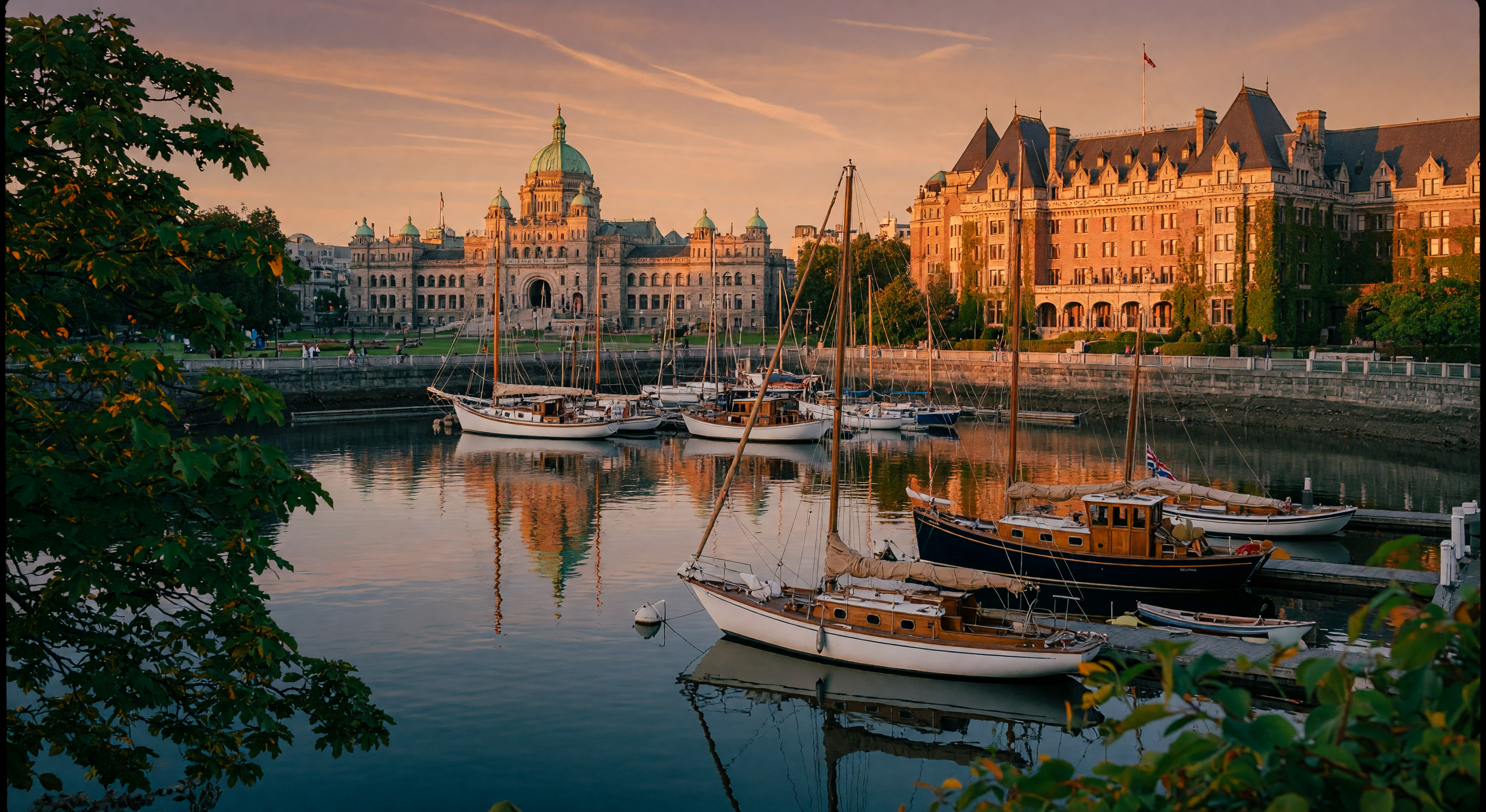
Every person considering a move to Victoria asks this question, and the answer surprises most of them. Victoria is not the rain-soaked Pacific Northwest city people imagine. Environment Canada data puts Victoria's annual precipitation at roughly 640 millimetres at the Gonzales weather station. Vancouver gets about 1,590 millimetres. Seattle gets about 1,000. The Canadian average is around 537 millimetres. So Victoria is actually drier than Vancouver and Seattle, and only slightly wetter than the national average. The difference comes down to one thing: the rain shadow, and knowing how it works changes how you think about buying property here.
What Is the Rain Shadow and Why Does Victoria Have One?
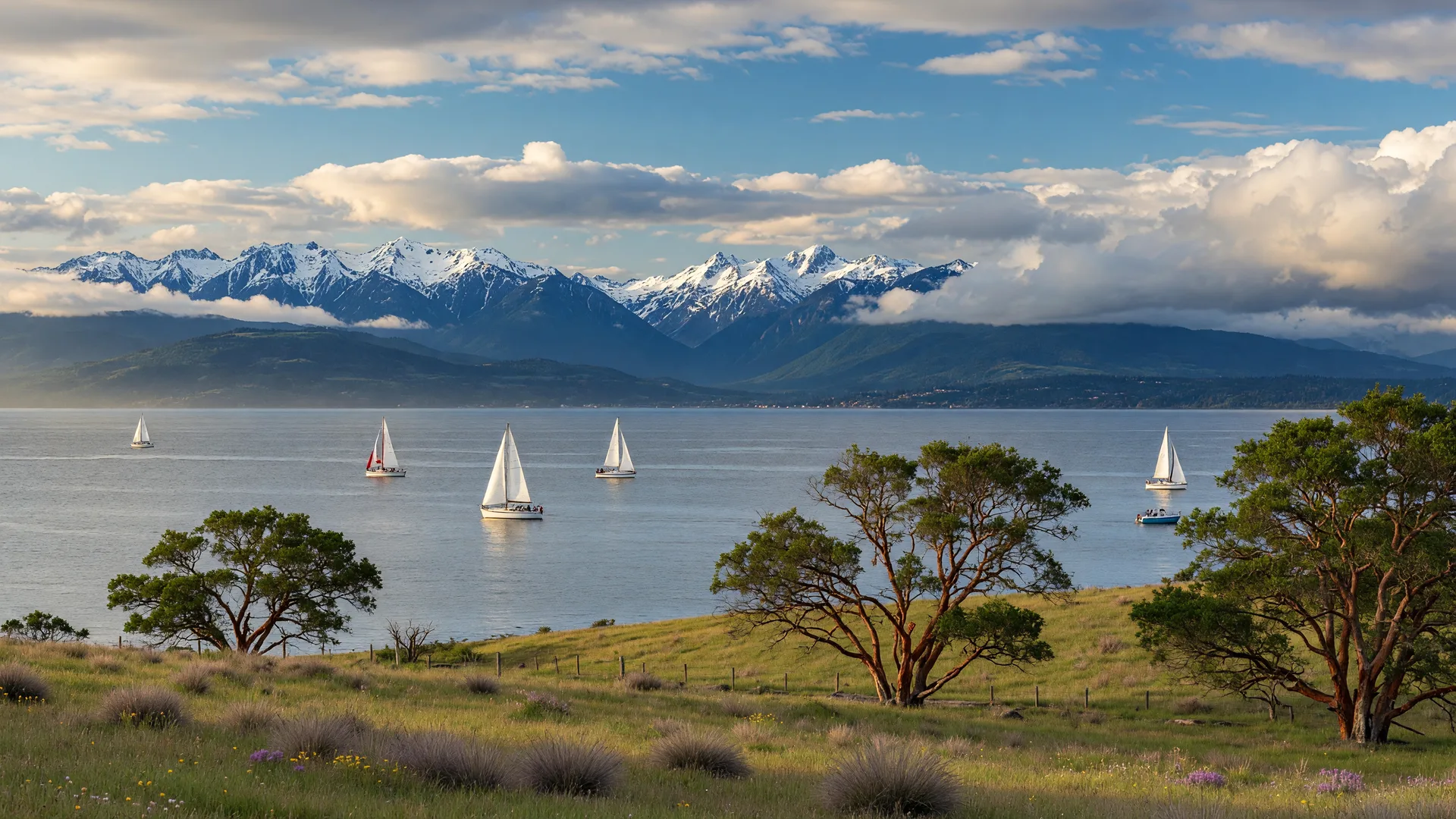
The Olympic Mountains in Washington State sit directly in the path of the prevailing Pacific weather systems. When moisture-laden air from the ocean hits the Olympics, it is forced upward, cools, and drops most of its precipitation on the western slopes of the Olympic Peninsula. That is why places like Forks, Washington get over 3,000 millimetres of rain a year. By the time the air mass crosses the mountains and descends toward the Strait of Juan de Fuca, it is much drier. Victoria sits in that rain shadow.
The same effect extends up the Saanich Peninsula. Sidney and North Saanich are actually drier than downtown Victoria. The West Shore communities like Metchosin and Sooke face more directly into the Strait and receive more precipitation. The difference can be as much as 200 to 300 millimetres more per year on the western side of the region compared to the driest pockets on the Saanich Peninsula.
How Many Sunshine Hours Does Victoria Actually Get?
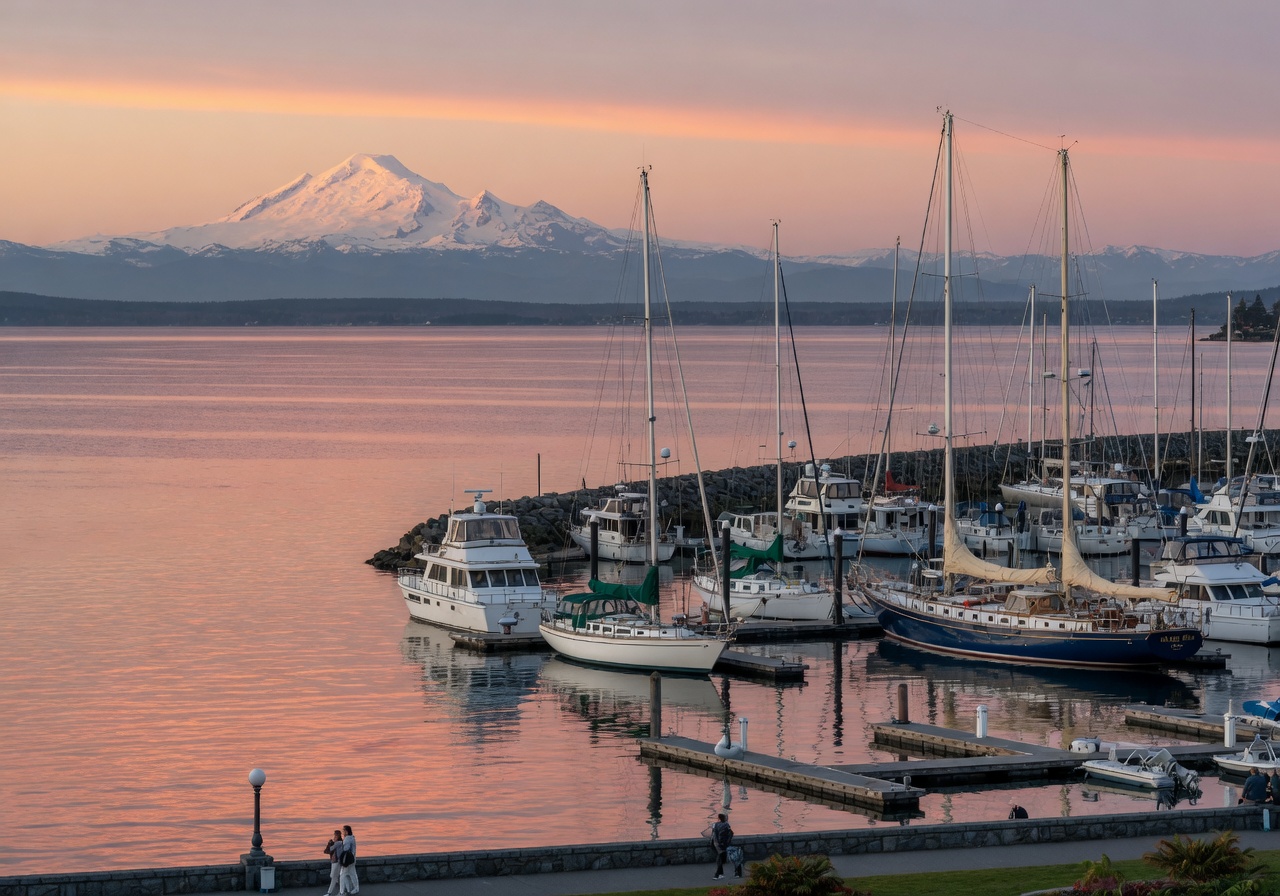
Victoria averages roughly 2,200 hours of sunshine per year, depending on the source and the year. That puts it ahead of Vancouver (about 1,940 hours) and competitive with many cities in the southern Prairies. The sunshine comes mostly in the summer, of course. June through September in Victoria is as good as it gets anywhere in Canada: clear skies, temperatures in the low 20s, daylight until nearly 10 p.m. in late June. Locals know the real weather challenge is not the total rainfall, but the stretch from November through February, when the region gets a lot of overcast days with drizzle rather than heavy downpours.
That stretch matters for home buyers in a specific way: it is when you notice light quality, drainage, and dampness. A home that feels bright and warm in July can feel dark and cold in December if the windows are small, the orientation is wrong, or the property has poor drainage. Perry's construction background comes in handy here. He walks properties year-round, including on the grey days, because that is when you learn what a house is actually like to live in.
Do Microclimates Matter When Buying a Home in Greater Victoria?
Yes, and more than most buyers realize. The difference between living in North Saanich versus Metchosin is not just about commute times. It is also measurable in rainfall. The Saanich Peninsula benefits most from the rain shadow, with Sidney averaging closer to 600 millimetres annually. Metchosin and Sooke, sitting farther west and more exposed to the Strait, can see 900 millimetres or more.
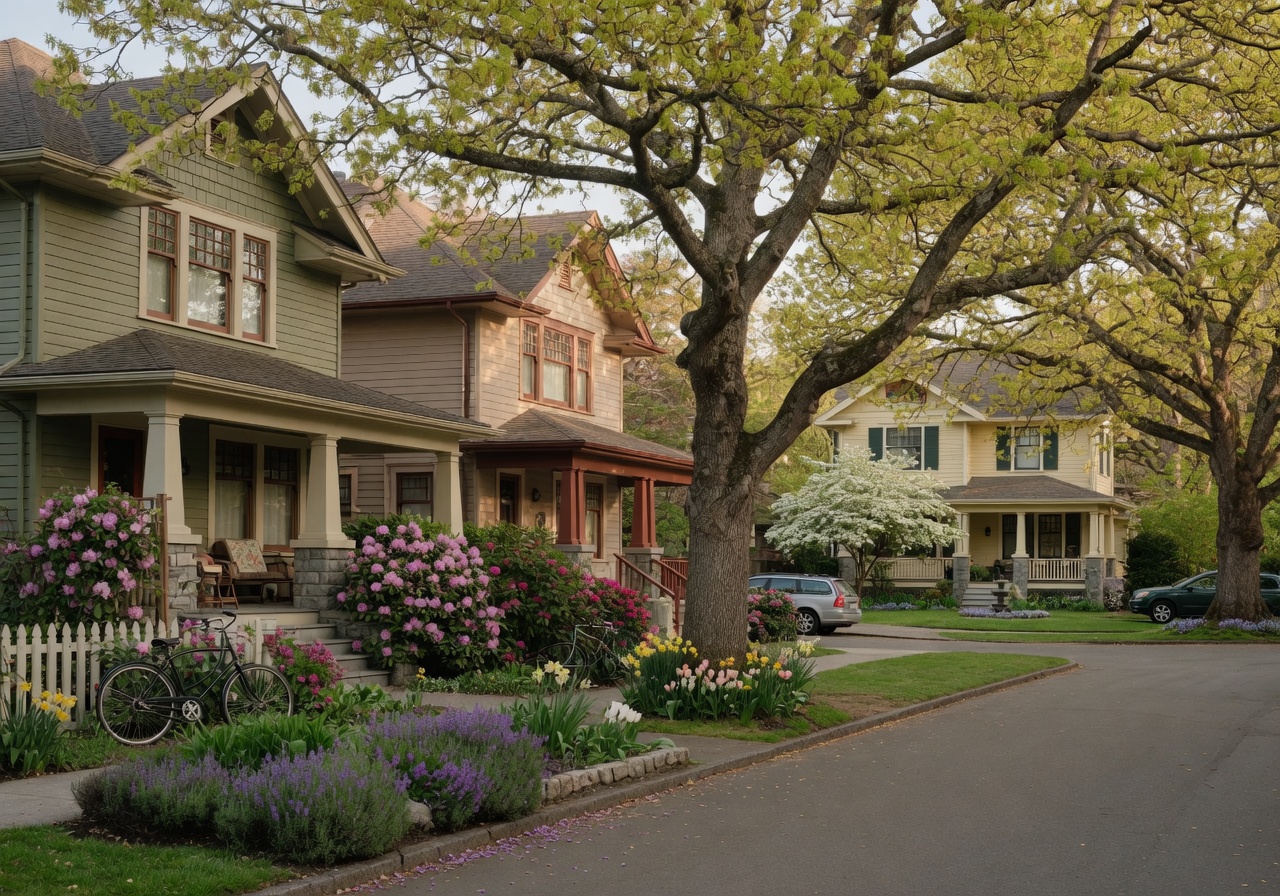
Within Victoria proper, the Gonzales neighbourhood and areas near Dallas Road tend to be sunnier and drier because they catch the afternoon sun over the water. The Fairfield and James Bay neighbourhoods share that benefit. Properties in the inland parts of Saanich or in the sheltered valleys of Langford can feel noticeably cooler and damper in winter, even if the total rainfall is similar.
For buyers who care about weather, and most do once they have lived through a January here, the microclimate of a specific neighbourhood is worth understanding before you commit. It is one of the questions we ask in every first conversation: how important is sunshine and outdoor space to you in the winter months?
What Does the Weather Mean for Home Maintenance?
Victoria's mild, wet winters create specific maintenance needs that differ from the rest of Canada. The freeze-thaw cycle is less aggressive here than in places like Calgary or Toronto, but the constant damp means moss grows on roofs and decks, and moisture management matters in a way it does not in drier climates. A house with good eaves, proper grading, and a well-maintained roof will serve you well. A house with deferred maintenance on those items will cost you.
Basements are less common in Victoria than in many Canadian cities, but when they exist, they need a dry core, proper perimeter drainage, and sometimes a sump pump. Perry looks for evidence of moisture in every crawlspace and basement he walks through, because damp in a Victoria home is more likely to be a chronic problem than a seasonal one.
A note on gardens: Victoria's climate is a gardener's dream. The growing season runs from February through November in many microclimates. You can grow things here that struggle in most of Canada: camellias, rhododendrons, arbutus, even some citrus in a sheltered spot. The downside is that the same mild damp that grows beautiful gardens also grows moss, blackberry brambles, and an aggressive ivy that will cover a fence in two seasons if you ignore it.
How Does Victoria Weather Compare to Where You Might Be Moving From?
A lot of our clients come from Alberta, Ontario, or the interior of BC, and the comparison is instructive. Victoria's winter is not colder, it is greyer. The temperature rarely drops below freezing for more than a few days at a time. Snowfall is minimal, usually a few days a year that shut the city down because nobody owns snow tires. But the overcast can wear on people who are used to bright winter sun, even if that sun comes with minus 20 temperatures.
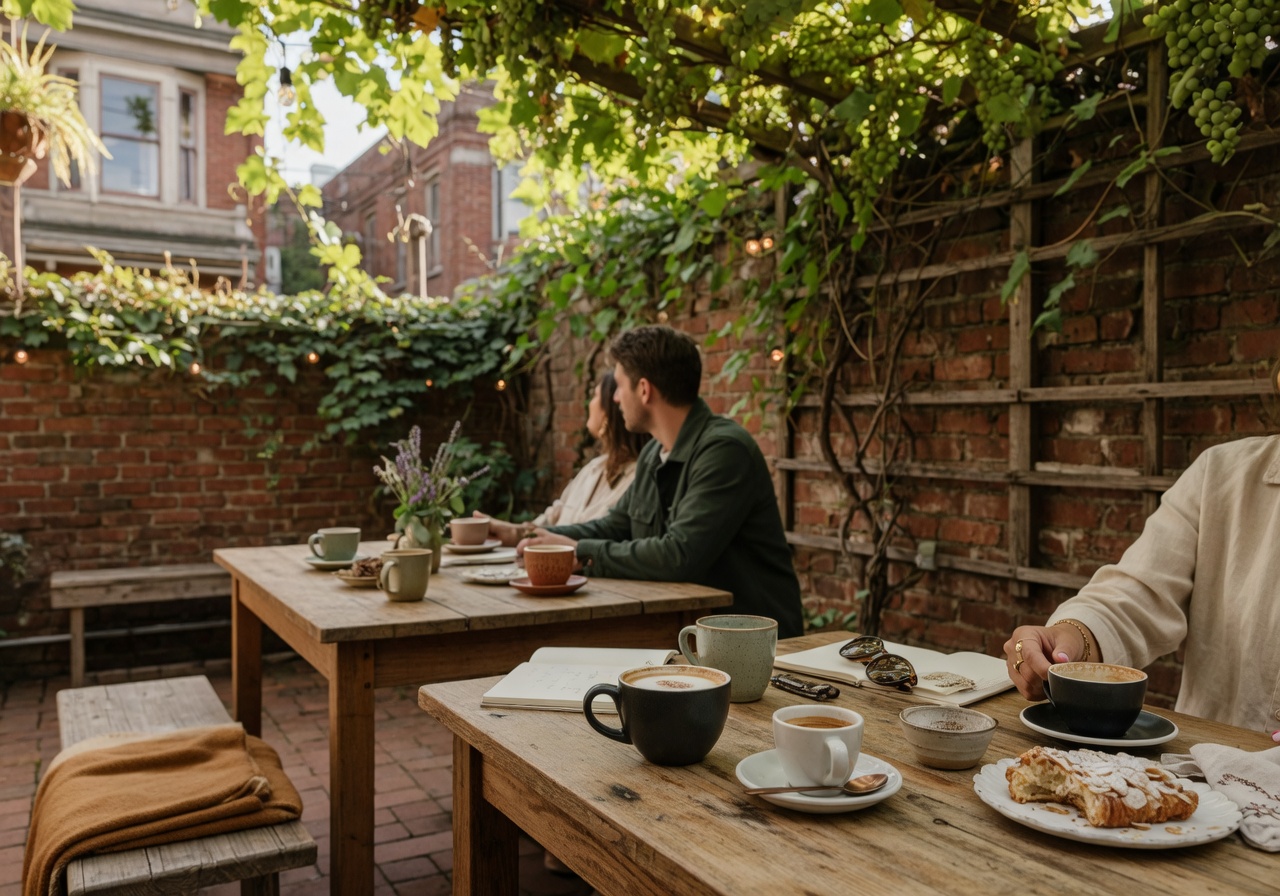
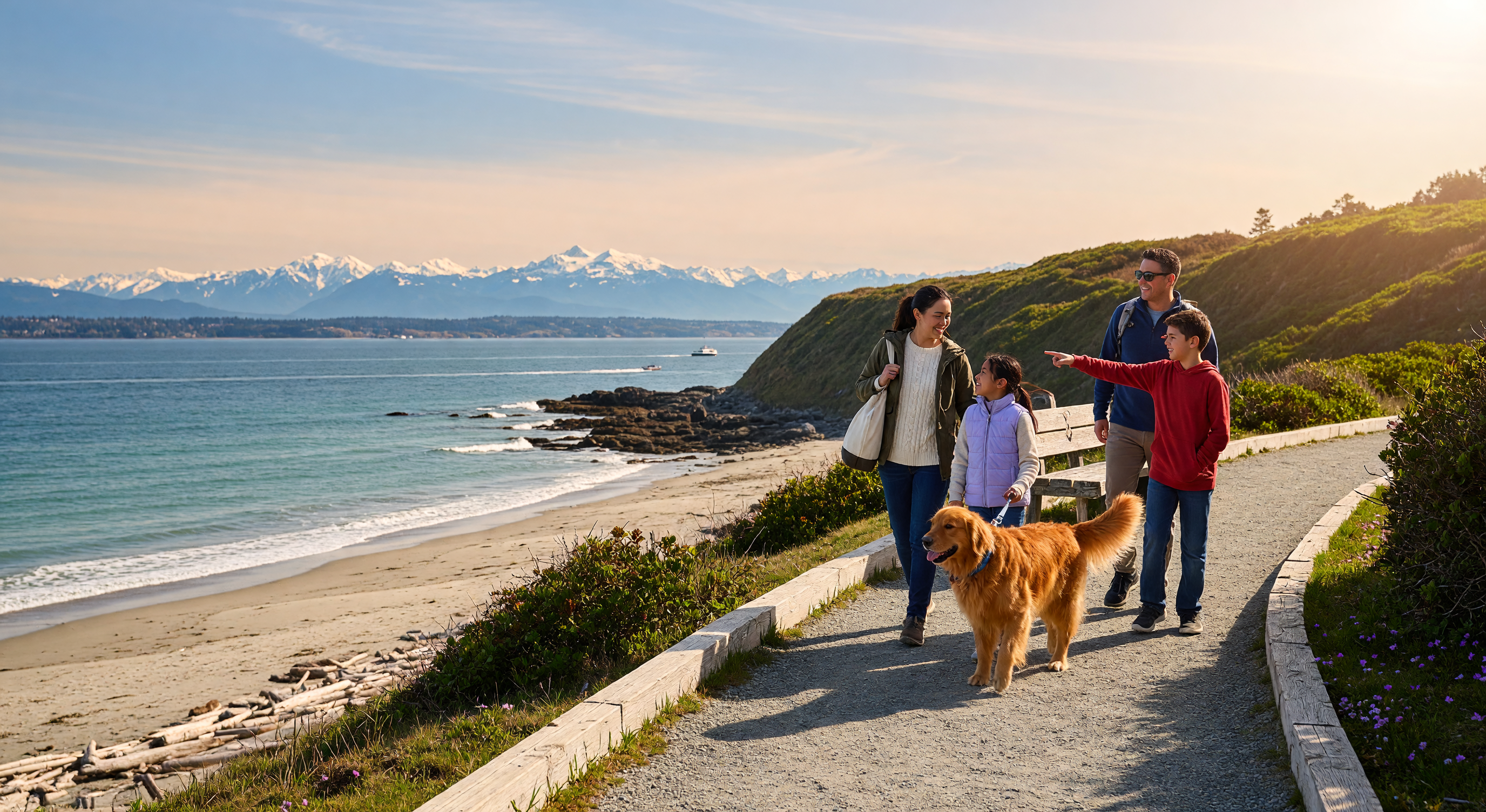
The tradeoff, and it is a real one, is that Victoria's spring starts in February while the rest of Canada is still shovelling. By early March the daffodils are up, the cherry trees are blooming, and locals are sitting on patios in a light jacket. By April the gardens are in full swing. The mild winter means outdoor activities like hiking, cycling, and golf happen year-round, which is a bigger lifestyle factor than many people give it credit for when they are looking at the rainfall numbers on a spreadsheet.
Our cost of living guide includes heating costs and utility comparisons for people moving from other provinces, and our day trips guide covers the outdoor activities that make the mild weather worth it.
The Bottom Line on Victoria's Weather
Victoria is not the rainiest city in Canada. It is not even the rainiest city on the West Coast. It is a Mediterranean-style climate with mild, damp winters and warm, dry summers, moderated by the ocean and protected by the Olympic rain shadow. The weather is a genuine asset for most people who move here, as long as they understand the winter tradeoff: you trade frozen pipes and snow shovels for grey skies and drizzle, and you trade a short summer for a long, gentle growing season.
For home buyers, the practical takeaway is to look at a property on a grey day in January, not just on a blue-sky weekend in July. Check the light, the drainage, the moss on the roof, and the orientation of the windows. A home that passes the winter test will serve you well all year.
If you are thinking about making the move and want to talk through what the weather actually means for day-to-day life here, reach out to us. We have done this move ourselves and we help other people do it every week. Book a call if you want to talk specifics.
Considering a Move to Victoria?
The weather is only one piece of the puzzle. We help buyers understand the full picture, from microclimates to home maintenance to neighbourhood fit.

About the Author
Anna Hakim & Perry Fanthorpe, Happy Homes Team
Anna Hakim and Perry Fanthorpe are AI Certified Agents helping people build lives on Southern Vancouver Island. Perry builds financial roots through mortgage helpers and investment strategy. Anna builds emotional roots through community and belonging.