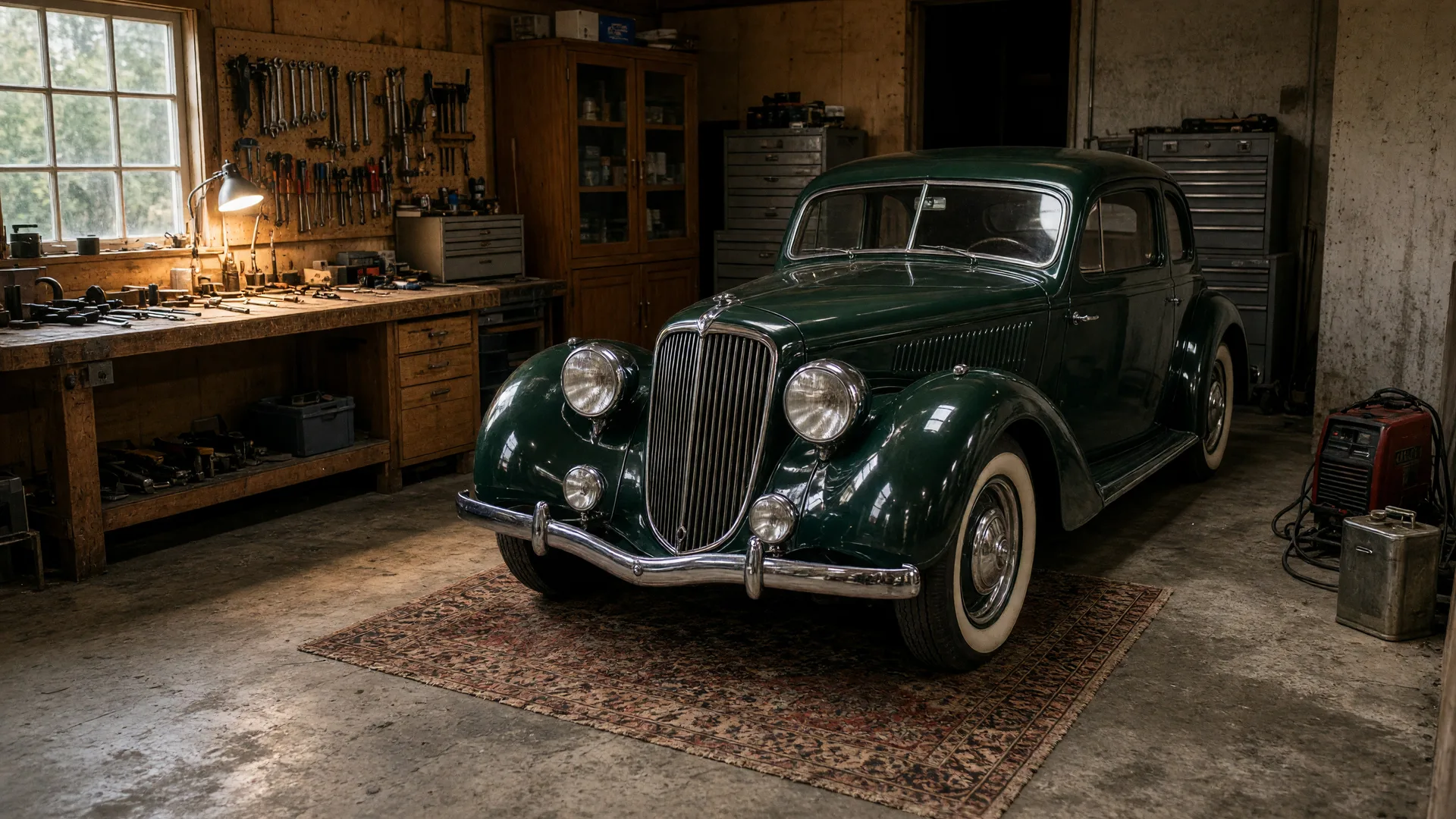
Honest answer: no, a classic car is not a reliable investment, and anyone who tells you otherwise is usually selling something. Some cars genuinely appreciate, but most just sit, and on Vancouver Island the costs of ownership, storage, insurance, maintenance, and rust eat appreciation faster than you expect. Buy the car you will actually drive and enjoy, and treat any money you get back as a bonus, not a plan.
Do classic cars actually appreciate?
Some do, most do not, and the ones that did were usually special when new: limited production, race provenance, a famous owner, or a combination of the three. A mass-produced car from the 1970s is not going to fund your retirement, no matter how many shows you win. Condition and originality matter more than age, and a full restoration rarely pays for itself dollar for dollar.
Enjoy the car first. If it happens to go up in value, great, but if you need the money to grow, a diversified portfolio is a better bet than a project car. I say that as someone who loves project cars.
What do collector plates actually give you in BC?
ICBC runs the collector vehicle program, and the rules are specific. Your car generally has to be 25 years old or older, kept in collectable condition, and used for pleasure only. That means you cannot drive it to or from work or school, and you cannot use it for business. You also need a separate daily driver registered in BC. In exchange, the insurance premium drops significantly.
I covered the whole program in detail in our collector plates guide, because the usage rules catch people out. If you buy a classic and run collector plates without a daily driver, you are breaking the terms, and ICBC can void the status.
How does insurance actually work for classics?
Standard auto insurance pays actual cash value, which is the depreciated market value at the time of a loss. That is a terrible deal for a car you have spent years restoring. Proper classic car insurance uses agreed value: you and the insurer agree on the car's worth up front, and that is what you get paid on a total loss, minus your deductible. Getting there usually requires a professional appraisal.
Specialty insurers write these policies, and because the cars are driven so little, the premiums are often lower than a daily driver. Talk to a broker who handles collector cars, and do not assume your regular auto policy covers the car properly.
What does it cost to keep a classic on Vancouver Island?
This is where the Island gets you. Rust is the enemy, and coastal salt air is the reason our cars rust faster than cars in the Interior, which we wrote about separately in our rust guide. If the car lives outside, you are fighting a losing battle. If it lives in an unheated garage, it is still a battle, just a slower one. Winter storage is a whole season of its own: fuel stabilizer, battery maintainer, and usually a conversation about humidity.
Maintenance is the other silent cost. Old cars need work, parts for rare ones cost real money, and if you cannot do the work yourself, labour adds up fast. Add it all up over ten years, storage, insurance, maintenance, and the occasional repair, and you can spend a lot of money to own a car that gains very little.
Why the garage matters more than the car
Here is the part that connects to what we actually do. The single biggest factor in owning a classic on Vancouver Island is not the car, it is where you keep it. A heated, dry garage or a proper workshop changes the calculus completely, and in core Victoria, garages and shop space are genuinely scarce. Homes with a real workshop are rare, and buyers pay for them.
So the smart version of this hobby is often a real estate decision first. If you are serious about old cars, look for a property with a garage you can work in, not just park in. We have helped car people find homes with workshops, and the right shop space is worth more than the right car. For more on that hunt, see our guide to home garages and workshops for car enthusiasts.
The Bottom Line
Bottom line: buy a classic car because you love it, not because you expect to make money. Keep it properly, insure it at agreed value, and put collector plates on it only if you follow the usage rules. And if you are serious about this hobby on the Island, make the garage part of the house hunt, because that is where the real value is.
If you want to find a home with a workshop, a heated garage, or a big enough lot to build one, we know the West Shore and the Peninsula block by block. We would love to help you find the garage before you buy the car.

About the Author
Anna Hakim & Perry Fanthorpe, Happy Homes Team
Anna Hakim and Perry Fanthorpe are AI Certified Agents helping people build lives on Southern Vancouver Island. Perry builds financial roots through mortgage helpers and investment strategy. Anna builds emotional roots through community and belonging.