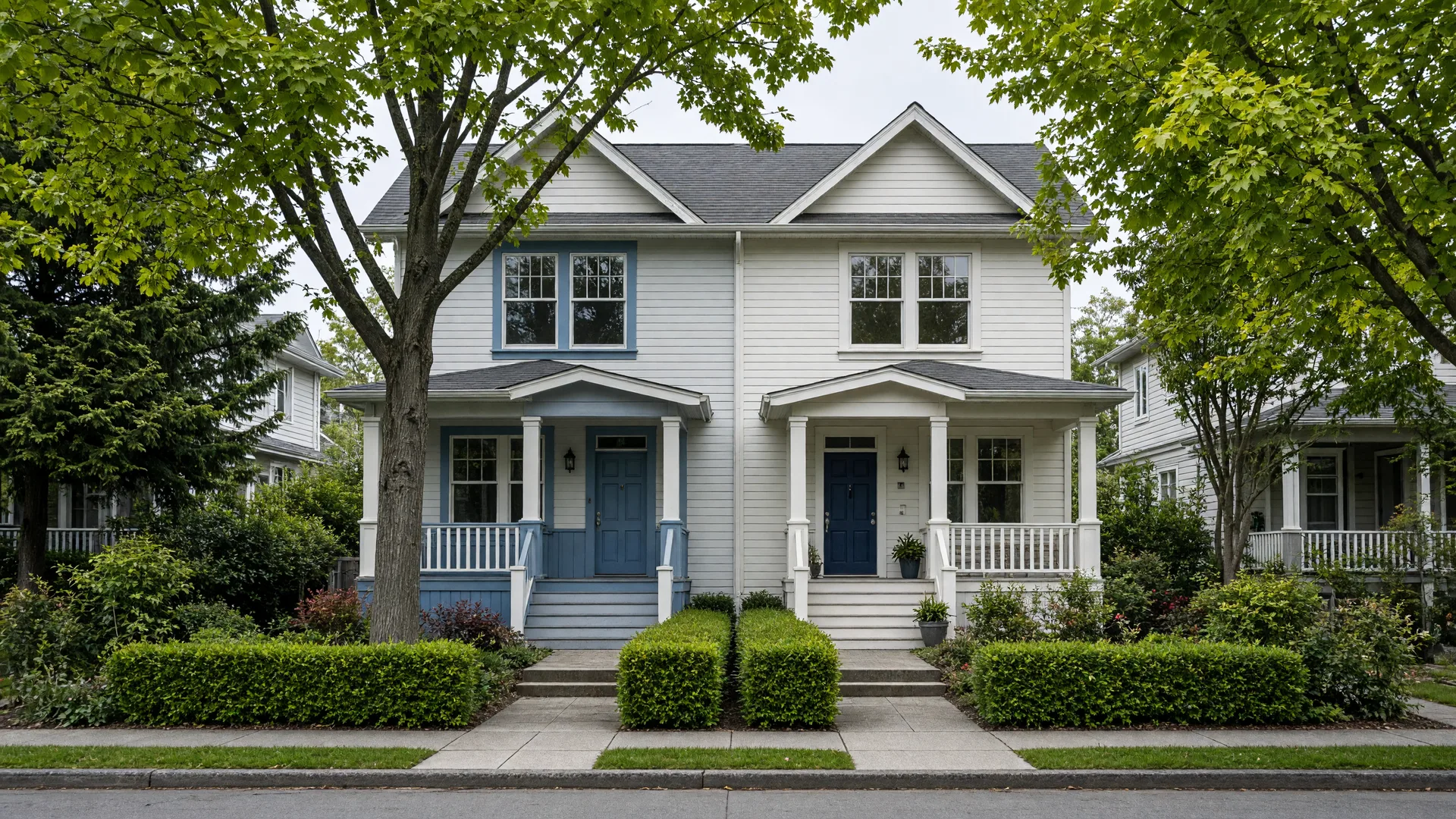
A duplex and a secondary suite both put two homes on one lot, but they work completely differently, and the difference decides what you can do with the property. A secondary suite is an apartment tucked inside your single-family house, one legal title, no separate sale. A duplex is a building with two full, roughly equal dwelling units that can each be bought and sold on their own, and it needs zoning that actually permits two-family dwellings. In Victoria, a suite is an accessory use allowed in most single-family zones, while a duplex belongs to a different zoning category entirely.
What exactly counts as a secondary suite in Victoria?
A secondary suite is a self-contained dwelling inside a single-family home, the classic basement or garden-level suite with its own entrance, kitchen, and bathroom. Under the BC Building Code it has real limits: the suite must be no more than 90 square metres and under 40 percent of the building's habitable floor area, and it has to sit in a building with no more than one other dwelling unit. It also has to meet fire separation, egress, and smoke alarm requirements, which is why legal suites are inspected.
The key legal point is that a secondary suite stays part of one real estate entity. You cannot stratify it and sell it off separately, and the whole house sells as one property with an income suite in it. That is exactly why it works as a mortgage helper: the rental income rides along with a single-family home.
What counts as a duplex, and why does zoning matter so much?
A duplex is a building divided into two full principal dwelling units, usually side by side or stacked, with each unit standing on its own as a proper home rather than as an accessory to the other. Under the same building code rules as any two-unit building, each side can be separately stratified and sold, subject to municipal approval. That separate-title potential is the big difference from a suite: a duplex can become two individually owned properties.
That is also why the zoning bar is higher. In the City of Victoria's single-family zones, the R1-A, R1-B, and R1-G districts, a duplex is not an as-of-right use. Duplexes belong to the R-2 Two Family Dwelling District and the multi-family zones. So if you want to build a duplex, the first question is not design, it is whether your lot's zoning allows two-family dwellings at all. That is a check with the City of Victoria's planning department, and nothing in this article replaces it.
What about garden suites and the new Missing Middle rules?
Between the suite and the duplex sits the garden suite, a detached suite in the rear yard. In Victoria's single-family zones it is an accessory use, like a secondary suite, and the same rule applies: you can have one suite or one garden suite on a lot, not both. We have a separate guide that breaks down all three suite types if you want the size and setback specifics.
The zoning picture has also shifted with Victoria's Missing Middle Housing Initiative, adopted in 2023. On eligible lots with a Traditional Residential designation, the city now allows houseplexes of up to six dwelling units without a rezoning or public hearing, and corner townhouses of up to a dozen units. The exact rules depend on your lot, its zone, and its designation, and the province's small-scale multi-unit housing rules push in the same direction across BC. What this means in practice: the old binary of "suite or nothing" is gone for many lots, but the specifics are very lot-dependent, so verify with the city before you plan around any of it.
Which one works better as a mortgage helper?
For most buyers, the secondary suite is the easier mortgage helper. You buy or build a single-family home with a legal suite, rent out the lower level, and the rental income can count toward your mortgage qualification, typically a percentage of the market rent that lenders will apply. The rules on how much income counts and whether the suite must be legal vary by lender and by the federal rules in place, so run the actual numbers with a mortgage broker, not a blog post.
A duplex is a different animal. It is a bigger build and a bigger price, and the income math works differently because you can rent both units, or live in one and rent the other. If you want the option of selling one side later, that is a strata conversion, which is a separate approval process with its own costs and rules. And lenders underwrite an owner-occupied duplex differently than a house with a suite, so the qualification picture is not the same. Neither is automatically better, they just answer different questions.
How do you actually decide?
Start with the lot, not the dream. Check what your property's zoning permits, whether a suite is as-of-right, whether a garden suite fits the yard, and whether the Missing Middle rules open a bigger option. Then check the money: what a legal suite costs to build versus a duplex, what each rents for in your area, and what your lender will count. We see people get this wrong in both directions, building for a duplex on a lot that will never be zoned for one, or missing that their lot already allows a bigger play than a single suite.
The honest shortcut is to talk to someone who runs these numbers every week. That is our whole job, and we have walked people through both paths on the same street. If you tell us the lot and the goal, we can usually tell you which way the zoning and the market math point before you spend a dollar on plans.
The Bottom Line
Bottom line: a secondary suite is an income apartment inside a single-family home, capped in size, sold with the house, and allowed in most single-family zones. A duplex is two full homes that can each be owned and sold separately, and it needs two-family zoning. If you are thinking about either one as a mortgage helper, start with the zoning check, then the lender conversation, and verify every number with the city and a professional before you build.
Talk to the Happy Homes Team About Your Suite or Duplex Plans

About the Author
Anna Hakim & Perry Fanthorpe, Happy Homes Team
Anna Hakim and Perry Fanthorpe are AI Certified Agents helping people build lives on Southern Vancouver Island. Perry builds financial roots through mortgage helpers and investment strategy. Anna builds emotional roots through community and belonging.