
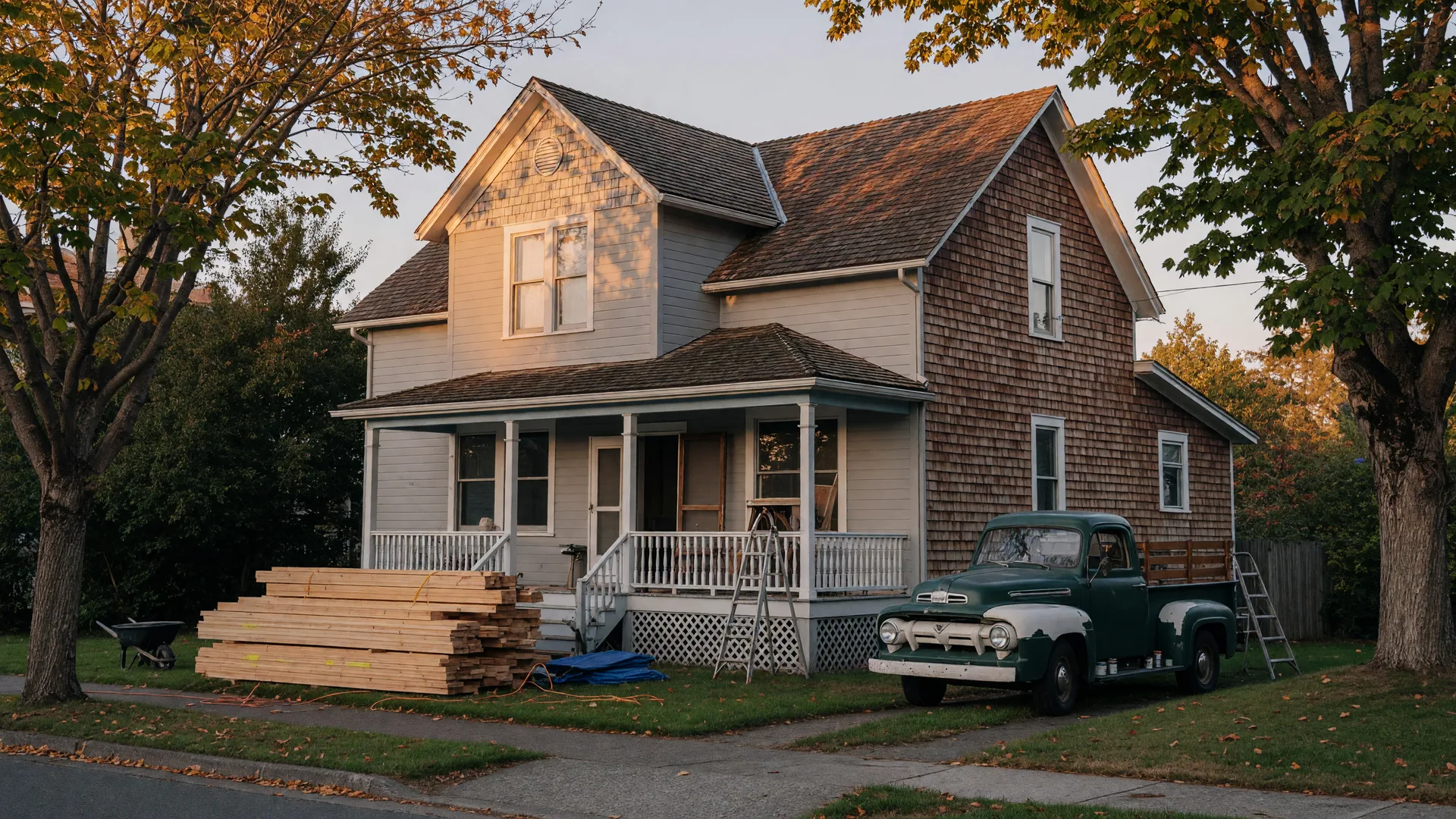
Yes, a fixer-upper can be worth it in Victoria, but only when you buy the problems you can see and budget for the ones you can't. The deals that actually work are the worst house on a good street, bought at a price that leaves room for the work. The ones that break people are the houses with buried surprises, and in Victoria those surprises are often literally buried in the ground.
Where Do the Real Fixer-Upper Deals Show Up?
Victoria's housing stock is old, and that's exactly where the fixer-upper inventory lives. The character homes in Fernwood, Vic West, Esquimalt, Burnside, and the older pockets of Saanich were mostly built between the 1910s and the 1960s, and plenty of them have never had a serious update. That's where the gap between the asking price and what the house could be worth is widest.
Locals know the good ones last about a weekend. If a fixer-upper sits for more than two weeks in this market, ask why, because the answer is usually a buried tank, a wet basement, or a price that was never realistic. The rule that keeps working is the same one it's always been: buy the worst house on the best street you can afford, not the best house on a street you're hoping gets better.
What Hidden Costs Should You Sweat Before You Offer?
Two things separate a smart fixer-upper buy from a money pit in Victoria: the wiring and the tank. Homes built before roughly 1950 very often still have knob-and-tube wiring, which is ungrounded and frequently sits behind a 60-amp panel. It isn't automatically dangerous if it's undisturbed, but insurers routinely require replacement before they'll write a policy, and that is a real line item. Have an electrician confirm what's actually in the walls before you commit.
The other one is the buried oil tank. Most homes built before the 1960s were oil-heated, and an abandoned tank can sit underground for decades without anyone knowing. A tank discovered after closing can kill financing and haunt the seller for years: a Victoria-area couple was ordered to pay more than $50,000 long after selling when a tank was found on the property. Removal typically runs a few thousand dollars, and contaminated soil can push that far higher. Get a tank sweep as a condition of your offer, and get it in writing.
Past those two, the usual suspects apply: cast iron drains that are near the end of their life, foundations that have settled, and roofs that were patched instead of replaced. None of these are deal-breakers on their own. The mistake is treating any of them as a surprise instead of a budget line.
How Do Permits Work When You Renovate?
The City of Victoria runs its permitting through the Building & Renovating portal and the Permit Finder, and the general rule is that structural changes, relocated plumbing, and altered electrical wiring need permits, while like-for-like replacements may not. The BC Building Code 2024 is currently in effect, and each municipality in Greater Victoria runs its own rules: Saanich, Oak Bay, and Langford all have their own processes and fees.
This matters more than people expect, because unpermitted work surfaces at resale, at insurance time, and when you try to get a suite legalized. Confirm the rules with the city the property actually sits in before you commit to a timeline, and budget permit fees into the plan from day one. A contractor who tells you to skip the permit is telling you something about how the rest of the job will go.
Are There Any Tax Breaks for Renovating?
This is the part people get wrong. There is no general renovation tax credit for a principal residence in BC, and ordinary fixer-upper work is not deductible. The help that does exist is targeted: BC's Home Renovation Tax Credit for seniors and persons with disabilities is refundable at 10% of up to $10,000 in eligible accessibility and home-safety expenses, for a maximum of $1,000 a year, and the federal Home Accessibility Tax Credit is worth up to roughly $3,000 for similar work.
For energy upgrades, CleanBC Better Homes rebates cover heat pumps, insulation, and windows, which is worth checking before you redo that old electrical anyway. Eligibility and amounts change, so verify the current rules with a tax professional before you count on any of it.
How Do You Budget a Renovation Without Guessing?
As a rough BC benchmark, cosmetic refreshes run about $75 to $150 per square foot, gut-and-update work runs higher, and full structural renovations can reach $500 per square foot and up. Treat those as ballpark, not budget. Get three quotes from contractors who actually do this work in Victoria, add a contingency of at least 10% to 15%, and expect the contingency to get used.
Locals stretch budgets at the Habitat for Humanity ReStore for fixtures, doors, and materials, and there's a healthy market for salvaged character pieces from older homes. The point isn't to cheap out, it's to spend on the things you can't see later: wiring, plumbing, foundation, and the roof. Those are the upgrades that show up in an appraisal.
Can a Fixer-Upper Become a Mortgage Helper?
This is the play that makes the fixer-upper math work for a lot of buyers in Victoria. Buy an older home with suite potential, renovate it with a legal secondary suite in mind, and the rental income becomes a mortgage helper that changes what you can afford. We've written the full breakdown in our secondary suite and ADU guide, and the cost side in our suite cost guide.
The zoning and building rules differ by municipality, and lenders have their own rules for how suite income counts toward your mortgage, so verify both with the city and with a mortgage professional before you count the rent. Done right, a fixer-upper with a legal suite can carry itself. Done wrong, it's a second job.
The Bottom Line on Fixer-Uppers in Victoria
A fixer-upper suits buyers with cash reserves, patience, and a genuine tolerance for dust. It does not suit buyers stretching to their last dollar, because renovations always cost more and take longer than the spreadsheet says. If you can buy the problems you've priced and leave room for the ones you haven't, the worst house on a good street can be the best financial decision you make in this market.
If you're weighing a fixer-upper against a move-in-ready home, we can walk you through the real numbers, including what a suite could add. Start with our neighbourhood guides to find the right street, then reach out and we'll help you sort the potential from the pitfalls.

About the Author
Anna Hakim & Perry Fanthorpe, Happy Homes Team
Anna Hakim and Perry Fanthorpe are AI Certified Agents helping people build lives on Southern Vancouver Island. Perry builds financial roots through mortgage helpers and investment strategy. Anna builds emotional roots through community and belonging.