
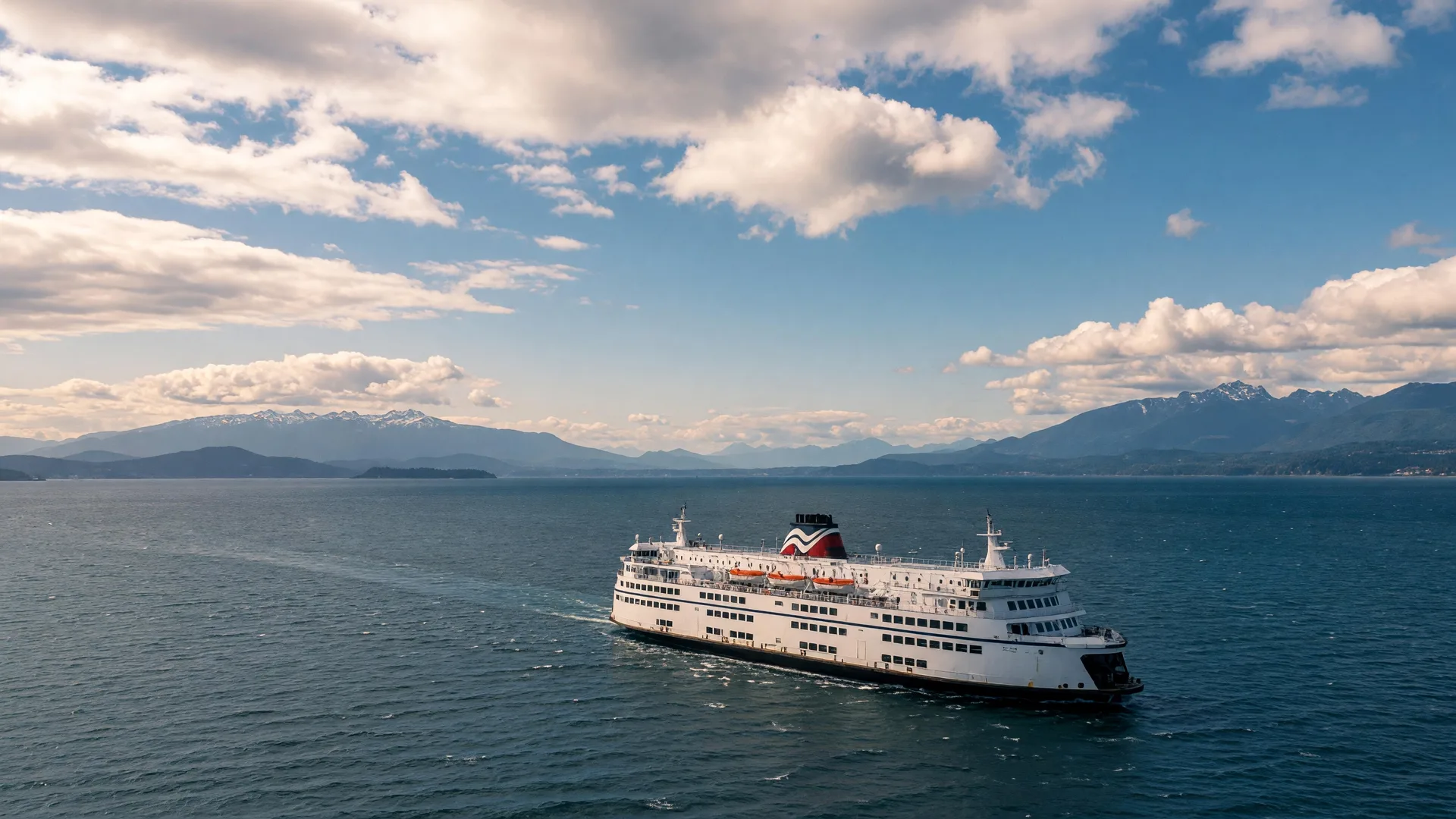
Moving to Victoria from Vancouver takes just a short ferry ride but feels like a world away. Victoria offers lower housing costs, less traffic, mild year-round weather, and a slower pace of life – making it one of the top relocation destinations in BC. Most Vancouver transplants say they wish they'd made the move sooner. For a step-by-step run-through of timelines, budgets, MSP deadlines, and logistics, see our complete relocation guide.
Every year, hundreds of people pack up their Vancouver lives and make the short but life-changing crossing to Victoria. Some are chasing affordability. Some are chasing a slower pace. Many are chasing both. If you're one of the people who keeps Googling "moving to Victoria from Vancouver," this guide is for you – the honest version, written by a team who knows both cities and has helped hundreds of families make this exact transition.
Why So Many Vancouverites Are Heading to the Island
The trend has been building for years, but post-pandemic it turned into a flood. Three forces are pushing people across the water:
Housing affordability. Let's start with the obvious. Greater Vancouver's average home price hovers around $1.25 million, with detached homes regularly topping $1.9 million. Victoria's benchmark for a single-family home in the core sits around $1.34 million – and in the growing West Shore communities like Langford, benchmarks drop closer to $890,000. For a Vancouver condo seller, that equity gap can mean a detached home with a mortgage helper on the island. For a Vancouver renter, it can mean actually getting into the market.
Remote work flexibility. The pandemic proved that many knowledge workers don't need to be in a Vancouver office five days a week. If you can work from home three or four days, the calculus changes completely. Victoria suddenly becomes a viable option – and a far more pleasant place to spend those work-from-home hours.
Lifestyle pull. Vancouver is a world-class city, and nobody denies that. But Victoria offers a version of West Coast living that many people describe as "Vancouver without the stress." Smaller, calmer, more walkable in its core neighbourhoods, and with dramatically milder winters – Victoria sits in the Olympic rain shadow and gets roughly half the precipitation of Vancouver. The lifestyle argument is what usually seals the deal.
The Cost of Living: Victoria vs. Vancouver
Housing is the headline number, but the full financial picture is more nuanced. Here's what you need to budget for:
Housing: This is where Victoria wins decisively. If you're buying a starter condo or a family home, you'll get meaningfully more for your money. A one-bedroom in Vancouver's east side might run $650,000–$750,000; in Victoria, comparable units in James Bay or Fernwood can be found closer to $450,000–$550,000. Detached homes follow the same pattern – savings of $300,000 to $600,000 are common when comparing equivalent neighbourhoods.
Groceries and everyday goods: Expect to pay slightly more on the island. Everything arrives by ferry or barge, and that logistics cost filters down. Grocery prices are roughly 5–10% higher than in Metro Vancouver. Gas prices tend to run a few cents higher as well, though Victoria's smaller footprint means you'll drive less overall.
Property transfer tax: If you're buying in BC for the first time or transferring from a Vancouver property, budget for the provincial property transfer tax – 1% on the first $200,000, 2% on the portion up to $2 million, and 3% above that. On a $900,000 home, you're looking at roughly $17,000 in PTT. First-time buyers may qualify for an exemption on homes up to a certain threshold.
Our complete cost of living guide breaks down housing, utilities, transit, and day-to-day expenses in detail. For a broader city-to-city comparison, see our Victoria vs. Calgary vs. Toronto breakdown.
Where to Land: Neighbourhood Picks for Vancouver Transplants
Every Vancouverite has a different reason for making the move, and Victoria's neighbourhoods cater to all of them. Here are four that consistently resonate with people coming from the city:
Langford – For Young Families Who Want Space
If you're a young family priced out of East Van or trying to trade a townhouse for a detached home, Langford is where to look first. It's the West Shore's fastest-growing community, with newer builds, bigger lots, and benchmark prices around $890,000. Goldstream Park is at your doorstep, the Galloping Goose trail runs right through town, and a growing number of restaurants and breweries are giving it a scene of its own. The trade-off is a 25–35 minute commute to downtown Victoria, but for families who grew up driving across Vancouver for everything, that commute barely registers.
James Bay – For Walkability Lovers
Coming from Kitsilano, Main Street, or Commercial Drive? James Bay is Victoria's most walkable neighbourhood and the closest thing to a Vancouver-feeling enclave on the island. You're steps from the Inner Harbour, the Royal BC Museum, Beacon Hill Park, and a string of cafés and restaurants along Dallas Road. It's genuinely possible to live here without a car – something that's nearly impossible in most of Greater Victoria. Our James Bay walkability guide breaks down what car-free life actually looks like here.
Oak Bay – For the Established, Village-Feel Crowd
If your ideal Saturday involves a farmers' market, a walk along the ocean bluffs, and coffee at a neighbourhood café where the barista knows your name – Oak Bay delivers that in a way that's hard to find anywhere else on the island. Think heritage character homes, tree-lined streets, Willows Beach, and a village commercial strip that feels like it was designed by someone who actually lives here. Oak Bay commands a premium – detached homes commonly list above $1.5 million – but for buyers selling Vancouver real estate, it's often within reach.
Saanich – For Space and Nature Access
Saanich is Greater Victoria's largest municipality and the one that offers the widest range of housing options – from waterfront properties on Cordova Bay to family-friendly subdivisions near Elk and Beaver Lake. If you want a bigger lot, proximity to trails and parks, and good schools without paying Oak Bay prices, Saanich should be on your shortlist. It's also home to UVic and the Royal Jubilee Hospital, which matters for families and retirees alike.
For a deeper neighbourhood comparison, see our Saanich vs. Langford vs. Oak Bay breakdown. And if you're narrowing things down, our honest pros and cons of Victoria covers what nobody puts in the brochure.
Getting Here: Ferry, Flight, and the Commute Reality
The biggest psychological barrier for most Vancouverites isn't the housing – it's the water. Let's talk about what the crossing actually looks like in daily life.
BC Ferries (Tsawwassen to Swartz Bay): The standard route takes about 1 hour 35 minutes of sailing time, plus drive and waiting time on each end. A car-and-driver crossing costs $100–$120 one way. Reservations are strongly recommended, especially on summer weekends and holidays when waits can stretch for hours without one. Many Victoria residents make the crossing to Vancouver once or twice a month for shopping, family, or events – it becomes a manageable routine, not a barrier.
Harbour Air floatplanes: The 35-minute flight between downtown Vancouver and Victoria's Inner Harbour is a game-changer for commuters. Fares run $150–$250 one way, so it's a premium option, but if you're commuting to Vancouver two or three days a week for work, many people find it's worth every penny. The convenience of landing in the heart of both cities changes the equation entirely.
West Coast Express / bus options: There's no direct passenger rail, but the BC Transit and coach connections are improving. For most people, the practical reality is that the ferry or floatplane covers 90% of mainland access needs.
The key thing to understand: the water is a filter, not a wall. It keeps Victoria's character intact and property values healthy, and most residents tell us they adjusted to the crossing routine faster than they expected.
Adjusting to "Island Time"
Here's something nobody warns you about: the pace of life in Victoria will feel different at first. Coming from Vancouver's energy and density, the slower rhythm can feel like a downgrade. Shops close earlier. Restaurants have smaller menus. Traffic moves at a different speed. The nightlife is quieter.
And then, somewhere around month three, most people realize it's not slower – it's just saner. The rush that defined daily life in Vancouver often wasn't urgency; it was habit. Victoria operates on a rhythm that prioritizes connection over efficiency, and once you stop fighting it, the adjustment becomes one of the best parts of the move.
Our honest pros and cons guide covers more of this cultural shift – the good and the challenging.
The Job Market: What to Know
Let's be straightforward: Victoria's job market is smaller than Vancouver's. It's a government town at its core – the provincial capital means provincial government jobs are the largest employer. Healthcare, education, tech, tourism, and construction round out the major sectors. If you work in tech, Victoria has a growing scene but fewer options than Vancouver's ecosystem. If you work in government, healthcare, or remote, the transition is seamless.
The remote work revolution has been the biggest game-changer. If you can work from home even part-time, Victoria offers an extraordinary quality of life for remote professionals. You get a small-city cost of living with proximity to ocean, mountains, and trails – something Vancouver promises but doesn't always deliver at accessible price points.
The Emotional Side of Leaving Vancouver
This is the part that rarely makes it into relocation guides, and it's the part that matters most.
Leaving Vancouver means leaving your people. Your favourite restaurant. The coffee shop where the barista knows your order. Your running route along the Seawall. The convenience of having everything – shopping, nightlife, airports, hospitals – within arm's reach. It's okay to grieve that. Most people do.
But here's what we've seen happen time and time again: within six months, most transplants have built a new social circle that feels deeper and more intentional than what they left behind. Victoria's smaller size forces a different kind of community – you bump into neighbours at the farmers' market, you join a hiking group, you end up at the same coffee shop three mornings in a row and suddenly you know everyone's name. It's the kind of organic social fabric that's hard to find in a city of 2.5 million.
The beach and park lifestyle also does more heavy lifting than people expect. Walking the Dallas Road trail at sunset, spending Saturday mornings at Moss Street Market, or kayaking in the harbour on a Tuesday afternoon – these aren't vacation activities. They're Tuesday. That shift from "I'll do that someday" to "I did that today" is the emotional core of why people stay.
How the Buying Process Differs on the Island
If you're selling in Vancouver and buying in Victoria, the real estate process has some key differences you'll want to understand:
Smaller market, faster dynamics. Victoria's real estate market moves differently than Vancouver's. It's smaller, which means inventory can be tighter and desirable homes can move quickly. Having a local agent who knows the neighbourhoods, the listing agents, and the negotiation culture matters more here than in a market as large as Vancouver's.
Mortgage helpers change the math. Victoria is exceptionally friendly to secondary suites and carriage homes – our 2026 secondary suite guide covers the details. A well-built mortgage helper can offset $1,500–$2,000 per month in carrying costs, which makes a significant difference when you're stretching into a new market.
Subject removal culture. Victoria buyers sometimes face pressure to remove subjects quickly in competitive situations. Having a team that can fast-track inspections, secure financing, and negotiate firm terms – without putting you at unnecessary risk – is critical. That's exactly what we do.
For a full breakdown, see our appraisal case study and our guide on protecting buyers in a competitive market.
Ready to Make the Move?
Moving from Vancouver to Victoria isn't just a change of address – it's a change of life. And it deserves a team that understands both sides of the water. The Happy Homes Team at eXp Realty has helped hundreds of families navigate this exact transition. We know the neighbourhoods, we know the market dynamics, and we know how to negotiate from a position of strength – even when you're buying from a distance.
If you're three months out or just starting to explore the idea, we'd love to have a conversation. No pressure, no sales pitch – just honest guidance from people who've helped people do this before and loved every minute of it.
Planning your move? Browse our full Victoria relocation guide for detailed chapters on mover selection, ICBC deadlines, MSP wait periods, neighbourhood comparisons, a printable checklist, and honest costs — everything you need in one place.
Book a Consultation
Let's Talk About Your Move
A free, no-obligation strategy session with the Happy Homes Team. We'll walk you through the market, the neighbourhoods, and the logistics – honestly and thoroughly.
Schedule a Call
About the Author
Anna Hakim & Perry Fanthorpe, Happy Homes Team
Anna Hakim and Perry Fanthorpe are AI Certified Agents helping people build lives on Southern Vancouver Island. Perry builds financial roots through mortgage helpers and investment strategy. Anna builds emotional roots through community and belonging.