
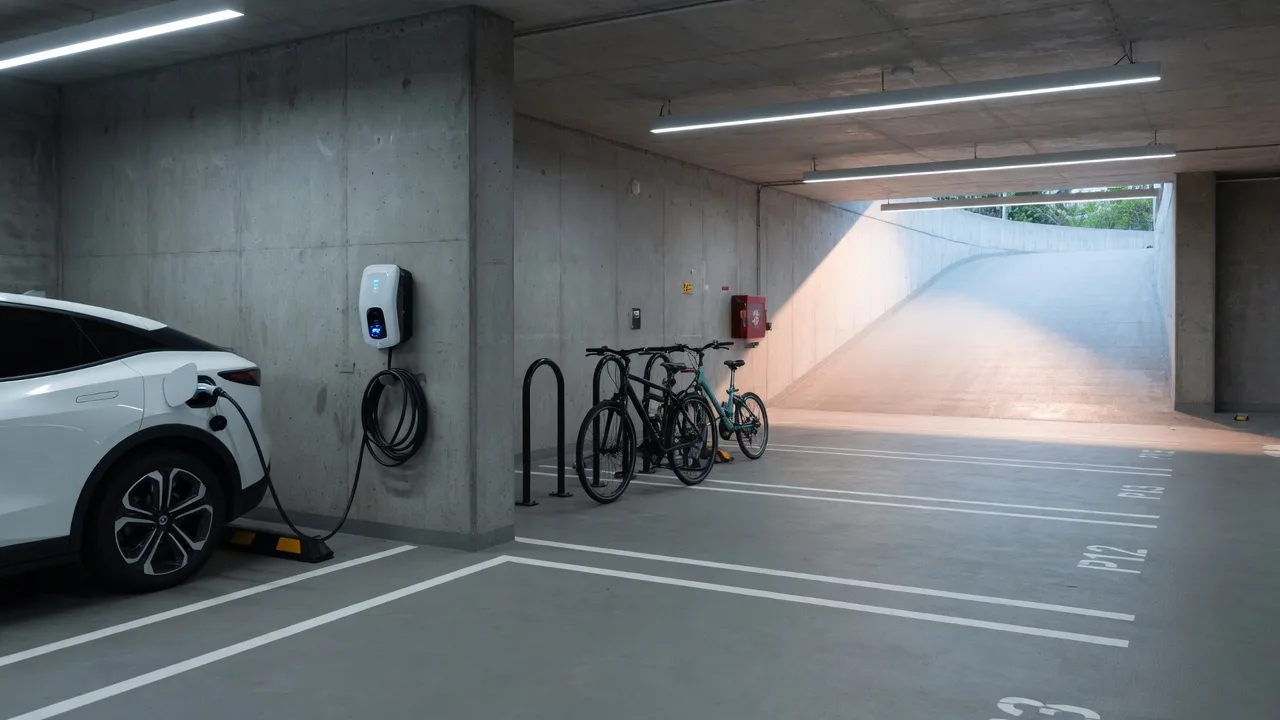
Yes, you can charge an electric vehicle in a Victoria condo or townhouse, and BC law now protects your right to ask for it. Under a set of changes to the Strata Property Act that took effect in 2023, a strata can no longer simply refuse an owner's reasonable request to install EV charging. The catch is that "reasonable" is doing a lot of work, and the reality depends on your building's age, its electrical panel, and how your strata manages the process. Here is what the rules actually mean for a buyer.
It Depends on Whether You Own or Rent
The first distinction is ownership. The strata rules about EV charging protect owners, because the request is made to the strata council about common or limited common property. If you rent, you do not get a direct seat at that table, you need the owner to make the request on your behalf. So for a renter, EV charging comes down to what your landlord is willing to do, not what the law guarantees you.
For owners, the situation is far more favourable, and that is the case that matters to most people buying a condo or townhouse in Greater Victoria. If you are the owner and you want a charger, the building has to engage with you in good faith rather than wave you off with a blanket no.
What Does BC Law Actually Say About EV Charging in a Strata?
The key changes came through amendments to the Strata Property Act and a supporting regulation that came into force in December 2023. In plain terms, a strata corporation cannot unreasonably refuse an owner's request to install an EV charging station and its related infrastructure on common or limited common property. The strata must respond to the request within about three months, and it can require the owner to cover the installation and ongoing costs. It can still set reasonable conditions, and it can refuse where there is a genuine safety or structural reason, but it can no longer block charging with a blanket ban.
This is a genuinely local-friendly shift, because EV uptake on Vancouver Island has been strong for years, and many older buildings simply were not built with charging in mind. The new rules are what force the conversation to actually happen. One honest caution: the technical detail here is dense and it is still being worked out in real buildings, so treat any specific deadline or requirement as something to confirm with your strata manager or a lawyer rather than taking a summary as gospel.
What Is the Electrical Planning Report Every Building Is Working Toward?
The biggest practical hurdle in a strata is never the bylaw, it is the building's electrical panel. To plan for charging, stratas with five or more units are being required to obtain an electrical planning report, with deadlines rolling out over the next few years depending on the size and location of the building. That report tells the strata how much charging capacity the building can actually support.
This matters to buyers for a simple reason: a building that has already done its electrical planning report, or that was built EV-ready, is a far easier place to add a charger than an older building whose panel is already near capacity. When we are looking at condos with a client who drives electric, the condition of the electrical system and whether the report has been done is one of the first questions we ask.
How Hard Is It for a Building to Pass EV Bylaws Now?
The rules also made it easier for a strata to move forward on EV-related changes and spending. What used to require a three-quarter supermajority vote can now often be done with a simple majority, which is a real shift for buildings that used to stall because a handful of owners could block a charger project.
In practice that means more buildings are getting chargers, and buildings that have not yet started are more likely to do so. If EV ownership is part of your plan, a building that has already approved an EV bylaw is a strong signal, and one of the details worth checking in the strata minutes before you make an offer.
Which Homes Are Easiest to Charge, and Which Are the Hard Case?
The easiest scenario by far is a townhouse with its own garage or dedicated parking spot and its own electrical panel, because you are not negotiating with the whole building for space and power. Newer builds are increasingly coming EV-ready as a standard feature, so a recent townhouse or condo development is often the simplest answer.
The hard case is an older concrete apartment tower where the parking is in a shared underground parkade and the main electrical panel is near its limit. That is where the electrical planning report and the strata's cost-sharing approach really determine what is possible. Surface lots with a dedicated stall are usually easier than a deep underground parkade, and a building that has already run conduit is a big advantage. If you are set on a specific older building and you drive electric, do the electrical due diligence before you commit rather than assuming you can sort it out later.
What Should You Check Before You Buy?
If EV charging matters to you, build it into your buying checklist. Ask for the strata's current bylaws and minutes to see whether an EV bylaw exists and how charging is handled. Ask whether the electrical planning report has been completed, and whether there is already a charger or conduit in place. Find out who pays for installation and ongoing electricity, because the cost-sharing structure can vary from building to building.
This is exactly the kind of thing our team reviews when we look at strata documents with a buyer, because a charger in place, or a plan for one, can meaningfully change how usable a home is for you. It also connects to the bigger picture of what a condo or townhouse actually costs you over time, which is why we point every buyer to our guide on strata fees and our breakdown of condo versus townhouse versus house before they start touring.
The Bottom Line
Charging an EV in a Victoria condo or townhouse is genuinely possible, and the law is now on the owner's side in a way it was not a few years ago. The practical reality, though, is building-specific: newer and townhouse-style homes are the easiest, older towers need more planning, and the electrical panel is the real gatekeeper.
If you drive electric and you are shopping for a condo or townhouse, we will help you ask the right questions before you fall for a home. Contact the Happy Homes Team or book a call, and we will review the strata docs and the electrical realities with you before you commit.

About the Author
Anna Hakim & Perry Fanthorpe, Happy Homes Team
Anna Hakim and Perry Fanthorpe are AI Certified Agents helping people build lives on Southern Vancouver Island. Perry builds financial roots through mortgage helpers and investment strategy. Anna builds emotional roots through community and belonging.