In the City of Victoria, you generally cannot operate a self-contained secondary suite as a short-term rental, even though the province allows it in theory. Provincial rules and Victoria's own licensing rules pull in different directions, and where they conflict, the municipal rule wins. Before anyone buys a suited home expecting Airbnb income, here is how it actually works, and what you need to verify with a professional.
A note up front: rules in this area change, and they differ street by street and municipality by municipality. Everything below is a snapshot for 2026, not legal advice. Confirm the details for your exact address with the municipality, a real estate lawyer, or a knowledgeable local broker before you rely on them.
What Does the Province Say About Short-Term Rentals?
In BC, a short-term rental is generally a stay of under 90 consecutive days. Under the province's Short-Term Rental Accommodations Act, which has applied in larger communities like Victoria since May 2024, a host has to be operating out of their principal residence: the home where they ordinarily live. Alongside that principal residence, the provincial rules permit one secondary suite or one accessory dwelling unit, like a garden suite or carriage home, on the same property.
Hosts also have to register with the provincial registry and show that number on any listing, and the registry charges different fees depending on whether the unit is the host's own home or a separate suite on the property. That is the provincial picture. The catch is that municipalities are allowed to be stricter, and Victoria is.
How Do Victoria's Own Rules Change That?
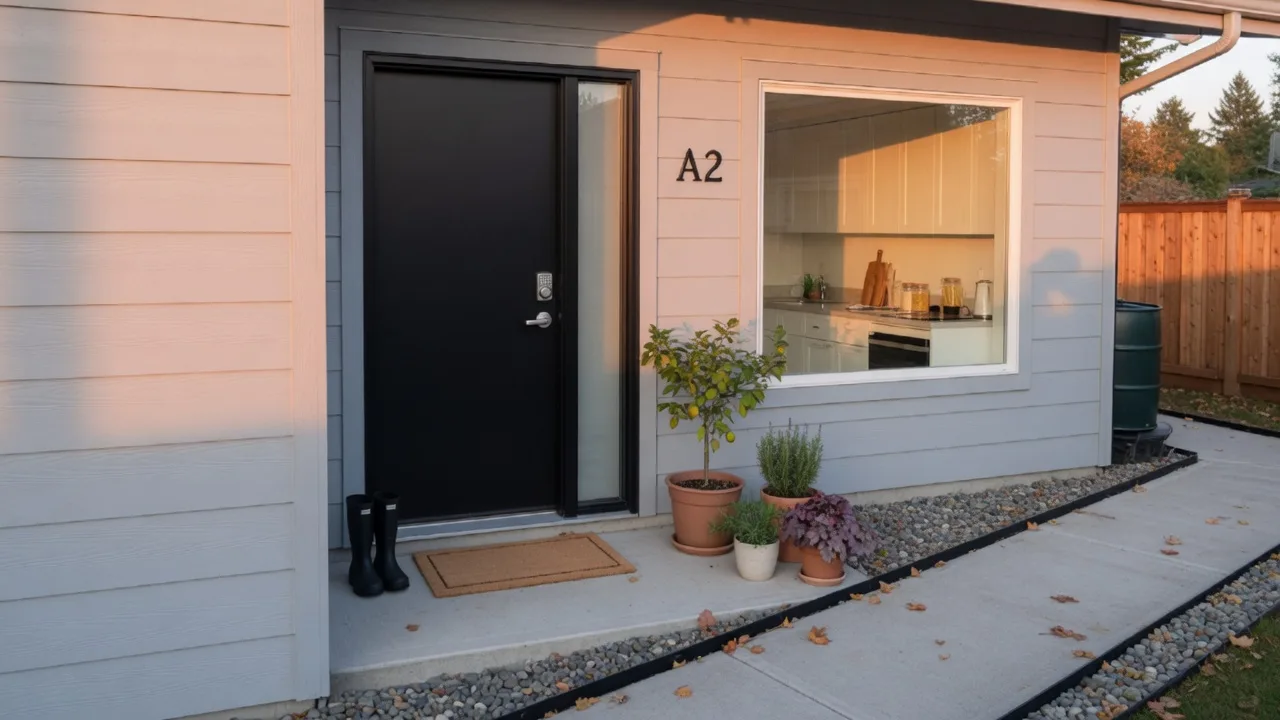
The City of Victoria runs its own short-term rental business licensing scheme, and it is tighter than the province. A licence applies only to the operator's principal residence: you can occasionally rent your whole home while you are away, or rent up to two bedrooms within the home that share your kitchen and living space. A self-contained secondary suite or accessory dwelling does not qualify for its own short-term rental licence in the City of Victoria.
What that means in plain terms: if you buy a house with a legal suite in the City of Victoria and imagine the suite as a nightly rental, the city's rules say no, not as a standalone short-term operation. The suite still has a very real job, it is just the long-term one: steady monthly rent from a tenant, which is what makes it a mortgage helper.
What About Saanich, Oak Bay, Langford and the West Shore?
Every municipality in Greater Victoria sets its own rules on top of the provincial ones, and they genuinely differ. Some communities require a business licence, some restrict where short-term rentals can operate, and some have rules that effectively stop a designated rental suite from being rented short-term. The rules can also change with fairly short notice, which is part of why this is a topic to verify rather than assume.
If you are looking at a specific home in Langford, Saanich, Oak Bay, Esquimalt, or anywhere else on the peninsula, ask us to help you find the right department, or look up the short-term rental rules on that municipality's website for the exact property. Address-level answers matter: what is allowed one street over may not be allowed on your street.
How Do Lenders Treat Short-Term Rental Income?
This is the part that surprises people. Lenders generally discount short-term rental income compared to a long-term lease, and many want a track record before they will count it toward what you can borrow. A signed one-year lease with a tenant is a document a lender can underwrite; a string of nightly bookings is a lot harder to count on, and the banks know it.
If the plan is to buy a home with a suite and use the income to qualify, run the numbers as a long-term rental first. Our breakdown of how lenders count suite income walks through the typical approach, and it is a conversation your mortgage broker should have before you make an offer, not after.
What Should You Check Before Buying a Suite-Home for Income?
Start with the municipality: confirm the property has a legal suite (permitted and properly registered, with the right zoning), and ask what its rules say about short-term rentals at that exact address. Then check whether a licence is required and what it costs, because that changes the monthly math. Then talk to a mortgage broker about how the income will actually count.
Finally, be honest about the difference between a mortgage helper and a vacation rental. A suite that rents long-term is a reliable co-pilot for your mortgage. A suite that depends on nightly bookings carries vacancy swings, platform fees, and regulatory risk that lenders and most long-term owners do not want. Both can work for the right person; they are just different investments with different risk profiles.
The Bottom Line
Short-term renting a secondary suite in the City of Victoria is, for most practical purposes, not on the table, and the rules elsewhere in Greater Victoria vary enough that the answer is always address-specific. The good news: a legal suite still earns its keep as a long-term mortgage helper in most of the region, and that is the income model lenders actually understand. Verify the rules for your exact address, then run the long-term numbers.
We talk through this math with buyers every week, and we can point you to the right municipal department for whatever address you are looking at. Contact the Happy Homes Team or book a call, and we will help you figure out what a suited home can actually do for you.

About the Author
Anna Hakim & Perry Fanthorpe, Happy Homes Team
Anna Hakim and Perry Fanthorpe are AI Certified Agents helping people build lives on Southern Vancouver Island. Perry builds financial roots through mortgage helpers and investment strategy. Anna builds emotional roots through community and belonging.