
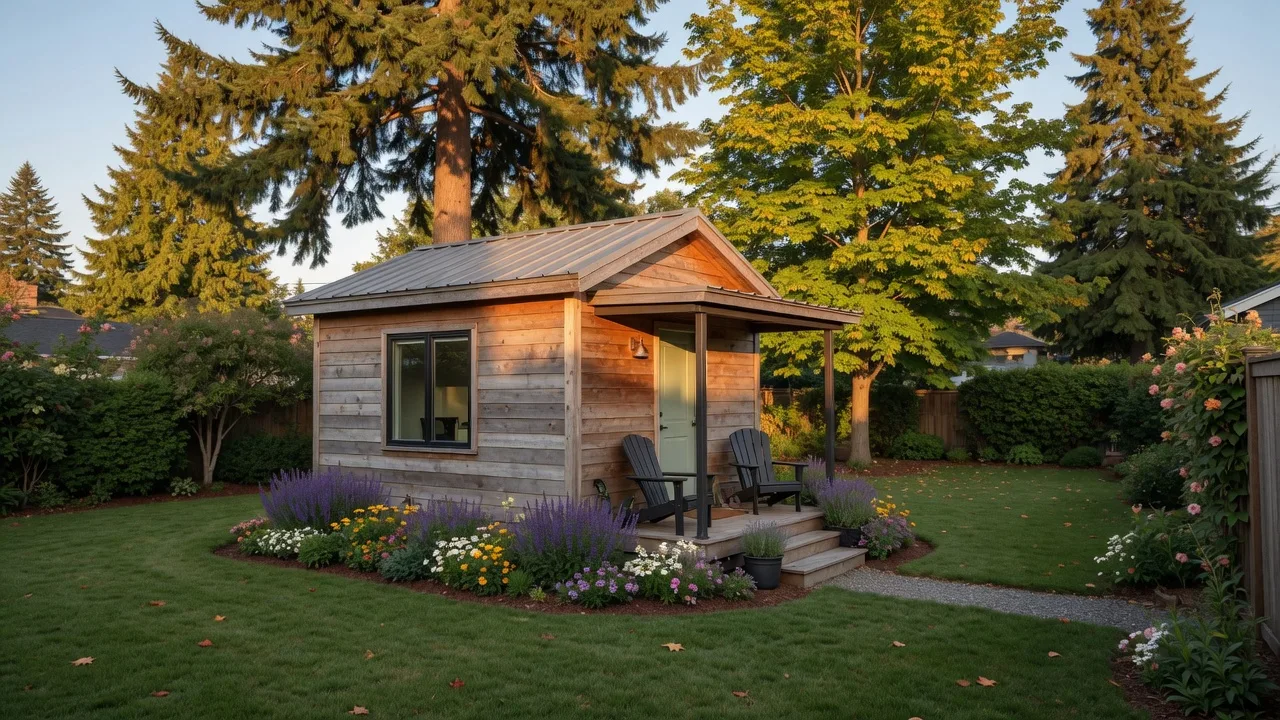
The short answer: in the current market, lenders will generally count a meaningful share of your suite's rental income toward your mortgage, with the exact percentage landing somewhere around half of the rent as the default, and up to 100% of it in the best case. But the whole game hinges on one word: legal. A proper, permitted, self-contained secondary suite is what unlocks the income for qualification, and the federal changes that took effect in January 2025 made the "mortgage helper" suite a much bigger part of the Victoria playbook. Here is how it actually works, and what you should verify with a professional before you build your numbers on it.
What Percentage of Suite Rent Do Lenders Actually Count?
There is no one number typed into Canadian lending, but the honest range that comes up in Victoria deals is 50% to 100% of the gross rent for a legal, self-contained suite. Many lenders underwrite closer to the 50% or 80% mark as a buffer for vacancies, maintenance, and turns, and CMHC, under its rental income guidelines, will consider up to 100% of gross for an owner-occupied two-unit property with a permitted suite. The exact haircut depends on the lender, the insurer, and the strength of your file, which is precisely why no blog post can give you a single answer.
There are two ways lenders fold rent in. The "add-back" method raises your qualifying income by a percentage of the rent. The "offset" method subtracts a share of the rent from your housing costs before the payment ratios are calculated. Both get to the same goal, making your payment-to-income numbers look healthier, and both require the suite to be legal and separately self-contained (own entrance, kitchen, and bath).
How Big Is the Impact in a Victoria Context?
Run a normal Victoria dollar through the math and the suite stops feeling like a nice bonus and starts looking like buying power. With a $2,000-ish monthly suite rent counted at even 50%, you are adding about a thousand dollars of qualifying income per month, often $150,000 to $200,000 of additional purchase power at current rates depending on the rest of your file. That is the difference between the entry condo market and a detached home with a legal suite, and it is exactly why the term "mortgage helper" gets thrown around so much here.
One hurdle a lot of first-time Victoria buyers hit: banks and appraisers want proof, not promises. You cannot walk into a branch and say "I plan to rent the basement for $2,200." Most lenders will want to see an existing lease, market rent in writing, or a strengthened appraiser's report at the very least, which plays exactly backward if the suite is a garage conversion you built last month. If your plan is to rent it later, the financing exercise happens at purchase time, on a projected basis, and it is the legal paperwork that gets lenders comfortable.
What Changed in January 2025, and Why Does It Matter?
In the fall of 2024 the federal government made "adding a rental suite to your home" a specifically supported move. The measures that took effect January 15, 2025 let homeowners refinance an insured mortgage in order to add up to several self-contained secondary units, and importantly, they let the expected rental income count toward the qualification. The policy is deliberately pitched at homeowners and families who want a basement suite or a garden suite to act as a mortgage helper rather than a pure investor play, and short-term rentals are excluded, so the suite has to be the real kind of home that works for a monthly tenant.
What that means for Victoria: the suite you currently think of as a renovation project is now officially part of the affordability conversation, at the policy level, and the region's municipalities have been moving into line with provincial rules that make suites and carriage homes easier to permit on many properties. That is still a long way from saying "anything goes." The rules meet each lot where the zoning and building codes actually are, which is exactly why you should never let a blog post tell you and instead ask the municipality and a professional about your address. Our secondary suite and ADU guide walks the whole permitted-by-municipality picture in detail.
How rental income counts toward qualification is lender-specific, not a single national number, so ask your mortgage broker or lender for the current percentage they will use. The figures here are common-market ground, not legal or lending advice, and you should treat any percentage above half as something to get in writing from the lender before you budget around it.
Why Is a Legal Suite the Only Suite That Counts?
Lenders hedge, and the hedge is legality. A suite that exists in the shadows of an unpermitted basement conversion is a liability inside the property, so the default is: unpermitted status depresses the value and keeps the income from counting. The bigger the rent claim, the more paper you need to back it up. Insurance is a real-time concern too: an unpermitted suite can create coverage gaps, which blows up the deal months after closing.
That does not mean every tenant suite is simple. The older houses of Victoria have some of the best legal-suite stock in the region, but municipal posture differs: most cities are reasonably suite-encouraging now, while a few still manage the details in their own way. So you should read our suites by municipality comparison, then confirm your specific address with the city. It is ten minutes of homework that saves the escrow table from a surprise.
How Do You Actually Set the Suite-Rent Math Up Right?
Start with the legal part: permitted or permit-eligible before you bid. Then be honest about the rent: what a similar suite in the area actually rents for today, not the number you want to see. Baseline it against current active listings and a quick conversation with a local property manager, both of which beat a number invented at the kitchen table.
Finally, expect to document. Have the occupancy permits, the building docs, the insurance letter, a draft lease, and a written market rent estimate ready before you talk to a lender. That paperwork is the currency that makes the income count, and it turns a pleasant conversation into a file the broker can actually use. Our buying a home with an existing suite guide walks this whole checklist in plain order, and the lesson every deal teaches is to get the suite paperwork right before the financing math, not after.
What Should You Verify Before You Plan Around Suite Income?
The honest, legally correct answer to "how much of the rent counts" will always be "it depends, and here is who you ask." Verify with a licensed mortgage broker the current percentage their lender uses, verify with your municipality whether the suite is permitted for that lot, and get your lease and docs in order before you add income to your budget. Rental income is not a guarantee, and a suite rarely bridges the whole gap by itself, but it is one of the strongest and most used purchasing levers available to a first-time or family buyer in Greater Victoria.
If you want to see exactly what a mortgage-helper home does to the numbers for your income, run it with people who do this all day. Contact the Happy Homes Team or book a call, and we will pair the right suite with the right financing path.

About the Author
Anna Hakim & Perry Fanthorpe, Happy Homes Team
Anna Hakim and Perry Fanthorpe are AI Certified Agents helping people build lives on Southern Vancouver Island. Perry builds financial roots through mortgage helpers and investment strategy. Anna builds emotional roots through community and belonging.