Downtown Victoria is a genuinely good place to live if you know what you're signing up for. You get walkability that rivals any Canadian city of this size, some of the best restaurant access on Vancouver Island, and condo prices that are still more reasonable than Oak Bay or Fairfield. The tradeoffs are noise, less green space than the surrounding neighbourhoods, and a parking situation that will test your patience if you own a car. Here's what daily life actually looks like for downtown residents.
What Does "Downtown" Actually Mean in Victoria?
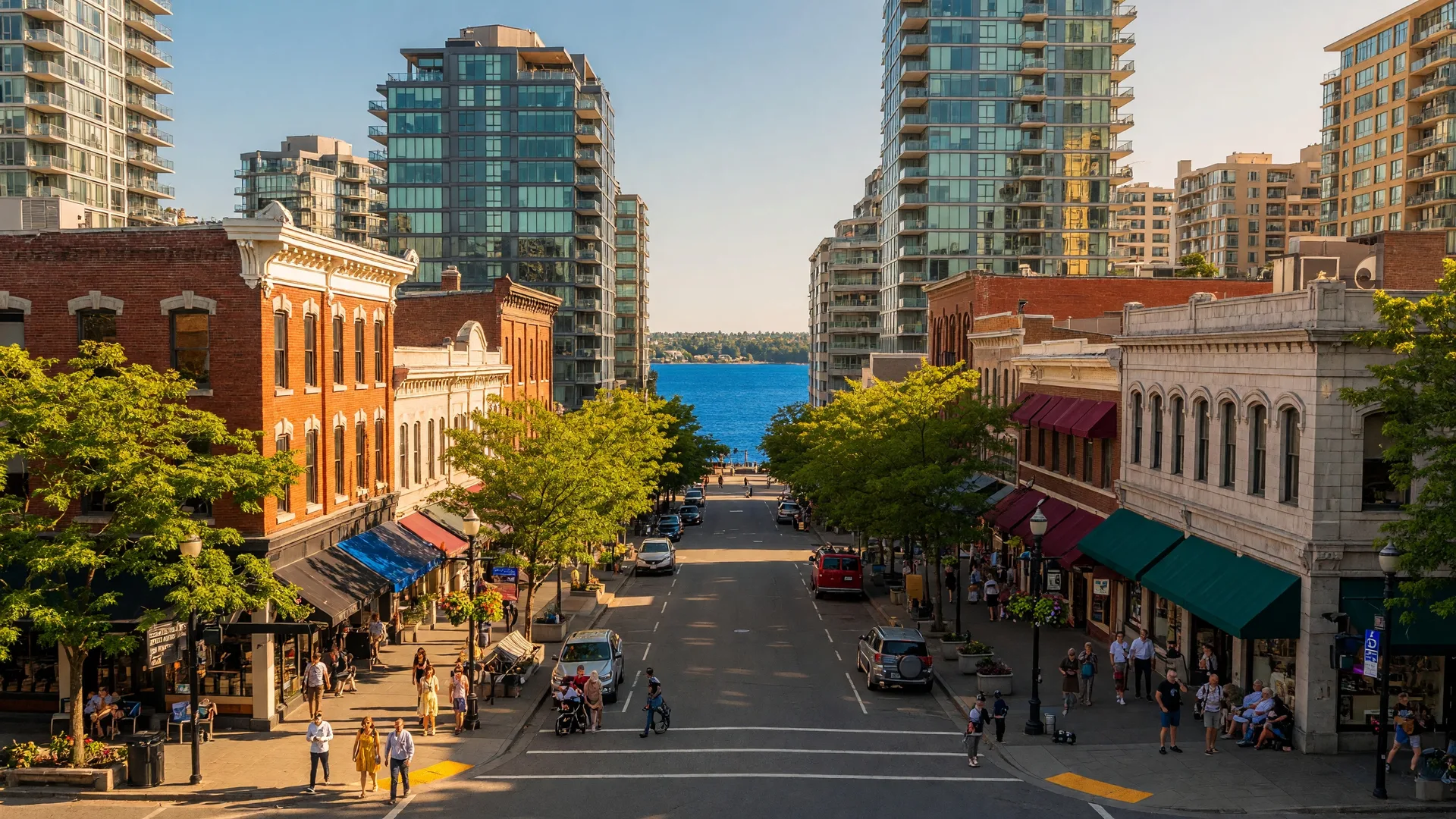
When locals talk about living downtown, they mean the area roughly bounded by the Inner Harbour to the south, Pandora Avenue to the north, Blanshard Street to the east, and Government Street to the west. That's about a dozen blocks, with Yates, Fort, and View streets as the main residential spines. It's a small footprint, and that's part of the point. You can walk from one end of it to the other in 15 minutes.
This is not James Bay, which is its own quieter neighbourhood along the waterfront. It's not Fernwood, which has a different community feel. This is the core: high-rises, street-level retail, buses, pedestrians, and the occasional ambulance siren at 2 a.m. That matters, because people who say they want to live downtown often mean they want to live in James Bay or Vic West. The actual downtown has a different rhythm.
What Kind of Housing Can You Actually Find Downtown?
The downtown housing stock is mostly condos and apartments, with a handful of heritage conversion lofts. The Yates on Yates, at 700-block Yates and Johnson, is two 20-storey towers that set the skyline standard when they went up. Vivid at the Yates, completed in 2021, added a 20-storey tower with below-market units that helped middle-income buyers get a foothold. NEST and Haven at Yates and Cook are 12-storey towers from Chard Development that brought modern layouts to the east end of the core. The 834 on Johnson between Blanshard and Quadra is a glass tower in the thick of things. Hudson Place One near the harbour is the tallest building on Vancouver Island, though most of its units went up before resale entered the current market.
Condo prices downtown track below Oak Bay and Fairfield for comparable square footage, but above Langford and Sooke. A one-bedroom in a newer tower typically runs in the $450K to $600K range depending on views and floor. Two-bedroom units push toward $700K to $900K. Strata fees can run $350 to $550 a month depending on building amenities and age, which is something Perry reminds every buyer to check before signing. We've seen people fall in love with a unit and forget that the strata fee eats into their monthly budget a lot more than a yard they never have to mow.
Heritage conversion lofts, like the ones in the old department store buildings on Johnson Street, offer something you can't find in new construction: high ceilings, exposed brick, and character. But they come with older building quirks, less soundproofing between units, and sometimes higher maintenance fees as the building ages.
How Walkable Is It Really?
This is where downtown wins. You can live here without a car, and plenty of people do. The Market on Yates at 903 Yates Street is the downtown grocery anchor. It's locally owned, open 7 a.m. to 11 p.m. daily, and carries everything from organic produce to specialty meats. It's not cheap, but it's convenient in a way that makes you forget about the premium. Tomley Market at 716 Johnson is smaller and good for quick runs. For a full shop, the Thrifty Foods on Simcoe Street in James Bay is a 15-minute walk, and the Save-On-Foods on Wilson Street is a short bus ride if you're stocking up.
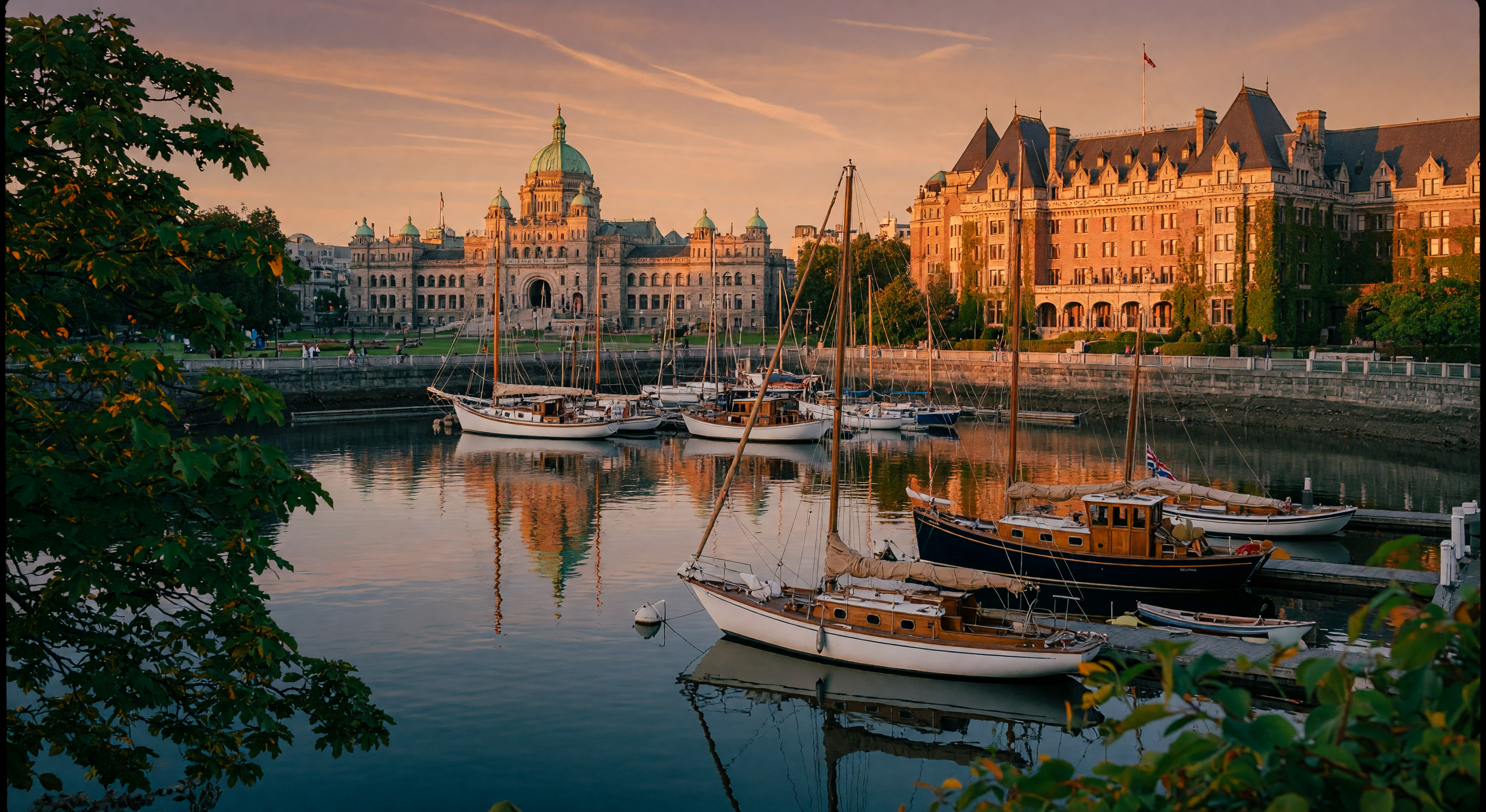
Beyond groceries, everything else is on foot. Government Street for tourists and souvenirs, Johnson Street for the pedestrian zone with shops and street performers, Fort Street for the protected bike lane and more local retail. The Inner Harbour seawall is a five-minute walk from most downtown condo buildings. Beacon Hill Park is maybe 10 minutes. The Legislature and Royal BC Museum are right there. Locals who live downtown quickly develop a radius; most errands are within a few blocks, and anything outside that means a bus or a bike.
What About the Restaurant Scene?
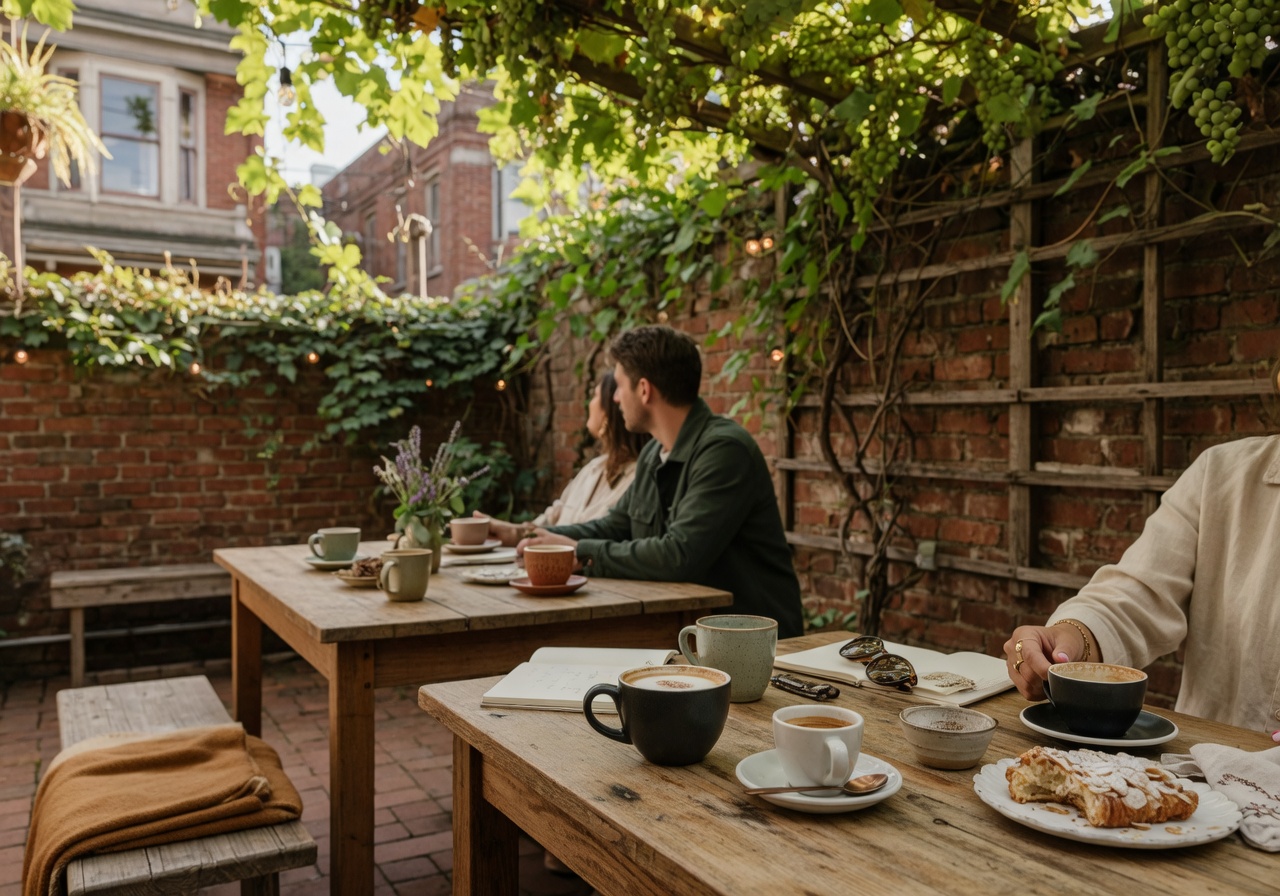
Downtown Victoria's restaurant density is one of the best arguments for living here. Within a five-minute walk of the Yates and Fort corridor you've got Block Kitchen and Bar for global fusion, Nubo for Japanese, Moxies and Yates Street Tap House for casual, Agrius for something fancier, Zambri's for Italian on Yates, and Il Terrazzo for classic Italian tucked off Johnson Street. For quick lunch or coffee, the downtown core has more cafés per block than any other part of the city. BeLove on Government has excellent food with a focus on local ingredients.
The tradeoff: most of these places are busiest during tourist season. From June through September, downtown restaurants have long waits and the streets are crowded. Locals learn which places are worth the queue and which ones are tourist traps. You'll figure that out quickly.
The Car Question: Can You Live Downtown With One?
You can, but it's annoying. Most newer condo buildings come with underground parking stalls, often sold separately or included in the unit price. Rental buildings usually charge $100 to $200 a month for a spot. Street parking downtown is metered and limited to two hours in most spots. Residential parking permits exist in some zones, but the core is tight.
Locals know to factor parking into the decision before buying. If you work outside the core or need a car for your job, check whether the building has visitor parking and whether your stall fits an SUV or truck. Some of the older underground lots were built when cars were smaller, and a modern F-150 does not fit in a 1990s condo parking stall. We've seen that one firsthand.
If you can go car-free, downtown is setup for it. BC Transit's main exchange is right at the edge of the core. The 50 bus to Langford, the 4 to UVic, and the 31 to Saanich all connect from downtown. The Galloping Goose trail runs right along the harbour, and Fort Street has protected bike lanes. A lot of downtown residents use Modo car-share or Evo for the occasional trip to Costco or a weekend hike.
What Are the Real Downsides?
Noise is the most common complaint. Downtown is loud. Traffic, sirens, street cleaning, the occasional late-night crowd spilling out of a bar on Johnson Street. If you're on a higher floor in a newer building with good windows, it's manageable. If you're on the second floor of a heritage walk-up facing Yates Street, you will hear everything.
Green space is limited. Yes, Beacon Hill Park is close. So is the harbour. But there's no backyard, no garden, no escape into nature without leaving the neighbourhood. For some people that's freeing. For others it wears thin fast. The downtown dog owners I know have developed a mental map of every pocket park and grass strip between Yates and the water.
The downtown core also has a higher concentration of visible poverty and street-level challenges than any other Victoria neighbourhood, particularly along Pandora Avenue. It's a reality of urban life in this city, and it's something to be aware of if you're considering a unit near the edges of the core. We're not going to sugarcoat it; it's part of the daily landscape.
Who Downtown Actually Works For
Downtown is best suited for professionals who work in or near the core and want to walk everywhere. Empty nesters downsizing from a house in Oak Bay or Fairfield who want to be close to theatres, restaurants, and the harbour often love it. Young professionals who rent or buy a one-bedroom and don't own a car are a natural fit.
It's a harder fit for families with kids, people who want a yard, anyone who needs two parking spots, or anyone who values quiet over convenience. That's not a judgement, it's a match issue. We've helped clients buy in both downtown and the suburbs, and the happiest ones are the ones who were honest about what they actually wanted from daily life, not what sounded exciting.
Next Steps: Walk the Core Before You Buy
The best test is to spend a weekend in the neighbourhood you're considering. Wake up downtown, walk to the Market on Yates for coffee, stroll the Johnson Street pedestrian zone, walk to Beacon Hill, and come back in the evening to see what the noise level is like. Then do it on a rainy Tuesday in February. That will tell you more than any article.
Our neighbourhood guides cover every community in the region, including the downtown core. For the full picture on what it costs to live across the region, our cost of living comparison breaks down the numbers. Talk to the Happy Homes Team when you're ready to make a move. Perry can walk you through strata documents and budget planning, and Anna can help you figure out which downtown building fits your lifestyle. That combination matters more than any single listing.

About the Author
Anna Hakim & Perry Fanthorpe, Happy Homes Team
Anna Hakim and Perry Fanthorpe are AI Certified Agents helping people build lives on Southern Vancouver Island. Perry builds financial roots through mortgage helpers and investment strategy. Anna builds emotional roots through community and belonging.