A home inspector in Victoria BC checks five big things that matter most in this climate: moisture intrusion and rot (the number one issue in coastal homes), the age and condition of the electrical panel, evidence of underground oil tanks, the foundation type and drainage, and the roof for moss damage. Not every issue is a dealbreaker. The key is knowing which ones are expensive to fix and which ones are just maintenance. Expect to pay $500 to $800 for a single-family home inspection in Victoria, and plan on being there for two to three hours.
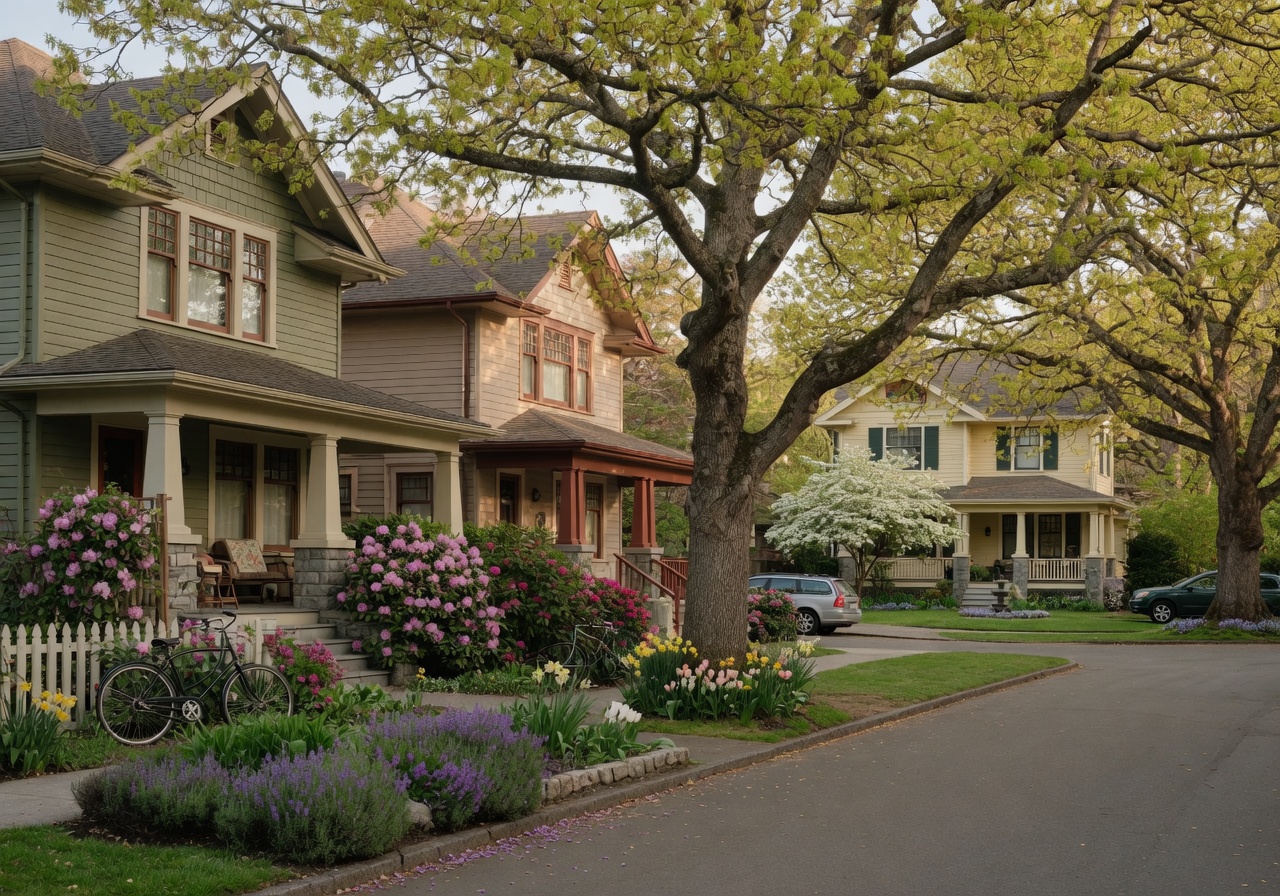
Victoria's housing stock is older than most people realize. Walk through Fairfield, Fernwood, Rockland, or Oak Bay and you are looking at homes built in the 1910s, 1920s, and 1940s. Craftsman bungalows, Edwardian foursquares, wartime cottages. They are beautiful, character-rich, and full of the kind of details you do not find in new construction. They also come with a specific set of issues that a home inspector who knows coastal BC inside and out will catch. Here is what they are looking for.
Why Is Moisture the Biggest Issue in Victoria Homes?
Victoria gets about 600 millimetres of rain a year at the downtown weather station, but the east side of Saanich and the Peninsula can push 900 plus. That much moisture over decades finds its way into every gap a house has. Home inspectors here spend more time looking at moisture damage than almost anything else because it is the most common and most expensive problem in older Victoria homes.
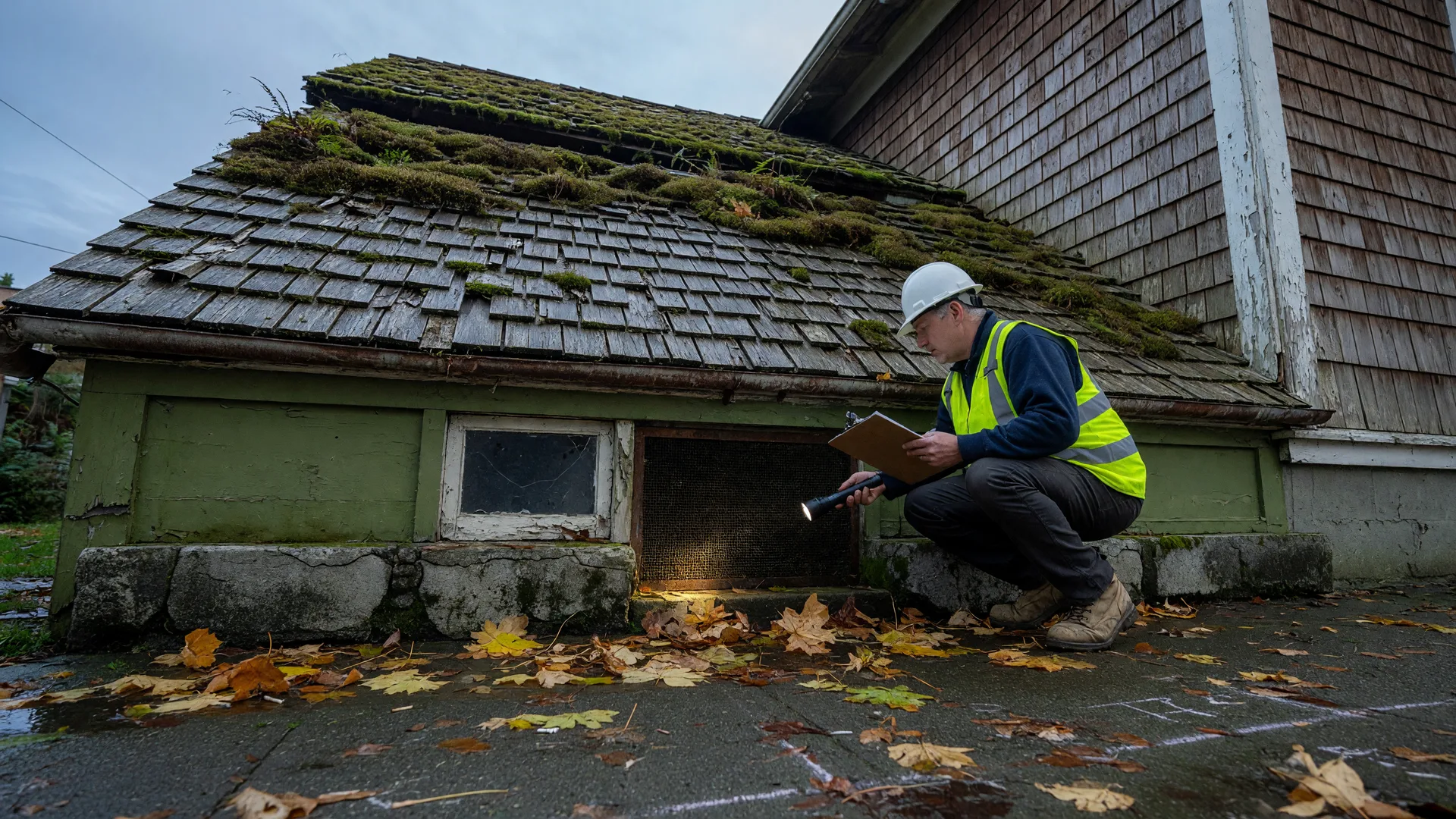
They use moisture meters on baseboards, window sills, and bathroom walls. They check the crawl space for standing water, vapour barrier condition, and signs of wood rot in the floor joists. They look at the exterior siding, especially around windows and doors where water penetration is most common on character homes. On a wet day, a good inspector will come back after the rain stops to see where water actually pools against the foundation. That tells them more than any meter can.
What this means for buyers: Moisture issues range from a leaky window seal that costs $200 to fix to full foundation drainage and mould remediation that runs into five figures. A home inspector can tell you which you are looking at. But to understand what moisture patterns say about the overall health of a property when you are evaluating neighbourhoods, we have a deeper breakdown of home condition considerations in our neighbourhood guides.
What Should You Know About Electrical Systems in Victoria's Older Homes?
Knob-and-tube wiring is the one that gets the most attention, and for good reason. Victoria has thousands of pre-1940 homes that still have original knob-and-tube wiring in the walls. Most insurers will not write a policy on a home with active knob-and-tube, and any reputable electrician will tell you it needs to be replaced. A home inspector will check for it in the attic, crawl space, and behind switch plates.
But knob-and-tube is not the only electrical concern. An inspector will also look at the electrical panel. Older panels like Federal Pacific or Zinsco are known fire risks and need replacement. A 60-amp service is undersized for a modern household. Even a 100-amp panel can be tight if you plan to add a heat pump, EV charger, or secondary suite. The inspector will note the panel brand, amperage, and condition. Those findings help you budget: a panel upgrade runs about $2,000 to $4,000 depending on the complexity.
What this means for buyers: If you are looking at a character home in Fairfield or Fernwood, budget for electrical work. A pre-inspection that flags an old panel or knob-and-tube gives you room to negotiate. It also tells you whether the home can support the upgrades you want down the road.
Are Underground Oil Tanks Still a Problem in Victoria?
Yes, and this is the one that spooks buyers the most. Thousands of Victoria homes built before the 1970s originally had oil furnaces. When homeowners converted to gas or electric heat, the oil tank was sometimes removed and sometimes just abandoned in the ground. An abandoned tank that is rusted through can leak heating oil into the soil, which creates a remediation cost that can hit $10,000 to $30,000 or more.
A home inspector cannot see an underground tank. They can check for telltale signs: a fill pipe sticking out of the ground, an old oil line entering the basement or crawl space, or a concrete patch in the floor where the furnace once sat. If they find evidence, they will recommend a specialized tank sweep using ground-penetrating radar.
Local tip: Sellers in Victoria are now expected to disclose known oil tanks, and many buyers include a tank sweep as a subject in their offer. For homes built after 1980, the risk drops significantly. If you are looking at an older character home, it is worth asking up front and doing the sweep before you remove subjects.
What Foundation Types Are Common in Victoria and Which Ones Need Attention?
Victoria's housing stock sits on several foundation types depending on the era and neighbourhood. Pre-1950s homes often have concrete block or rubble stone foundations. Post-war homes typically have poured concrete. Newer construction uses reinforced concrete with proper perimeter drainage. The foundation type directly affects how the home handles moisture and settling.
A home inspector will look for cracking, bowing, water staining, and efflorescence (the white chalky mineral deposit that indicates moisture migration through concrete). They will check whether the grading around the house slopes away from the foundation. They will note whether the crawl space has adequate ventilation and vapour barrier.
On homes built into Victoria's hillsides, especially in Fairfield, Rockland, and parts of Saanich, the inspector will pay close attention to retaining walls and slope stability. Drainage behind retaining walls is a common issue in our neighbourhoods.
What this means for buyers: Minor foundation cracks are normal and often cosmetic. Horizontal cracks, significant bowing, or evidence of ongoing water entry are the ones that matter. Ask your inspector to rate the foundation issues as cosmetic, maintenance, or structural.
What Does Moss Do to a Victoria Roof?
Walk down any block in Oak Bay or Fairfield in the winter and you will see green roofs. Moss grows on cedar shakes, asphalt shingles, and even tile roofs in this climate. It holds moisture against the roofing material, which accelerates deterioration and can lead to leaks. A home inspector will check the roof condition, the age of the shingles or shakes, and the extent of moss growth.
Cedar shake roofs are common on older Victoria homes. They look beautiful but have a shorter lifespan than asphalt (15 to 20 years for cedar versus 20 to 25 for asphalt). A roof inspection will tell you how many years the current roof has left and whether the moss has already caused damage.
The same inspector will check the gutters and downspouts. Clogged or undersized gutters are a major cause of foundation moisture issues in Victoria. In the fall, when leaves from the Garry oaks and maples fill the gutters, water spills over the edges and soaks the ground right next to the foundation.
Local tip: Roof cleaning and moss treatment costs about $300 to $600 and should be done annually or biannually. If you are buying a home with a mossy roof, factor that into your first-year maintenance budget and ask your inspector whether the moss has already lifted the shingles.
What Does a Home Inspection Actually Cost and How Long Does It Take?
For a standard single-family home in Victoria, expect to pay between $500 and $800. Condos in the $300 to $500 range. The inspection takes two to three hours for a house, depending on size and accessibility. You should plan to be there for the whole thing. A good inspector will walk you through every finding as they discover it, which is more useful than just reading the report later.
The report typically arrives within 24 to 48 hours and includes photos, descriptions of each issue, and a priority rating. Some inspectors offer thermal imaging as an add-on for about $100 to $200. It is worth it for Victoria homes, since thermal cameras can reveal moisture inside walls that is invisible to the naked eye.
What this means for buyers: The inspection is your best negotiating tool. A well-documented inspection report gives you the information you need to ask for repairs, a price adjustment, or in some cases, to walk away. You never skip the inspection on a Victoria character home. The inspection fee is insurance against a $30,000 surprise.
Should You Get a Separate Inspection for the Secondary Suite?
If the home you are buying has a legal or illegal secondary suite, and many Victoria homes do, you want a separate inspection for that space. The suite may have its own electrical, plumbing, and heating systems that are independent of the main house. An inspector who only looks at the primary dwelling could miss problems in the suite that affect both your tenant and your mortgage helper income.
Perry has seen too many buyers assume the main house inspection covers everything. It does not. If you are buying a home with a mortgage helper suite, make sure your inspector knows to treat the suite as a separate dwelling unit for inspection purposes. It is worth the extra $200 to $300.
For more on how to evaluate suites when you are buying, check our guide on secondary suites and ADU regulations in Victoria.
How Do You Find a Good Home Inspector in Victoria?
The best home inspectors in Victoria are the ones who do this full time, carry errors and omissions insurance, and belong to a recognized professional association like the Canadian Association of Home and Property Inspectors (CAHPI) or the Applied Science Technologists and Technicians of BC (ASTTBC). Ask for sample reports. A good inspection report is detailed, readable, and uses photos to illustrate every finding.
Avoid inspectors who offer to do repairs. That is a conflict of interest. You want someone whose only job is to find problems, not fix them. Most real estate agents have a short list of trusted inspectors they have worked with over many transactions. Ask us for ours.
A great inspector also knows Victoria's neighbourhoods. They know that a 1912 Craftsman in Rockland has different common issues than a 1990s townhouse in Langford. They know which subdivisions had known drainage problems and which builders cut corners. That local knowledge is worth paying for.
The Bottom Line on Victoria Home Inspections
A home inspection is not a pass-fail test. Every older home has issues. The question is whether the issues are manageable and whether you are going into the purchase with your eyes open. A good inspector in Victoria will tell you what needs fixing now, what can wait, and what you should budget for in the next five years. That information is the difference between buying a home you love and buying one that slowly drains your savings.
If you are looking at homes in Victoria and want to know what the inspection might find before you even make an offer, we can help. We have walked through enough character homes with inspectors to know which issues are neighbourhood-specific and which ones are just part of living in a 100-year-old house. Reach out and we will talk through what to watch for in the areas you are considering. And when you are ready, we know exactly which inspectors to call.

About the Author
Anna Hakim & Perry Fanthorpe, Happy Homes Team
Anna Hakim and Perry Fanthorpe are AI Certified Agents helping people build lives on Southern Vancouver Island. Perry helps buyers understand the full cost of homeownership from inspection to insurance. Anna helps clients find homes that feel right from the moment you walk in.