
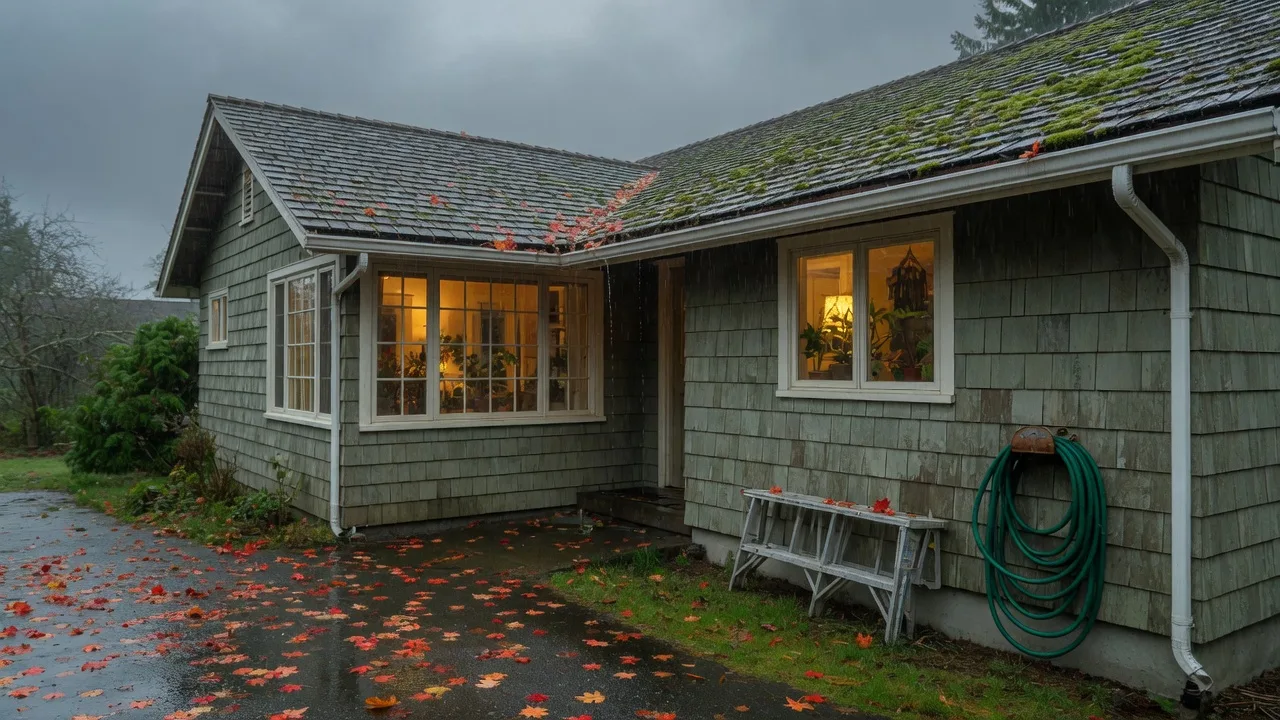
Five jobs, in this order: gutters and downspouts, the roof and its moss, windows and seals, the basement and crawl space, and your heating. The rain arrives for real in late October and November, and the people who book those jobs in November are the ones who wait until spring to get them done. Victoria's climate is gentle in most ways, but it is also a moss machine and a rain machine, and the week after the first big storm tells you exactly what your home forgot to do in October.
Why Do Gutters Come First?
Because everything else downstream depends on them. When a gutter clogs, the water stops going where the roofer intended and starts finding its own way: over the edge onto the foundation, behind the fascia, or straight into the basement wall. Around here the usual offenders are maple keys, fir needles and the layers of moss that blow off the roof, and they pack into a downspout faster than you would believe.
The job is two hours on a Saturday, or one call to a gutter company in early October before they book solid. Then check the downspout extensions: the pipe should be pushing water several feet away from the foundation, not dumping it against the concrete. That single detail prevents more wet basements than any other fix in this city, and it costs about twenty dollars.
Is Moss on the Roof Actually a Problem?
Moss on a Victoria roof is so common that homeowners stop seeing it, but it deserves a look every autumn. It is cosmetic until it is not: thick moss holds moisture against the shingles, lifts them, and works its way under the edges in freeze-thaw cycles, which is exactly how small leaks start in December. The honest local approach is to have eyes on the roof once a year, especially the north side and the shaded valley areas where moss grows thickest.
One warning locals repeat: do not power-wash cedar shingles, and be careful even on comp shingle. A pressure washer at close range can blast granules off a roof that would have lasted another decade. Gentle removal, or a professional who knows moss treatment, is the safe path. If you cannot see the roof from the ground, ask a neighbour with a drone or pay for a quick roof inspection, because December is when you discover what the roof was doing all fall.
What About Windows, Seals and the Corners You Cannot See?
In the rain season, water finds the small failures. Check the seals around windows, the weep holes at the bottom of vinyl windows, and the door sweeps that are supposed to keep the weather on the outside. A thirty-second walk around the house in the first heavy rain of the season will show you every leak, because that is the one day they all announce themselves at once.
The corners people miss are the ones hidden by furniture and stored boxes: the edge of the basement under the stairs, the wall behind the water heater, the crawl space hatch. Clear access to those spots before the water table rises, and put a dehumidifier in a damp basement now rather than in February when the smell has already arrived.
How Do You Test a Basement for the Winter?
The test is simple and seasonal: the first big storm of November is the honest test, because that is when groundwater is highest and the drainage does its real work. Walk the basement during the rain, not after it dries, and look at the floor-wall junction, the sump pump pit if you have one, and any efflorescence, the white powder that means moisture is coming through the concrete. If the sump pump has not run in months, pour water into the pit and watch it cycle, because the pump that fails in January always failed in October.
For buyers, this is the most valuable time of year to be house hunting. A home inspected in November shows you what it does in the rain, which is the version of the house that actually matters in Victoria. Sellers who have done their October homework list with a dry basement and a clean history, and it shows. Our home inspection guide covers what a professional looks for, and the honest local truth is that a good inspector in the rainy season is worth double.
Heating, Fireplaces and the Jobs Everyone Books at Once
The furnace filter is the five-minute job that pays all winter, and a heat pump gets the same courtesy: clean the filters and check the outdoor unit is clear of leaves before it runs flat out. If you burn wood, the chimney sweep books out in October, so call now. If you are on electric baseboards, the job is even simpler, vacuum the fins and move the furniture back, because baseboard heat does not work with a couch in front of it.
There is a rebate angle here too: heat pump upgrades and insulation work qualify for provincial programs, and the energy rebate guide walks through what is available. November is the wrong time to discover your heat source is tired, and the trades know it, so the call you make today is the one that gets answered.
Why This Matters If You Are Selling or Buying This Fall
The rainy season is when homes tell the truth, and smart sellers get ahead of it. A home that went into November with clean gutters, a moss-free roof and a dry basement has an easy inspection story in the spring, while the house that waited has a conversation about water stains, roof age and the mysterious bucket in the corner. If you are planning to list, the October maintenance is not an expense, it is the cheapest part of your marketing.
If you are buying, use the season. Book viewings after rain, ask about the sump pump and the roof's service history, and check the basement at the end of the showing rather than the start. And if you are buying a home with a suite, the same rules apply with a stake in the ground: a wet basement under a rental unit is a tenant problem and a landlord problem at once. Our selling guide covers how we stage homes to pass the rainy-season test, and it starts with the same checklist above.
Next Steps: Do the Two-Hour Job This Weekend
You do not need a list of ten jobs, you need the five above done in order, and three of them can be finished before lunch on a Saturday: gutters, downspout extensions, and the walk-around in the first rain. The roof and heating calls take one phone call each. If you do nothing else, clear the gutters, because every other winter problem in this city traces back to water going where it should not.
If you are shopping for a home this fall, come see the difference a maintained house makes in November, and let us show you which listings have done their homework. Book a call with Anna and Perry, and read up on what the rain actually does around here while the gutters dry.
Buying or Selling This Fall?
The rainy season is the honest test for a Victoria home, and we know which listings pass it. We can walk you through what the November inspection will find before you commit to a house or a price.

About the Author
Anna Hakim & Perry Fanthorpe, Happy Homes Team
Anna Hakim and Perry Fanthorpe are AI Certified Agents helping people build lives on Southern Vancouver Island. Perry builds financial roots through mortgage helpers and investment strategy. Anna builds emotional roots through community and belonging.