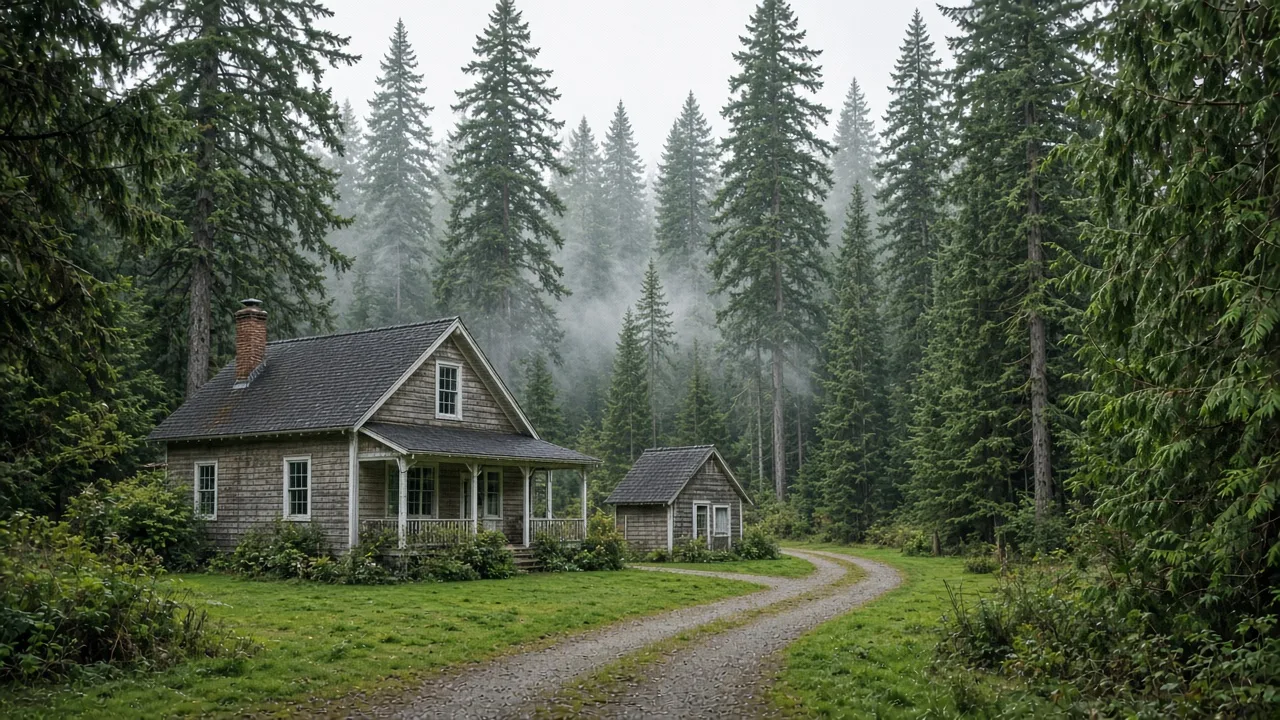
If you are looking at acreage in the Highlands, Metchosin, East Sooke, rural North Saanich, or Sooke, the short answer is that you become your own utility company: the water comes out of the ground under your property, and the waste stays on your property too. It is not a dealbreaker, it is a routine, and the routine is mostly testing your well water on a schedule and maintaining your septic system on a schedule. The honest warning is that neither system looks after itself, and the due diligence on a rural property is different from a serviced city lot.
Which Parts of Greater Victoria Are on Well Water and Septic?
Anywhere there is no municipal water or sewer line, which is most of the rural map: the Highlands, Metchosin, East Sooke, Sooke, much of rural North Saanich, and acreages in parts of Saanich. Some areas have small community water systems instead of individual wells, and a few rural pockets are close enough to a municipal line to connect for a fee.
The property disclosure statement will say what your lot actually has, and the first question is always which of the three this property is tied to: a private well, a community system, or a municipal line. The answer shapes everything downstream, from your monthly costs to what you can build.
How Often Do You Need to Test Well Water?
Island Health's standing recommendation is a bacteriological test every six months and a broader chemical panel every three to five years, plus a test any time the well, pump, or plumbing is worked on, or the water changes in taste, colour, or smell. You collect the sample yourself in sterile bottles from a certified lab, or you hire a sampling service to do it for you.
Island EHS in Victoria is the local environmental consultancy that collects samples, sends them to an accredited lab, and explains the report, and water-treatment companies like Canada Aqua in Nanaimo arrange certified lab analysis when you are sizing filtration gear. Guidance does get refreshed, so check the current recommendations before you set your own calendar, and if you are buying, ask the seller for the last two years of test results.
Do You Need a Licence to Use Your Own Well?
For a normal household, no. Domestic groundwater use is exempt from the licensing requirements of BC's Water Sustainability Act, so you do not need a provincial licence or pay water fees for your home and basic household use. The province does encourage well owners to register their well in the GWELLS database, which is free and records your water use so it stays protected.
Anything beyond household use, big irrigation, commercial operations, is a different story, so verify the current rules with the province before you assume what is covered. When a well serves a suite or a rental, that is exactly the kind of thing to confirm with a professional rather than assume.
What's the Septic Rule in Greater Victoria?
The CRD's Onsite Sewage System Maintenance Bylaw sets the local rhythm in the municipalities that participate: Saanich, Langford, Colwood, and View Royal, with North Saanich joining in 2025. Under it, a conventional Type 1 system gets pumped out at least every five years, and busier households, big families, anyone renting a suite, usually pump more often than that.
Type 2 and 3 package plants are maintained annually by an Authorized Person, and you keep the receipts as proof of the work. The Highlands, Metchosin, Sooke, and the CRD's electoral areas like East Sooke are not in the bylaw, so there the provincial Sewerage System Regulation applies instead. Confirm which regime covers the property you are looking at, because it changes the paperwork and the budget.
What Should You Ask Before Buying a Rural Property?
Go in with the inspector's list: well depth and age, flow rate, recent water test results, the septic system's age, its type, and the date of the last pump-out. Ask whether the well and septic already serve a suite, and whether the seller kept the maintenance receipts.
Then book a home inspector who actually knows acreage, not a city-house inspector, and budget for the possibility of a water treatment system or a septic upgrade, because those are the two bills that show up in the first five years. Our guide to what home inspectors look for in Victoria covers the difference between a rural inspection and a city one.
Can You Add a Suite If You're on Well and Septic?
This is the question that surprises people. A secondary suite means more people drawing on the same well and the same septic field, and both systems have a capacity. Municipalities often require an engineered assessment or a septic upgrade before a suite on septic gets a permit, and the well needs enough flow for two households in the driest month of summer.
Treat it as a property-by-property question: pull the property file, get the numbers, and verify the current rules with the district before you count suite income. Our suite and ADU guide covers how the rules differ across the region, and the short version is that rural acreage is not the automatic mortgage-helper that a serviced Langford lot can be.
Why Rural Acreage Costs What It Costs
The price gap between a serviced lot and an acreage parcel is partly the market pricing in what you take on: the well, the septic, the gravel driveway, the fire risk, the distance to a grocery store. But for the buyers who want space, forest, and privacy, well and septic is a feature, not a bug, as long as you know the routine.
That is why Perry walks every rural buyer through the disclosure statement and the system paperwork before we write an offer. He has a construction background, so he reads a septic design like other people read a menu, and he has watched enough rural purchases go sideways over a failing field to treat the systems inspection as the deal-breaker it is.
Next Steps: Run the Due Diligence Before You Fall in Love
Book the water test and the septic inspection before you get emotionally attached, not after. The seller's disclosure gives you the starting point, the inspector gives you the truth, and the municipality gives you the rules, and all three are cheaper than a surprise.
If you are weighing acreage in the Highlands, Metchosin, or North Saanich, come talk to us with the results. Book a call with Anna and Perry, and we will tell you honestly which properties are worth the systems and which are priced the way they are for a reason.
Rural Acreage Done Right
Well and septic living rewards buyers who do the homework: tested water, a maintained system, and a property file that matches the price. We know the acreage communities of Greater Victoria property by property, and we can show you which parcels are worth the drive and the systems.

About the Author
Anna Hakim & Perry Fanthorpe, Happy Homes Team
Anna Hakim and Perry Fanthorpe are AI Certified Agents helping people build lives on Southern Vancouver Island. Perry builds financial roots through mortgage helpers and investment strategy. Anna builds emotional roots through community and belonging.