When people tell us they have outgrown their home, they rarely mean they need a bigger building. They almost always mean the home no longer fits the life they are actually living. This guide walks through the two honest paths to more space in Greater Victoria: remaking the home you already own, or moving to a home with more square footage, and the real money math behind both. We are Anna and Perry from the Happy Homes Team, and we have sat at more kitchen tables than we can count helping families sort through exactly this question.
First, Diagnose What Is Actually Missing
Before you look at floor plans or listings, spend fifteen minutes being specific about the problem. "More space" is a wish, not a plan. The plan only appears once you can say what the space is for. Here is the checklist we run through with clients, and it is worth doing on your own with a coffee and no interruptions:
The Space Self-Diagnosis Checklist
- Another bedroom, for a child, a parent, or regular guests?
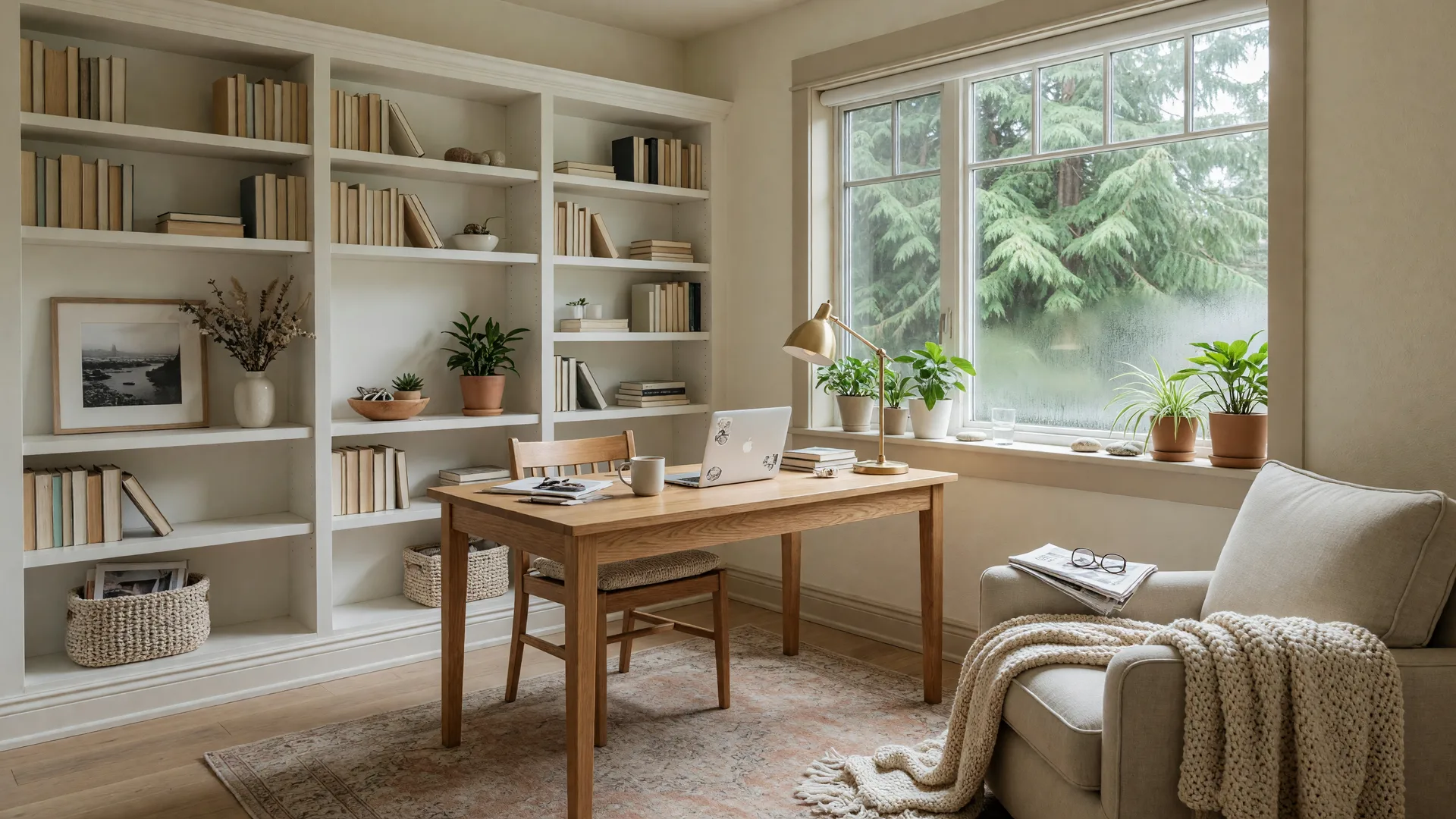
- A dedicated home office that is not the dining table or a lap on the couch?
- Separation: somewhere two people can work, rest, or host without being on top of each other?
- Storage that does not mean the garage and the attic becoming a Tetris game?
- A second bathroom for the morning rush, or a bathroom on the main floor?
- Parking: a second car, a boat trailer, or just keeping the driveway clear?
- Or simply breathing room: a house that does not feel full the moment everyone is home?
The answers change the strategy completely. A missing office and a missing bathroom are both "space problems" on the surface, but one might be solved by converting a rarely used dining room, while the other is a full renovation or a move. When you know which two or three items are the real pinch points, every option below gets easier to judge.
Path A: Make Room Where You Are
The first path is staying put and reshaping the property you already own. This is where Greater Victoria has changed more in the past few years than in the previous two decades. Provincial legislation around missing middle housing and multiplex zoning now requires most municipalities to permit at least one secondary suite and one detached accessory dwelling on most single-family lots. The old answer of "sorry, your zone does not allow it" is far less common than it used to be across Victoria, Saanich, Langford, and the surrounding municipalities.
The practical menu looks like this:
- A basement or lower-level suite. The most affordable conversion, because the shell already exists. Finished basement space becomes a self-contained unit with its own entrance, kitchen, and bathroom.
- A garden suite or ADU in the backyard. A small detached home that can create genuinely separate space for a parent, a grown child, or a tenant, without sharing a roofline with you.
- A garage conversion or carriage home above the garage. Turns the structure you already pay to maintain into usable square footage.
- A main-floor bedroom or bathroom addition. Less about rental income, more about making daily life work for a growing family or ageing parents.
For many homeowners the suite path is attractive for two reasons at once: it adds space or income, and it can act as a mortgage helper. That is the idea that behind a rental suite, or a suite you rent to someone else, the monthly rent offsets your housing costs, which is a completely different conversation from the one about squeezing in a bedroom. If the income angle interests you, our deep dive on building a secondary suite in Victoria covers rules and timelines, and our guide to how lenders treat suite rental income explains what you can actually budget around.
There is also a provincial program worth knowing about: the BC Secondary Suite Incentive Program, which offers a forgivable loan in exchange for renting the suite below market for a set number of years. We are not going to quote numbers at you, because the details and eligibility change, and they should be verified directly with BC Housing before you build a budget around them. What we will say is that the program exists precisely for the situation this post is about: a household that needs more space or more income and is willing to share part of their property to get it.
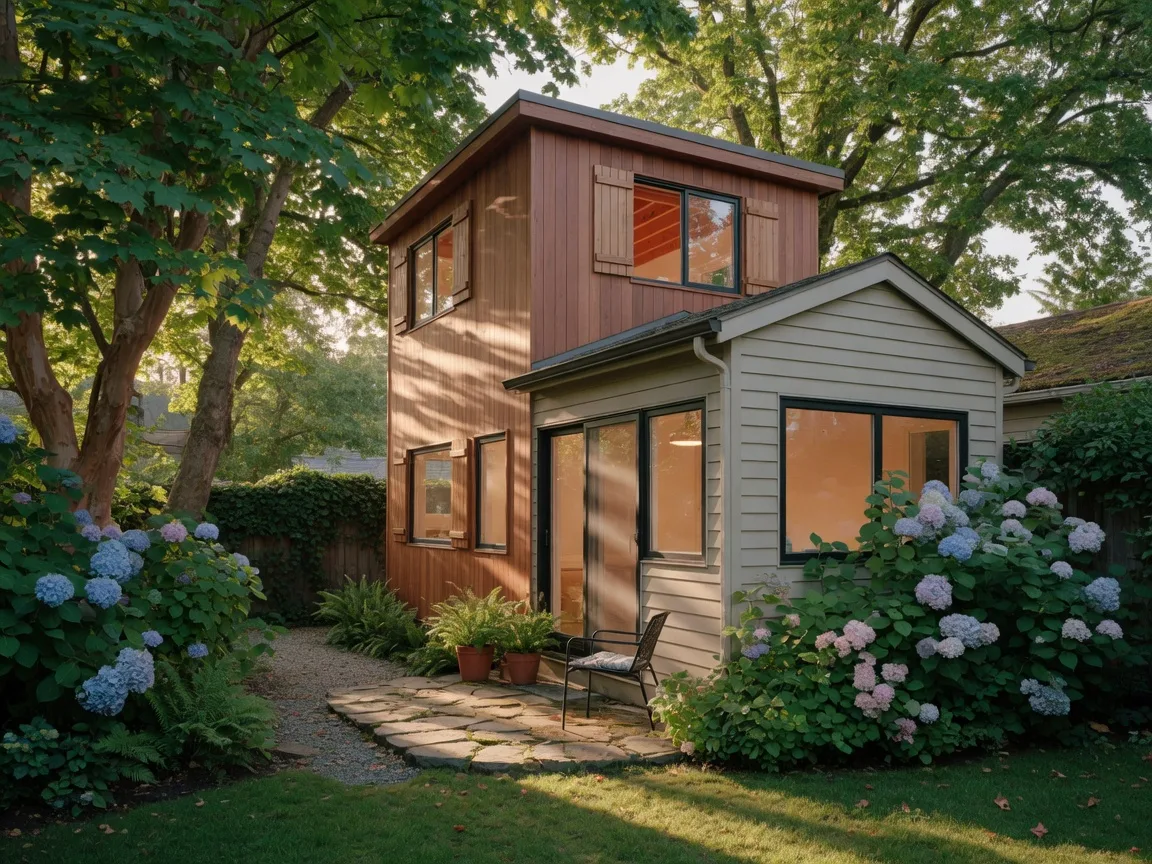
A well-designed garden suite can be the "extra room" that changed everything: separate, private, and useful to your family or a tenant.
The Honest Trade-Offs of Building
Before you pick up the phone to a contractor, sit with the downsides, because they are real. Permits take time: plan review in most Greater Victoria municipalities runs anywhere from a handful of weeks for a clean application to months for a complex one. Construction costs real money, and anyone who tells you differently is not the person you want to hire. And the process is disruptive: weeks of noise, dust, and a kitchen or bathroom out of commission if the work touches your living space.
Three follow-up reads will give you the specifics we are keeping general here: whether your backyard can legally take a garden suite in Victoria, whether a suite adds resale value, and which municipalities make the process easiest versus most complicated. If you would rather buy a property with a legal suite already in place, our buyer's checklist for homes with suites is the right place to start.
The deeper question is whether the project solves your actual pinch point. A suite solves income and separation. It does not give you a bigger kitchen or a second bathroom on the main floor unless you build them as part of the work. If what you really need is daily-life space for the whole household, the renovation gets bigger, and the maths can start to look different from the maths of a move.
Path B: Move for Square Footage
The second path is moving, and in Greater Victoria the honest truth is that where you buy changes how far your dollar goes. Newer communities on the West Shore, Langford and Colwood especially, plus View Royal and Sooke further out, tend to offer more finished square footage for the same money than the tightly held neighbourhoods closer to downtown. There are also pockets of Saanich, Royal Oak for example, and even parts of the Highlands where older homes sit on bigger lots with room to grow.
We say "tend to" on purpose, because averages hide a lot, and the real ranges move with the market. Rather than quoting current figures that will be stale by the time you read this, read the local numbers from our Langford living guide, our honest take on whether the Colwood commute is worth it, and the Colwood Crawl commute guide. The full Langford neighbourhood guide and Sooke neighbourhood guide on this site carry the detailed, up-to-date breakdowns.
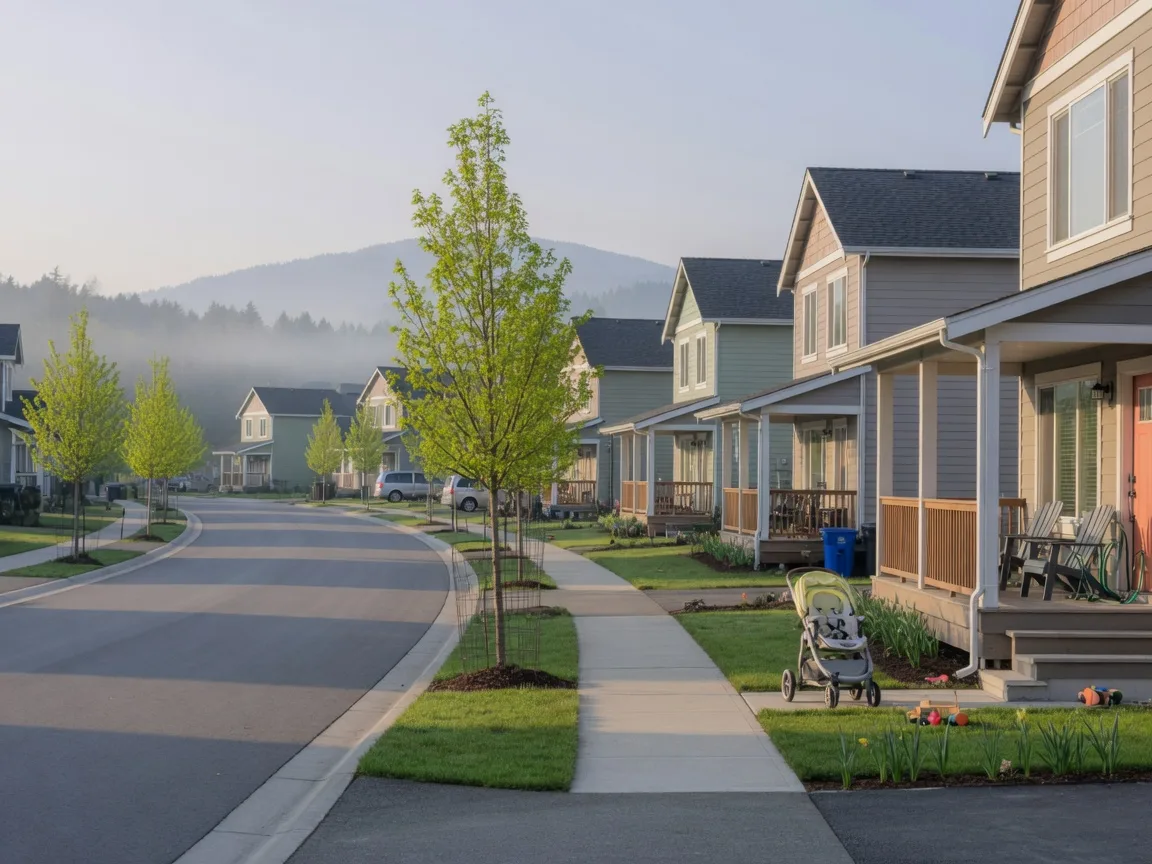
Newer suburbs deliver more square footage per dollar, but they ask you to trade commute time and, often, services within walking distance.
What You Trade When You Go Further Out
To be fair to everyone involved, moving for square footage is a trade, not a win. The commute to downtown and the hospitals gets longer, and anyone who has sat in the West Shore rush hour knows exactly what we mean. Services thin out: the walkable bakery and the corner store may be a five-minute drive instead of a five-minute stroll. And school catchments are genuinely different, which matters more than many first-time movers expect. If children are part of the picture, read whether school catchment zones actually matter before you fall in love with a specific house.
None of this makes the suburbs wrong. For a family that works on the West Shore, a Langford or Colwood three-bedroom with a real yard and a garage genuinely beats a cramped Victoria bungalow, and the people living that life will tell you so. It just means the decision should be made with eyes open: more house, different commute, different services, different school catchment. Those are the four words to carry into viewings.
The Money Math: Renovate or Relocate?
Here is the part nobody wants to skip and everybody tries to. Cost per square foot varies noticeably across Greater Victoria, between municipalities and even between streets in the same municipality, and we will not pretend a single number captures it. The general shape of the comparison, though, is consistent:
- Renovating costs hard money. A basement suite conversion, an addition, or a detached garden suite each carries a very different price tag, and the total includes permits, engineering, and the soft costs people forget. Our suite income guide and the resale value guide get into the ranges.
- Moving costs hidden money. Property transfer tax is the big one for BC buyers, and first-time buyers have their own exemptions; our property transfer tax guide explains both. Legal fees, the moving truck, staging the old place, and the furniture that somehow never fits the new one all add up.
- Bigger is not automatically better. A larger house means larger property tax, more insurance, more heating, and more cleaning. The trap clients describe to us is buying more square footage and still feeling squeezed, because the mortgage grew faster than the house solved the problem.
The cleanest way to compare the two paths is to put them side by side on paper: the all-in cost of the renovation against the all-in cost of the move, including the land transfer tax, and then what each option does to your monthly number over five years. If you are weighing a house, townhouse, or condo in the process, our guide to condo versus townhouse versus house helps with that layer of the decision too.
Before You Decide: The Three Conversations
Whatever the spreadsheets say, three conversations will tell you more than any listing or contractor quote:
- Talk to a lender first. Find out what you can actually carry before you shop, because the answer shapes everything. A bigger mortgage plus renovation debt is a very different load from a refinance on a finished suite.
- Talk to a contractor about the conversion. Get a real estimate for the specific work, not a per-square-foot guess from the internet, and ask about timeline and disruption in the same breath.
- Live with your current layout for a week. Actually track where the household bumps into itself. Some clients discover the real problem is one corner of the house, not the whole house, and a thousand dollars of shelving solved what they thought was a hundred-thousand-dollar problem.
The Other Three Home Wishes
"More space" is one of four wishes we hear constantly from families in Greater Victoria, and they connect more than people expect. A better location can deliver a bigger-feeling home without a bigger footprint, because the park, the café, and the school stop being destinations. More outdoor space often adds the room that indoor square footage was going to provide. And lowering your housing costs can be the lever that makes the space you want affordable in the first place. Worth reading all three before you commit to a path.
A Conversation Beats a Spreadsheet, Eventually
We genuinely enjoy this exact problem. It is the most common and the most personal decision a household makes in Greater Victoria, and no two answers look alike. If you are weighing a renovation against a move, we can walk the numbers with you, show you what is possible in your budget, and be honest about which path we would choose in your shoes. Book a no-pressure conversation through our calendar, get in touch, or start with a free home valuation to see what your current place is actually worth before you decide.

About the Author
Anna Hakim & Perry Fanthorpe, Happy Homes Team
Anna Hakim and Perry Fanthorpe are AI Certified Agents helping people build lives on Southern Vancouver Island. Anna reads what households need before they say it; Perry makes sure it actually happens. Together they help families navigate one of the biggest transitions of their lives with honesty, humour, and heart.