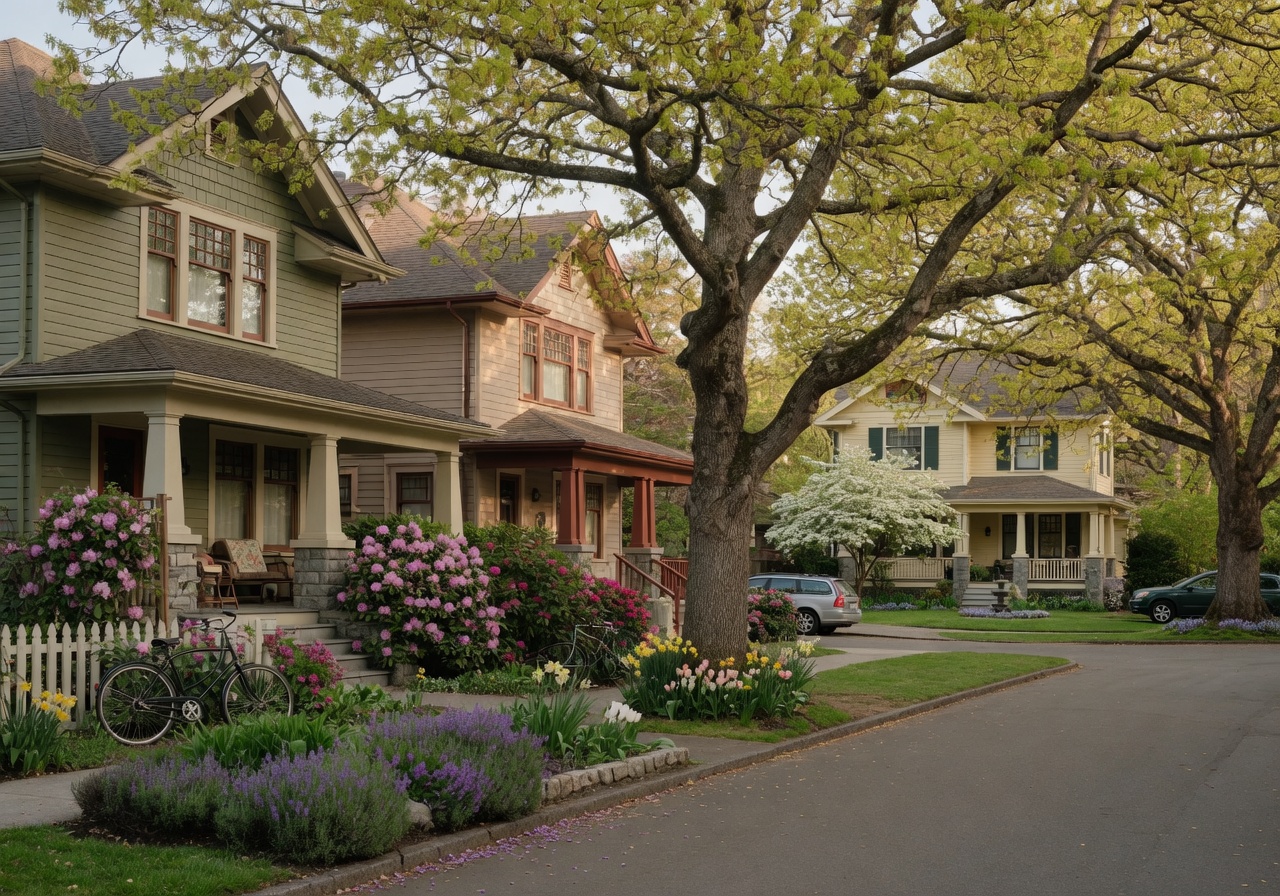

When buyers tell us they want more time, they usually mean it literally: more hours in the week that are not spent in the car, stacked into errands, or lost to a commute that eats the daylight. Where you live in Greater Victoria decides a surprising share of those hours. This guide looks at how commute length, walkability, bike routes, and proximity to work, school, and daily needs shape your week, and how to buy a home that gives some of it back. We are Anna and Perry from the Happy Homes Team, and we ask every client about their week before we ever ask about their budget.
Where Do the Hours Actually Go?
Time is the quietest line item in a household budget, because nobody writes it down. But it is the most predictable one: the same commute, the same school run, the same weekly errand loop happen fifty weeks a year. When you add them up, the address can cost you the equivalent of a full working day every single week, or save you one. That is the real price difference between two otherwise similar homes, and it is worth taking as seriously as the mortgage payment.
- Commutes. The daily drive to work is the biggest single chunk for most households, and it is the one most people underestimate before they move. Our guide to what it costs to own a car in Victoria covers the money side, but the hours are the part nobody budgets for.
- Car dependence. When every errand needs a car, every errand costs parking, warming up, and driving time. If the essentials are within walking distance, the same errands take minutes instead of an hour. Our piece on living without a car in Victoria is the extreme version of this question, and it is a useful lens even if you keep the car.
- School runs. A school within walking distance quietly removes two car trips a day for a decade. It is the most underrated time-saver in real estate, and it only shows up if you check the catchment before you buy.
- Errand stacking. The weekly loop of groceries, pharmacy, gym, and coffee adds up street by street. Homes near a real commercial node, not just a single shop, let you stack errands into one trip instead of four.
The pattern to notice is that these are all address decisions, not personality decisions. Two families with identical schedules can live completely different weeks based purely on where their home sits. That is the good news: it means you can buy the week you want.
Walkable and Bikeable Pockets: Where the Week Gets Shorter
Greater Victoria has genuine walkable and bikeable pockets, and they are not all downtown. The James Bay walkability guide is the classic example: groceries, cafés, the waterfront, and transit all within a short stroll. Cook Street Village and Fairfield run on the same idea, with daily needs clustered around a walkable core. Fernwood and Vic West bring the same energy closer to downtown, and both have the bonus of being genuinely bikeable to the core.
For cyclists, the region's trail network is the real gift. Our guide to living along the Galloping Goose explains what it is like to ride to work instead of driving, and whether you can commute by bike in Victoria is the honest, all-seasons answer to the question everyone asks in October.
The Honest Note: Walkability Varies by Block and Route
A neighbourhood's walk score is an average, and averages hide hills, missing sidewalks, and the one busy intersection you cross twice a day. The walkable pocket of a neighbourhood can sit three blocks from a car-dependent one. Walk the actual route from the home to the grocery store, the school, and the bus stop before you believe the reputation, and do it in the rain, because that is the version of the walk you will repeat most often.

When the essentials are a short walk away, the weekly errand loop stops being a series of car trips and becomes one pleasant stroll.
Commute Realities: The West Shore, the Peninsula, and the Map That Lies
The other side of the time equation is the commute, and in Greater Victoria the honest version of that story is about corridors, not distances. The West Shore corridor is the one everyone knows: the drive from Langford and Colwood into the core is a different creature at rush hour than it is at noon. Our Colwood Crawl commute guide is named for exactly that reality, our Langford living guide weighs the trade-offs honestly, and our honest answer to whether the Colwood commute is worth it is the one to read before you fall for a West Shore listing.
The Peninsula has its own version of the same story. Sidney for commuters is a real question with a real answer, and Shawnigan Lake to Victoria shows how far the trade can stretch for the right household. And for the growing number of people who work remotely or hybrid, our guide to remote work in Victoria explains how the commute question changes when it is two days a week instead of five.
The Right Answer Depends on Where Work Actually Is
There is no single "best commute neighbourhood" in Greater Victoria, because the answer changes with the workplace. A home that is perfect for someone who works on the West Shore is a poor fit for someone who works downtown, and vice versa. And one rule beats every map: a real drive at rush hour, on a weekday, in the direction you would actually travel, tells you more than any map at noon ever will. Do that drive before you commit, and time it. Your future self will thank you.

The commute is the most predictable hour of the week, which makes it the most fixable one. Test the real drive before you buy the house.
What the Reclaimed Hours Support
We have never met a family that moved for more time and then struggled to fill it. The hours come back and the life expands to meet them: dinner that is not eaten in the car, a dog walk that is not rushed before dark, a hobby that actually happens on a Tuesday, an evening outdoors instead of an evening in traffic. The quieter, slower version of daily life is the whole point, and it is worth saying plainly: buying for time is buying for the life you want to be living, not the one you are currently surviving.

The reclaimed hours go somewhere real: the dog walk, the family dinner, the hobby, the evening outdoors. That is the actual return on a time-smart address.
How We Ask About Your Week and Match Homes to It
This is the part of our job we genuinely love, because it is where the search gets personal. When we sit down with a new client, we ask about the week before we ask about the house: where work is, what time the school run starts, who drives where, what the weekend actually looks like. Those answers become the filter for every home we show. A great house in the wrong corner of the region is not a great house for you, and we would rather show you the right block than the right kitchen.
Start with our living in Victoria guide to see how the region fits together, then get in touch and tell us what your week looks like. We will match homes to the hours you actually have, and we will be honest about the commute before you ever fall in love with the house.
Keep Reading: The Other Home Wishes

About the Author
Anna Hakim & Perry Fanthorpe, Happy Homes Team
Anna Hakim and Perry Fanthorpe are AI Certified Agents helping people build lives on Southern Vancouver Island. Anna reads what households need before they say it; Perry makes sure it actually happens. Together they help families navigate one of the biggest transitions of their lives with honesty, humour, and heart.